



Night riders in Lagos must glow or face the Law as govt cracks down

 Quick Read
He stressed that delivery companies must sensitise their riders and enforce strict compliance to avoid penalties from enforcement agencies such as the Lagos State Traffic Management Authority (LASTMA) and the Vehicle Inspection Service (VIS).
The Lagos State Government has made the use of reflective jackets and visibility tapes mandatory for all courier and delivery riders operating at night, in a bid to enhance road safety and curb accidents.
In a directive issued by the Ministry of Transportation, riders working between 6:00 p.m. and 6:00 a.m. are now required to wear reflective vests, while their motorcycles and bicycles must also be fitted with reflective tapes to improve visibility.
Mr. Oluwatobi Idowu, Senior Special Assistant to the Governor on Transport Education and Innovation, announced the policy on behalf of the Ministry’s Permanent Secretary, Mr. Olawale Musa.
He stressed that delivery companies must sensitise their riders and enforce strict compliance to avoid penalties from enforcement agencies such as the Lagos State Traffic Management Authority (LASTMA) and the Vehicle Inspection Service (VIS).
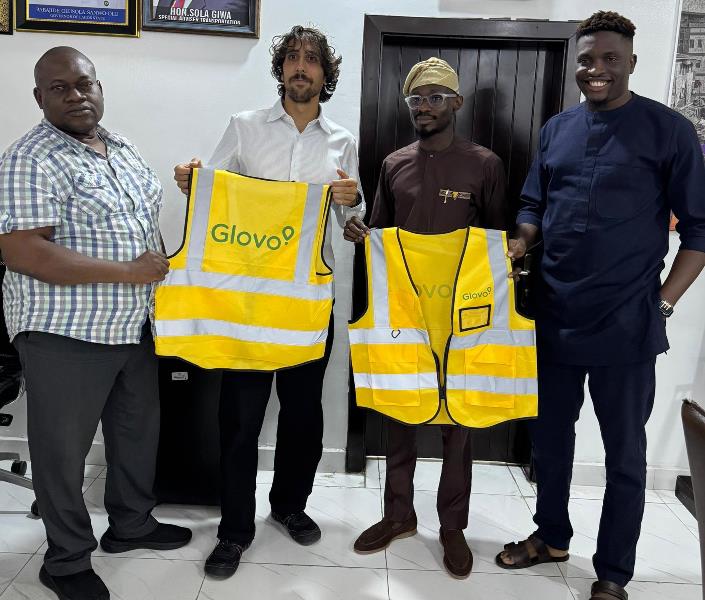
In response, Glovo Nigeria has pledged full compliance with the new regulation. The company’s General Manager, Mr. Lamide Akinola, described the initiative as “a timely and progressive step to protect riders and road users alike.” He further revealed that Glovo will distribute 3,000 reflective vests free of charge to its couriers over the next month.
“We are proud to support this safety drive and encourage other operators in the sector to adopt similar measures to safeguard lives,” Akinola said.
The Ministry of Transportation welcomed Glovo’s proactive response, noting that sustained collaboration with courier companies would be crucial in building a safer, more responsible delivery ecosystem in Lagos.
The directive is part of the state government’s broader efforts to promote safety and accountability within Lagos’s fast-growing dispatch industry, which has become vital to commerce and daily living in Africa’s largest city.
Comments