


Insecurity erodes Nigeria’s Growth, Experts warn at Kosofe Dialogue

 Quick Read
Idahosa identified youth unemployment, cybercrime, and fragile supply chains as pressing threats to community stability, stressing that businesses must embrace innovation and corporate responsibility to become co-architects of national security.
Leading voices from Nigeria’s business and policy community have warned that the country’s growth prospects will remain fragile unless economic expansion and national security are pursued in tandem.
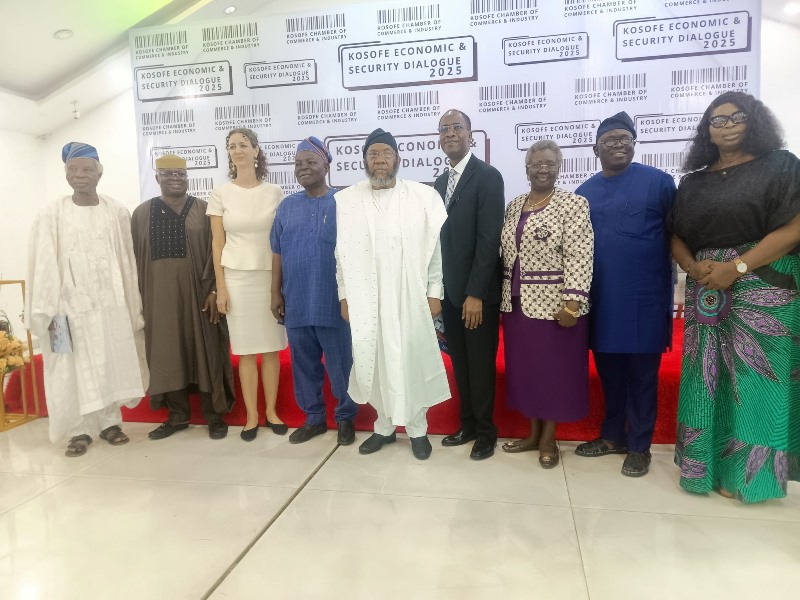
The spoke at the Kosofe Economic and Security Dialogue 2025.
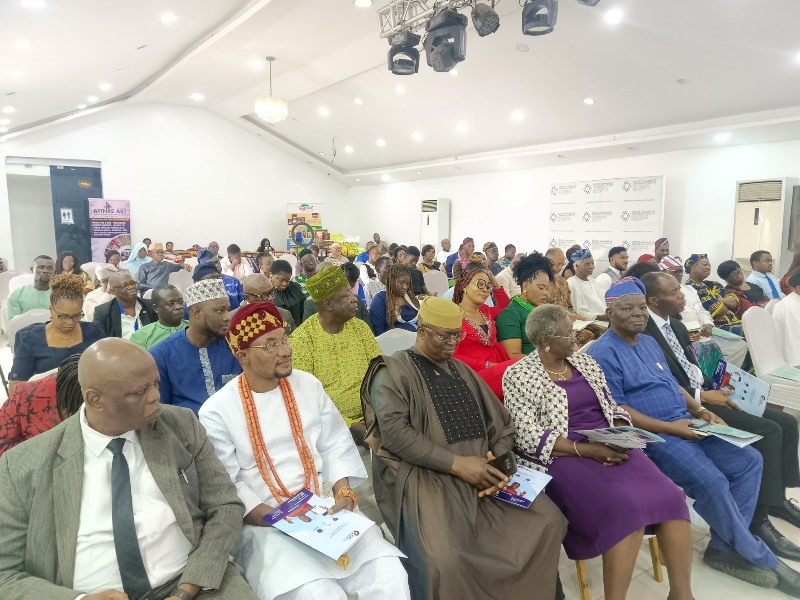
Held at the Fish Farm, Ogudu, Lagos, on 18 September, the dialogue brought together the President of the Lagos Chamber of Commerce and Industry (LCCI), Mr. Gabriel Idahosa; the Chief Executive Officer of the Centre for the Promotion of Private Enterprise (CPPE), Dr. Muda Yusuf and the Founder of B. Adedipe Associates Limited (BAA Consult), Dr. Biodun Adedipe, among others.
The dialogue, convened by Joe Femi-Daguro, President of the Kosofe Chamber of Commerce and Industry, carried the theme “Forging a Resilient Future: Balancing Economic Growth and Security Imperatives.”
Speaking on this year’s theme, “Forging a Resilient Future: Balancing Economic Growth and Security Imperatives,” Dagunro, reminded participants of the founding vision of the dialogue.
According to him, the platform was never intended to be “a place where people gather to complain,” but rather “a model of how communities can solve their own problems.”
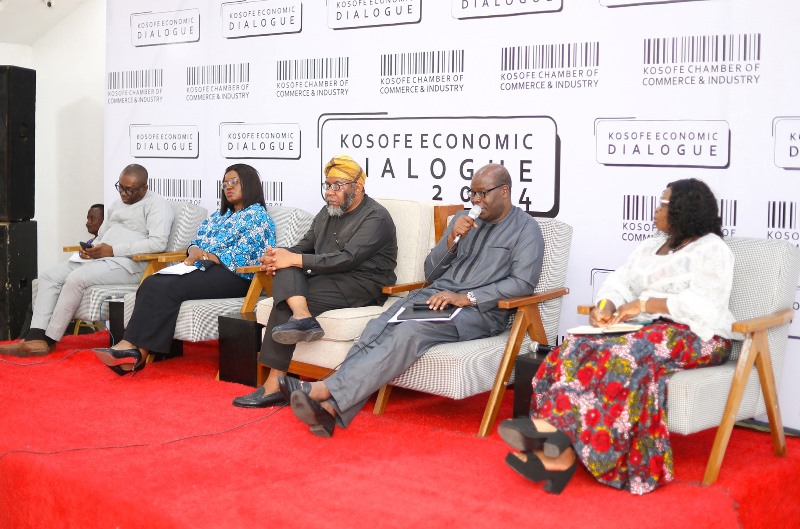
“Everywhere you go, people complain about the economy, about security, about life itself. Complaining is natural,” he said.
“But when we created this programme, we agreed it would not just be a forum for lamentation. It must be a space where we propose practical solutions and hold ourselves accountable for progress year after year.”
Dagunro pointed to tangible results from the previous year’s deliberations, including the establishment of a multipurpose cooperative society under the Chamber.
The scheme, he said, has become a lifeline for small businesses long stifled by bank loans with interest rates as high as 36 percent.
“If you put in ₦200,000, you can access ₦400,000. If you put in ₦2 million, you can access ₦4 million. The rules are simple—members guarantee one another,” he explained.
“If your own community cannot vouch for you, then even a bank will not. This is how we take our destiny into our own hands,” he added.
In a lighter moment, he contrasted the initiative with government’s frequent rhetoric about “unlocking opportunities.”
“Government likes to say they are unlocking, but who locked it in the first place?” he asked, drawing laughter from the audience, adding that “We don’t need to keep unlocking. We are building houses without doors, so there’s nothing to lock.”
This year, Dagunro added, the dialogue expanded its scope to include security, recognising that economic progress cannot thrive without safety, saying that experts from Nigeria, Ghana, and beyond were invited to share comparative strategies on tackling insecurity while fostering enterprise.
“Security challenges are not just about what happens on the streets,” he said. “They affect businesses, supply chains, and the confidence of investors. That is why we must examine them from a broader perspective.”
Speaking at the event, Idahosa commended the Kosofe Chamber for creating a platform to interrogate Nigeria’s toughest challenges, describing the theme as both urgent and existential.
“Economic growth without security is fragile, and security without economic opportunity is unsustainable,” he said.
He identified youth unemployment, cybercrime, and fragile supply chains as pressing threats to community stability, stressing that businesses must embrace innovation and corporate responsibility to become co-architects of national security.
Also speaking, Dr. Yusuf warned that insecurity has become Nigeria’s greatest economic threat, eroding investor confidence, disrupting agriculture, and draining oil revenues.
He linked persistent food inflation to insecurity in farming communities and highlighted the billions lost annually to crude oil theft.
“Insecurity is not just a social or political problem; it is fundamentally an economic problem. It distorts markets, deters investment, and deepens poverty,” he noted.
He called for stronger security institutions, technology-driven intelligence, and deeper public-private collaboration to break what he described as the “vicious cycle of poverty and crime.”
Echoing these concerns, Dr. Adedipe argued that resilience begins with anticipating disruptions and building capacity to recover from them.
He noted that while Nigeria’s rebased GDP in 2024 stood at ₦372.8 trillion (US$243 billion) with a growth rate of 3.38 percent, the figures mean little if insecurity continues to erode productivity.
“Every act of violence or insecurity has an underlying economic motivation,” he observed, citing terrorism, oil theft, and banditry as examples of the “economics of insecurity,” he said.
Adedipe added that poverty, unemployment, poor governance, and the proliferation of arms remain key drivers of unrest.
He urged the government to adopt transparent social safety nets to cushion the harsh effects of reforms, stressing that “successful reforms are the outcome of courage and sacrifice.”
The dialogue ended with a consensus that Nigeria’s future resilience depends on an integrated approach in which economic policies reinforce security, and security provides the foundation for inclusive and sustainable growth.
Comments