



Ajadi Rescue Movement reaffirms commitment to unity and youth empowerment in Taraba

 Quick Read
The Taraba State chapter of the Ajadi Rescue Movement (ARM) has reaffirmed its commitment to promoting youth empowerment, national unity, and social development across Nigeria’s northern region.
The Taraba State chapter of the Ajadi Rescue Movement (ARM) has reaffirmed its commitment to promoting youth empowerment, national unity, and social development across Nigeria’s northern region.
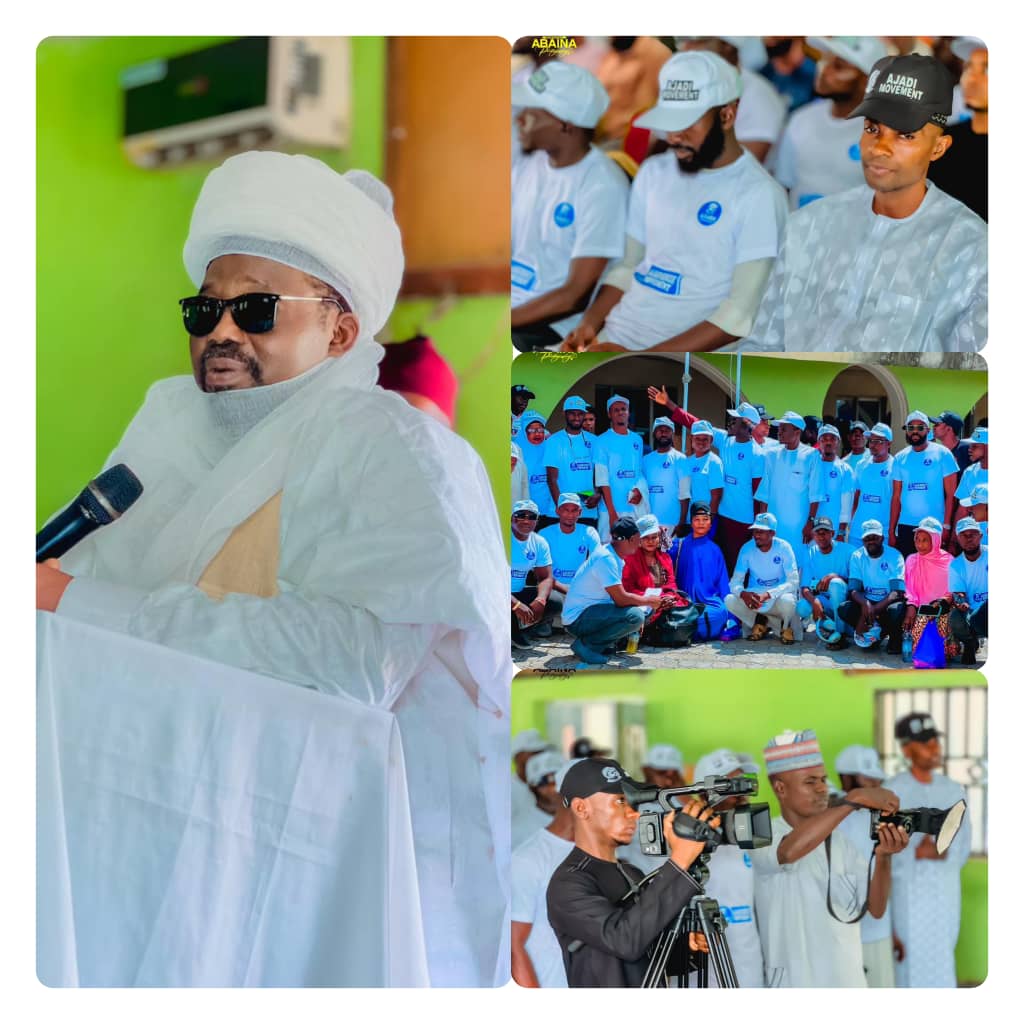
The declaration was made during a vibrant meeting held on Saturday at the movement’s state headquarters in Jalingo. The gathering brought together state and zonal executives, local government coordinators, women leaders, and representatives of various ethnic groups.
The meeting began at 10:00 a.m. with the arrival of state officials who distributed branded shirts and caps to members. By 11:00 a.m., the Nineteen Northern States Coordinator, Mr. Ibrahim Shuibu, arrived with his team and was warmly received by state and local government leaders. Proceedings formally opened with the Nigerian National Anthem, followed by prayers led by the Deputy State Coordinator, Mr. Babangida Sani Muhammad.
In his welcome address, Comrade Dabo Nuhu Muhammad, Taraba State Coordinator of ARM, praised members for their dedication and discipline. He also commended the movement’s founder, Ambassador Olufemi Ajadi Oguntoyinbo, describing him as a visionary leader who has given Nigerian youths “a renewed sense of direction.”
“Ambassador Ajadi’s message is simple — unity, productivity, and patriotism,” Dabo said. “The Ajadi Rescue Movement is not just a group; it is a mission to redefine youth participation in governance and national development.”
Delivering his keynote address, Mr. Shuibu emphasized the need for peace, religious tolerance, and inter-ethnic harmony among young Nigerians.
“We must rise above religion and tribal sentiments,” he said. “Our diversity is our strength, not our weakness. The Ajadi Rescue Movement is a platform for young Nigerians to build bridges, not barriers.”
He further described Ambassador Ajadi as “a leader who believes that the true wealth of a nation lies in its youth.”
The event reached its peak with the arrival of the royal father of the day, His Royal Highness, the Galadiman Muri, at noon. He was received with traditional honours by the movement’s coordinators and members.
In his remarks, the royal father applauded the leadership of the movement for its efforts in fostering inclusivity and mobilizing young Nigerians toward positive causes.
“I commend Ambassador Ajadi and his team for building a movement rooted in unity and discipline,” he said. “I urge them to consider scholarship opportunities for our teeming youths because education remains the foundation of progress.”
Goodwill messages also came from representatives of different ethnic groups in Taraba. The Yoruba coordinator called for stronger collaboration among all groups, while the Calabar/Akwa Ibom representative praised the movement’s inclusiveness. The Hausa/Fulani representative reaffirmed northern youths’ commitment to peace and national solidarity.
The Women Leader of the movement lauded the growing participation of women in leadership and called for more initiatives to promote gender equality and education.
“The Ajadi Rescue Movement has given women a voice,” she said. “We will continue to support efforts that empower women and encourage their active involvement in leadership.”
During an interactive session, the Central Zonal Coordinator, Mr. Rayyan Hassan, raised questions about youth capacity-building and national integration. Responding, Mr. Shuibu and Comrade Dabo assured members that new skill acquisition programs were being developed to address these concerns.
The meeting concluded with closing remarks, prayers, and a group photograph that captured the unity and enthusiasm of the participants.
As members dispersed, one message resonated throughout Jalingo — the Ajadi Rescue Movement is more than a political platform; it is a youth-driven vision for national renewal and empowerment.
Comments