



Oba of Benin and the Audacity of Cultural Appropriation by the Iyaloja-General

 Quick Read
To attempt to superimpose such a structure is not innovation; it is cultural imposition. It is, quite frankly, an act of administrative arrogance and historical ignorance. It reduces an ancient system of self-regulation to a political patronage network controlled from outside Edo borders.
By Kazeem Ugbodaga
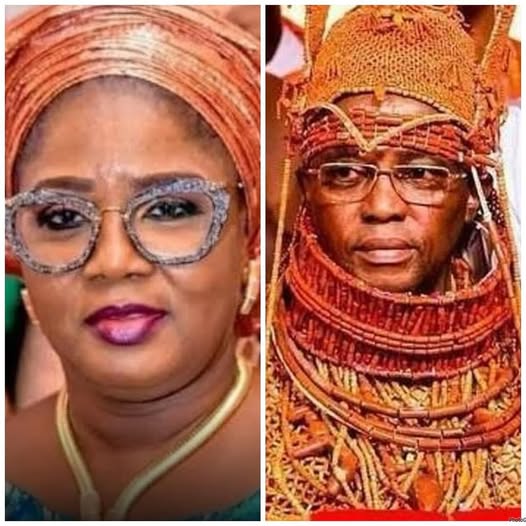
When the Oba of Benin, Omo N’Oba N’Edo Uku Akpolokpolo, Ewuare II, declared that the title “Iyaloja-General” is alien to Benin tradition, he was not merely defending an institution, he was protecting the soul of a civilisation. His pronouncement was a necessary reminder that cultural sovereignty is not a political accessory, and no individual, no matter how well connected, has the mandate to rewrite centuries of indigenous order.
At the heart of the recent controversy is Mrs. Folashade Tinubu-Ojo, the self-styled Iyaloja-General of Nigeria, who reportedly sought to extend her influence to Edo State by appointing a so-called Iyaloja-General over all markets in the state. Such ambition, however, collides directly with the traditional hierarchy of the Benin Kingdom, where each market is governed by its own Iyeki-women who serve not just as traders’ leaders, but as custodians of sacred oaths and local deities associated with market life.
The Benin monarchy predates Nigeria by nearly a millennium. Its governance system, from the Uzama to the Iweguae and Igiohon, is built on well-defined roles sanctioned by culture and divine ancestry. The Iyeki institution is no different, every market in Benin operates under its own spiritual and administrative order. There is no concept, nor any historical precedent, for a “General” market leader presiding over all others.
To attempt to superimpose such a structure is not innovation; it is cultural imposition. It is, quite frankly, an act of administrative arrogance and historical ignorance. It reduces an ancient system of self-regulation to a political patronage network controlled from outside Edo borders.
Mrs. Tinubu-Ojo’s national title, Iyaloja-General, may find legitimacy within the Yoruba socio-economic context, where the office emerged organically within market unions and later assumed a political hue under her late grandmother, Alhaja Abibatu Mogaji. But Benin is not Lagos, and Edo’s traditional market system is not a franchise of the Lagos market association.
Every cultural space has its rhythm. To extend the Iyaloja-General concept to Benin, without regard for its distinct cultural laws, is to trespass on the sacred. It is akin to appointing an Emir in Oyo or installing an Oba in Sokoto, a direct insult to the cultural geometry of Nigeria’s federation.
The Oba’s intervention, therefore, was not an act of defiance but of preservation. His Majesty’s reminder that every Iyeki is selected by the market community and presented to the Palace for confirmation reaffirms the structure that has kept Benin’s market system stable for generations. It is a system where spiritual responsibility and community accountability coexist.
Attempts to distort this structure under the pretext of “national coordination” must be viewed for what they are: a creeping politicisation of traditional institutions. Such trends, if unchecked, risk turning revered cultural titles into instruments of influence rather than service.
Nigeria’s beauty lies in its diversity, in the ability of each ethnic nation to maintain its unique traditions while coexisting in a shared republic. Respecting those differences is the bedrock of national cohesion. Cultural unification by decree, especially when driven by political proximity to power, is not unity; it is colonisation by culture.
Mrs. Folashade Tinubu-Ojo may continue to exercise her authority where it is culturally legitimate. But in Benin, tradition reigns supreme, and the word of the Oba is law. The Benin Palace has spoken with clarity and dignity and that voice deserves not just obedience, but deep national respect.
Comments