


UI don Adedoyin Aguoru honoured at 6th International Conference on Japanese Studies in Africa


 Quick Read
“We don’t have to start from scratch. We can learn from Japan’s Society 5.0—a human-centred vision where technology and humanity work together to solve real problems.”
By Nehru Odeh
Prof. Adedoyin Aguoru is an intellectual with a difference. She is not just a scholar dedicated to academic excellence; she puts her intellectual ideas into practice, thus not only bridging the gap between town and gown but also fostering bilateral relations between Japan and Africa.
Aside from her intellectual acumen, which has earned her a professorship at the University of Ibadan, where she teaches English, she has, for the past six years—among numerous achievements—promoted Japanese studies in Africa, as well as mutual understanding between Japan and Africa through the African Association for Japanese Studies (AAJS), which she founded in 2019. She is the current President of the association.
It is in light of these and her many other achievements that the Embassy of Japan in Nigeria conferred the Ambassador’s Commendation Award on Aguoru, who is also the Director, Centre for Excellence in Teaching and Learning, at the University of Ibadan.
In a letter signed by Suzuki Hideo, Ambassador Extraordinary and Plenipotentiary of Japan to the Federal Republic of Nigeria, Aguoru was given the award for her:
“Exceptional and unwavering contributions to promoting Japanese Studies in Africa and fostering mutual understanding between Japan and the African continent.”
Aguoru was presented with the award at the 6th Annual International Conference on Japanese Studies, held on 7 October 2025 at Trenchard Hall, University of Ibadan. The conference, which was organised by the AAJS with sponsorship support from Leadway Assurance and Suzuki CFAO, took place between 7th and 9th October 2025.
The theme of the conference was: “Japan–Africa Relations: New Horizons and Challenges”. Aside from the opening ceremony, there was also the Ambassador’s Commendation Dinner, during which the award was presented to the honouree.
It was three days of intellectual discourse, with plenary sessions held throughout, fostering bilateral relations between Japan and Africa, and opening educational opportunities for students and empowering youth.
The string of Japanese music playing in the background gave the atmosphere a cultural feel and highlighted the seriousness of AAJS members in strengthening relations between Japan and Africa.
Principal officers of the University of Ibadan who graced the event with their distinguished presence included:
Prof. Peter Olapegba, Deputy Vice-Chancellor (Administration)
Prof. Juwon Arotiba, Deputy Vice-Chancellor (Academic)
Mr Ganiyu Oke Saliu, Registrar, University of Ibadan
Dr Mercy Iroaganachi, University Librarian
Prof. Olayinka Idowu, former Vice-Chancellor, University of Ibadan, represented Dr Tokunbo Awolowo-Dosunmu. Also present were Prof. Jide Owoeye, Proprietor and Chairman, Council of Lead City University, and Prof. Aderonke Baiyeroju, former Deputy Vice-Chancellor (Academic), University of Ibadan.
The keynote speaker, Dr Adedayo Omotunde, presented his paper titled “The Strategic Leap: Applying Japan’s AI Playbook to Nigerian Productivity” virtually.
Another notable highlight of the event was the inauguration of the AAJS Students’ Club, founded in 2025—a testament to Aguoru’s commitment to nurturing future generations of scholars and researchers.
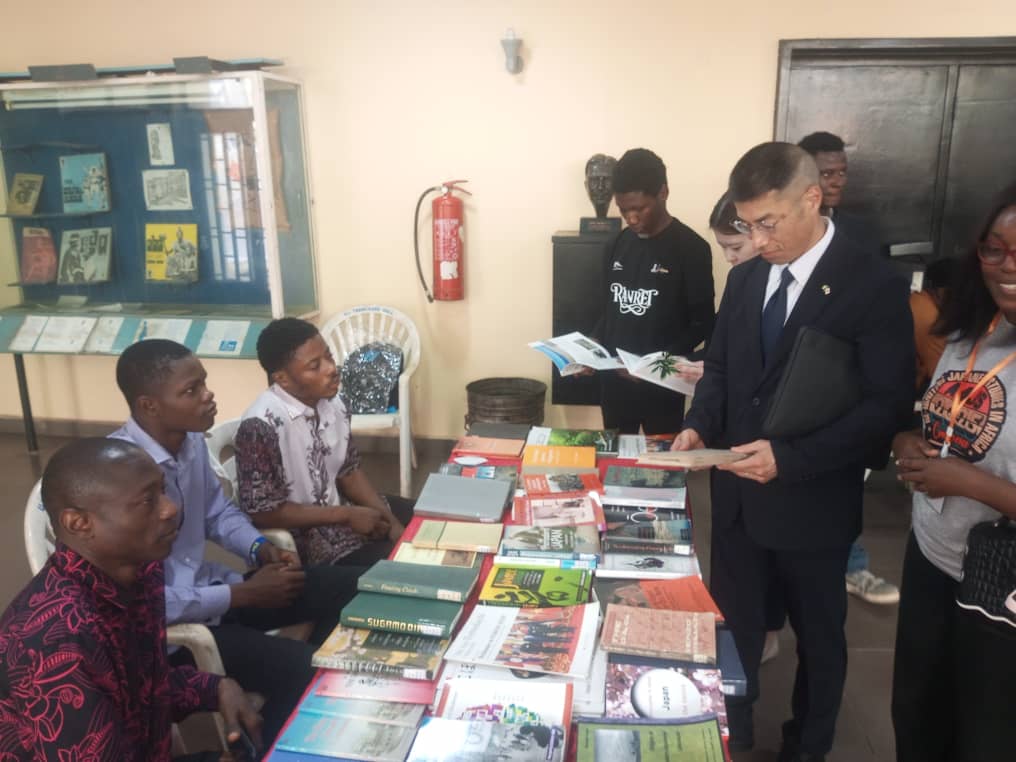
There was also an exhibition of Japanese collections, facilitated by Aguoru through The Japan Foundation’s Read Japan Project, at the Kenneth Dike Library, University of Ibadan.
In her acceptance speech, Aguoru expressed appreciation to the Embassy of Japan in Nigeria for honouring her with the award:
“Your Excellency’s appreciation means a great deal to me, and I am grateful for the acknowledgment of my work,” she noted.
“This award is not just a personal achievement but also a testament to the hard work and dedication of the AAJS team, our partners, and the University of Ibadan community. I am proud to bring this award home to Nigeria, to the University of Ibadan, and to Oyo State—the intellectual capital of Nigeria—as the first recipient of this award in Africa.”
The university don also expressed gratitude to the management of the University of Ibadan, particularly the immediate past Vice-Chancellor and the current Vice-Chancellor, for their support and encouragement:
“Your leadership has been instrumental in fostering an environment that promotes academic excellence and innovation.
“I also wish to acknowledge the support of Lead City University, particularly the Proprietor and Chairman of Council, Prof. Jide Owoeye, who was my lecturer and supervisor during my Master’s in International Relations programme at Obafemi Awolowo University, and who introduced me to Japan through his seminal book, Japan’s Policy in Africa.
“We are grateful for the opportunity to host two of our conferences at Lead City University at no cost to the association. LCU has enabled us to strengthen the AAJS platform,” Aguoru maintained.
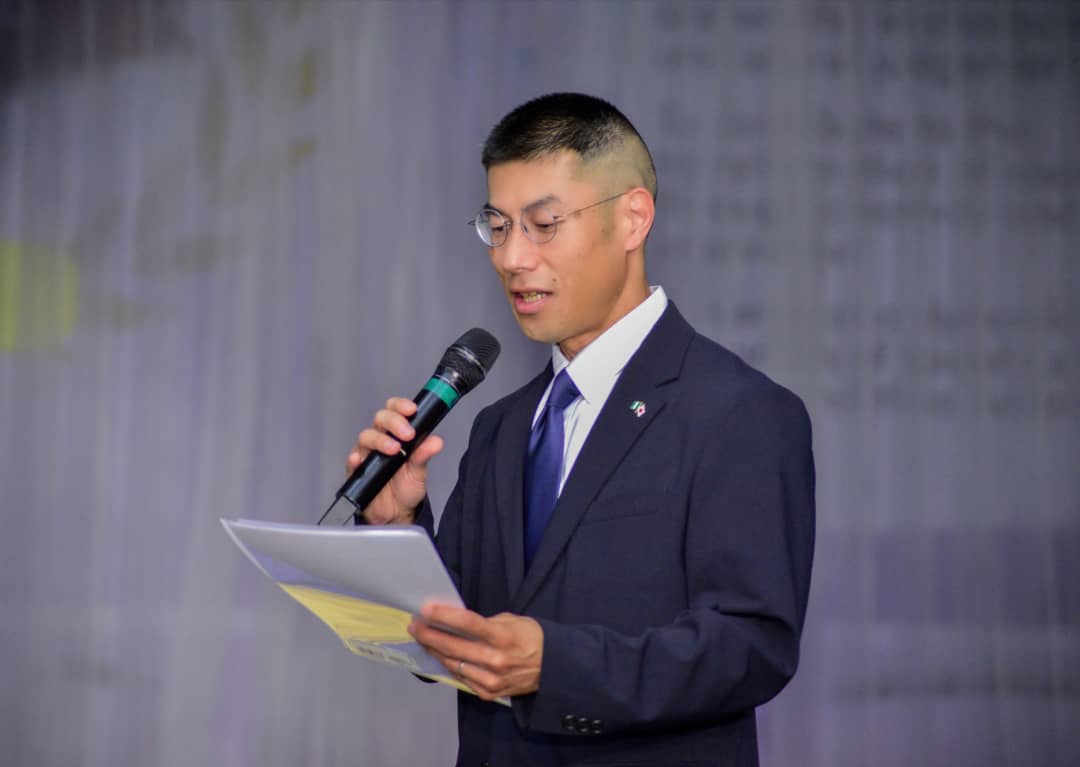
In his speech, His Excellency, Suzuki Hideo, Ambassador of Japan to Nigeria, represented by the Deputy Head of Mission, Shin Honda, remarked that the Embassy of Japan has followed the work of AAJS with growing admiration.
“In just a few short years, the association has emerged as a leading hub for academic dialogue and cultural understanding, promoting interdisciplinary scholarship linking Japan and Africa. To us at the Embassy, the AAJS is both a scholarly organisation and an important bridge between Africa and Japan.”
The Ambassador also noted that the Embassy of Japan has been proud to support AAJS activities in the past and continues to view the association as a key partner in strengthening Japan–Africa cooperation.
“In particular, we highly respect your efforts to create African-led narratives on Japanese culture, society, history, and policy—not shaped by external perspectives but by the lived experiences and intellectual contributions of African scholars and institutions.”
In his address, the Vice-Chancellor of the University of Ibadan, Prof. K.O. Adebowale, congratulated Aguoru on receiving the prestigious Ambassador’s Commendation Award.
“This recognition is a testament to her outstanding contributions to promoting Japanese Studies in Africa. Her dedication and leadership have been instrumental in shaping the association and fostering stronger ties between Japan and Africa.”
The Vice-Chancellor also commented on the theme of this year’s conference:
“The theme of this year’s conference, Japan–Africa Relations: New Horizons and Challenges, is timely and relevant.
The sub-themes cover a wide range of topics, from the humanities and social sciences to economic partnerships and youth empowerment. I am confident that the discussions and presentations will provide valuable insights and recommendations for future collaborations,” he maintained.
Ambassador Dr Tokunbo Awolowo-Dosunmu, who chaired the Commendation Award Dinner, paid glowing tribute to the award recipient:
“Tonight, we gather to celebrate a remarkable individual, Prof. Adedoyin Aguoru, who has been recognised for her outstanding contributions to promoting Japanese Studies in Africa.
“As President of the African Association for Japanese Studies, Professor Aguoru has demonstrated exceptional leadership and dedication. Her achievements are truly impressive.
“Tonight, we celebrate Professor Aguoru’s remarkable accomplishments, and I extend my warmest congratulations to her. Her dedication to promoting Japanese Studies in Africa has made us all proud—at the University of Ibadan, in Nigeria, and across the African continent.
“To the members of the African Association for Japanese Studies, I commend your tireless efforts. Your work has not gone unnoticed, and I am confident that your continued collaboration will yield even greater achievements,” Awolowo-Dosunmu said.
In his keynote, titled “The Strategic Leap: Applying Japan’s AI Playbook to Nigerian Productivity”, Dr Adedayo Omotunde spoke about how Nigeria can leverage Artificial Intelligence (AI) to drive inclusive national development, using Japan’s Society 5.0 as a blueprint.
“While many nations view AI as a means of economic or military supremacy, Japan’s approach is fundamentally different. It is not just a strategy—it is a national philosophy called Society 5.0.
“Japan starts from a simple but profound question: What problem must we solve? For Japan, the problem was undeniable—a rapidly ageing population and a critically shrinking workforce. So, technology was not the goal; it was the solution to existential social challenges confronting the nation,” Omotunde noted.
According to Omotunde: “We don’t have to start from scratch. We can learn from Japan’s Society 5.0—a human-centred vision where technology and humanity work together to solve real problems.”
He suggested that Nigeria must adapt Japan’s mindset, not copy it:
“The recent launch of N-ATLaS, Nigeria’s own multilingual LLM, by His Excellency Dr ‘Bosun Tijani, shows how this philosophy can work in practice—a government-led step toward digital inclusion and language preservation. Now is the time to build on that momentum.”
Omotunde made the following recommendations: 1. Start with the problem, not the tech. 2. Empower government as an enabler: launch an NYSC Digital Corps to deploy STEM graduates on national AI projects. 3. Reward private investment: introduce AI Infrastructure Tax Credits to attract corporate funding for R&D and data centres. 4. Bet on our youth: equip them with digital skills and build AI tools that reflect our realities and languages.
“Japan’s story shows that national transformation is never accidental—it is the result of vision, collaboration, and intent. Nigeria is taking its first steps. Now, we must build the ecosystem to sustain it,” Omotunde concluded.
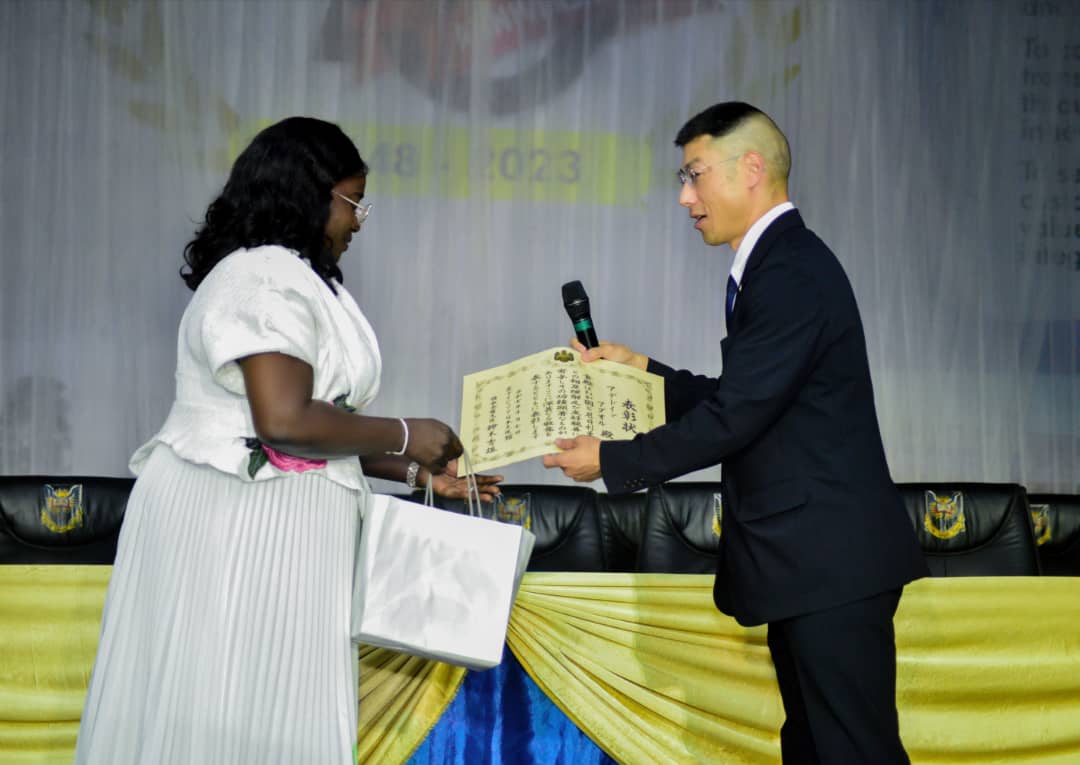
Still, the high point of the event was when Shin Honda, Deputy Head of Mission at the Embassy of Japan in Nigeria, representing Amb. Suzuki Hideo, presented the Ambassador’s Commendation Award to Aguoru. The award recipient also presented a gift to the Japanese Ambassador.
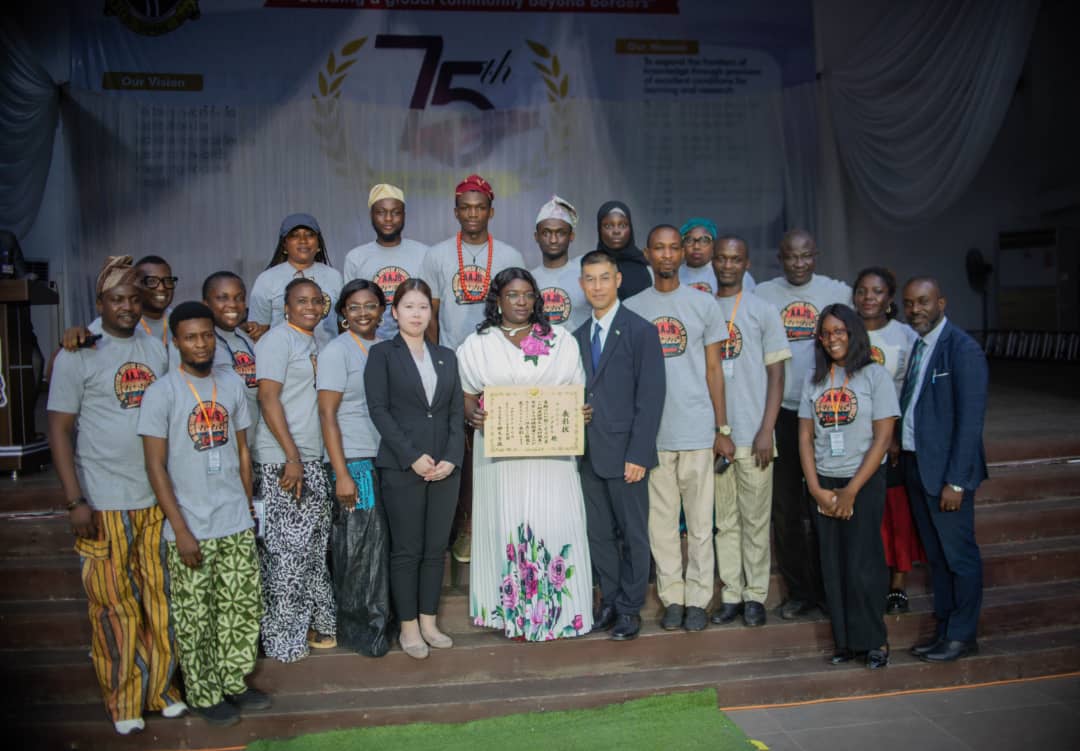
Then followed the photo sessions, and the toast, which was spiced up with scintillating Japanese music—marking the end of a day rich with intellectual discourse, cultural exchange, the strengthening of Japan–Nigeria relations, and the opening of educational opportunities for young scholars and researchers.
Segun Orimakinde, Executive Secretary of the African Association for Japanese Studies, delivered the vote of thanks.
Comments