


How Nigeria will benefit from removal from FATF’s grey list – Prof Uwaleke

 Quick Read
Nigeria was included on the FATF grey list in February 2023, citing strategic deficiencies in the country’s systems for combating money laundering, terrorist, and proliferation financing.
By Kadiri Abdulrahman
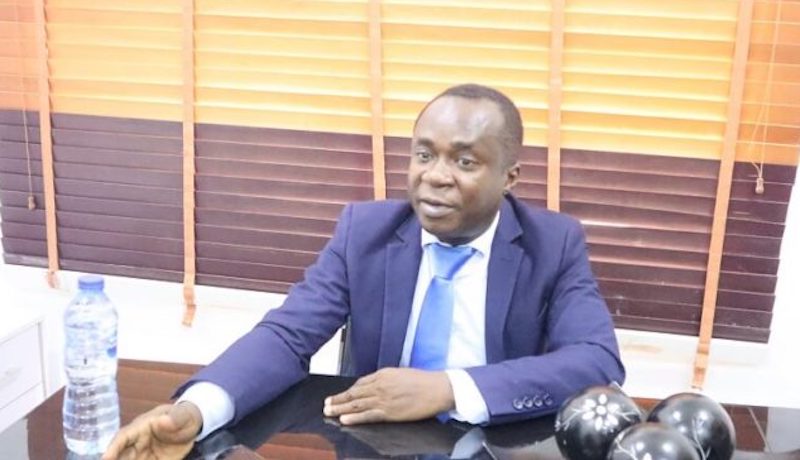
A financial expert, Prof. Uche Uwaleke, has explained how removal of Nigeria from the Financial Action Task Force’s (FATF) “grey list” will benefit the country.
Uwaleke, a Professor of Capital Market Studies at the Nasarawa State University, Keffi n a statement on Saturday in Abuja said the removal represented a trust signal for investors and Nigeria’s trading partners.
He added that being taken off the FATF grey list would also enhance Nigeria’s access to global finance, trade, and investment.
“The delisting is also good for Nigeria’s international image and credibility as it signals to international investors, banks, and Rating agencies that Nigeria has strengthened its AML/CFT regime.
“This reduces the perception of the country as a high-risk jurisdiction for cross-border financial flows and correspondent banking relationship.
“With enhanced global trust, the country may witness increasing foreign direct investments which have been in short supply.
“As country risk is perceived to fall, domestic companies raising debt capital might do this at lower costs,” he said.
He said that as risk perception lowered, demand for securities might increase, tightening spreads, and possibly reducing yields for government securities and improving valuations for equities.
According to him, Nigerian Issuers may also find it cheaper to access global debt markets.
“Overall, the removal is positive given Nigeria’s substantial cross-border financial flows.
According to him, it is cheering news for the country coming from an international body that was established to coordinate global efforts to combat money laundering, terrorist, and proliferation financing.
“Its signal value of a strong fundamental governance and AML/CFT systems will help position Nigeria as not only a leading economy in ECOWAS but also in Africa,” he said. .
Uwaleke, however, said that removal from the grey list was not the end of expected reforms.
“It only means that the country has substantially addressed the recommended strategic deficiencies.
The grey list refers to the list of countries under increased monitoring by FATF.
It is an international body that sets standards to combat money laundering, terrorist financing, and proliferation financing (financing of weapons of mass destruction)
Nigeria was included on the FATF grey list in February 2023, citing strategic deficiencies in the country’s systems for combating money laundering, terrorist, and proliferation financing.
According to Uwaleke, being on the grey list has several positive implications for the Nigerian economy.
“When FATF grey-lists a country, it means the country has significant deficiencies in its Anti-Money Laundering (AML) and Combating the Financing of Terrorism (CFT) framework .
“It means that the country is under enhanced scrutiny, which often send ripples through the global financial system increasing the country’s risk.
“Foreign investors are bound to reassess risk exposure and pull back or demand higher risk premium.
“International banks increase due diligence or even limit correspondent relationships,” he said.
He said that multilateral agencies may tighten supervision or delay funding, while private compliance systems such as SWIFT automatically flag transactions from that country as higher risk.
“As a matter of fact, development Finance Institutions like the International Monetary Fund (IMF), and World Bank use FATF standards as a condition for funding and technical assistance,” he said.
“The challenge for Nigeria, going forward, is to sustain them including by effectively implementing all required legal, institutional, and operational reforms to permanently stay out of FATF grey list,” he said.
(NAN)
Comments