



50 Astonishing facts about Diana Ross, Michael Jackson’s first love

 Quick Read
Rising from a Motown hopeful to the shimmering lead of The Supremes and later a trailblazing solo artist, Ross redefined fame, fashion, and female power in entertainment.
By Kazeem Ugbodaga
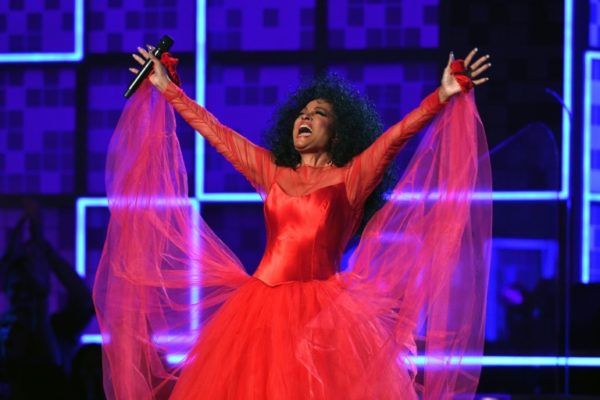
From humble beginnings in Detroit to global superstardom, Diana Ross’s life reads like a living chronicle of modern music history. Rising from a Motown hopeful to the shimmering lead of The Supremes and later a trailblazing solo artist, Ross redefined fame, fashion, and female power in entertainment.
Here are 50 fascinating facts tracing her extraordinary journey from chart-topping triumphs and cinematic acclaim to her indelible influence on generations of artists and fans alike.
1. Diana Ross was born on March 26, 1944, in Detroit, Michigan, and her birth certificate mistakenly listed her name as “Diana” instead of “Diane,” a name her family used until 1965.
2. As a child, Ross lived near Smokey Robinson in Detroit’s North End, and later traded her group’s guitarist Marv Tarplin to him in exchange for an audition opportunity with Motown.
3. At age 15, Ross joined the Primettes, the precursor to the Supremes, after being scouted by music manager Milton Jenkins through her connection to Paul Williams of the Primes.
4. Berry Gordy was so captivated by Ross’s voice while hearing her sing “There Goes My Baby” that he stopped in his tracks, but advised the young group to finish high school before signing with Motown.
5. Ross served as the Supremes’ hairstylist, makeup artist, seamstress, and costume designer in their early days, showcasing her fashion design aspirations from Cass Technical High School.
6. The Supremes’ name was chosen by Florence Ballard because it was the only option on a list that didn’t end in “ette,” despite Ross fearing it might be confused with a male group.
7. In late 1963, Berry Gordy personally selected Ross as the Supremes’ lead singer, propelling them from obscurity to their first hit, “When the Lovelight Starts Shining Through His Eyes.”
8. Between August 1964 and May 1967, the Supremes with Ross on lead scored 10 number-one U.S. singles, all also reaching the UK Top 40, making them Motown’s top act of the decade.
9. Ross began dominating media interviews for the Supremes, answering questions meant for her bandmates, which highlighted her growing star power early on.
10. In 1967, Florence Ballard’s firing from the Supremes due to personal struggles led Gordy to rename the group “Diana Ross & the Supremes” to capitalize on her fame and boost fees.
11. Ross suffered from anorexia nervosa due to the intense pressure from Gordy, collapsing onstage in Boston in 1967 from exhaustion and requiring hospitalization.
12. As a solo artist on Supremes specials like TCB and G.I.T. on Broadway, Ross began performing independently as early as 1968, paving the way for her 1970 departure.
13. Ross is credited with “discovering” the Jackson 5, though it was a publicity move by Motown; she introduced them on The Hollywood Palace, and their debut album was titled Diana Ross Presents The Jackson 5.
14. Michael Jackson viewed Ross as a mother figure and close friend; she embraced the role, mentoring him during his early career at Motown.
15. Ross’s final Supremes performance was on January 14, 1970, at the Frontier Hotel in Las Vegas, marking the end of an era with 12 number-one Hot 100 singles as the group’s lead.
16. Her debut solo single, “Ain’t No Mountain High Enough,” hit number one in 1970, earning her first Grammy nomination and establishing her as a solo force.
17. In the UK, Ross’s early solo career exploded with “I’m Still Waiting” becoming her first number-one there, followed by five top-20 singles in her first two years.
18. Ross’s portrayal of Billie Holiday in Lady Sings the Blues (1972) won her a Golden Globe and an Academy Award nomination, making her the first African-American actress nominated for a debut film role.
19. The Lady Sings the Blues soundtrack was Ross’s only solo album to top the Billboard 200, selling two million copies and staying at number one for two weeks.
20. In 1973, Ross became the first entertainer invited to Japan’s Imperial Palace for a private audience with Empress Nagako during her world tour.
21. Ross co-hosted the 1974 Academy Awards as the first African-American woman, alongside John Huston, Burt Reynolds, and David Niven.
22. For her 1975 film Mahogany, Ross designed the costumes herself, but production chaos led Berry Gordy to direct after firing the original director, with Ross even walking off set briefly.
23. Despite critical panning, Mahogany’s theme “Do You Know Where You’re Going To” became Ross’s third U.S. number-one single in 1976.
24. “Love Hangover” (1976) was Ross’s fourth solo number-one, innovatively shifting from mid-tempo soul to uptempo disco, showcasing her versatility.
25. Her 1976 Broadway stint at the Palace Theatre led to an Emmy-nominated TV special where she transformed into icons like Josephine Baker using special effects by Stan Winston.
26. Ross received a Special Tony Award in 1977 for her Broadway concert, a rare honor for a non-theater performer.
27. Convinced producers to cast her as Dorothy in The Wiz (1978), changing the script from schoolgirl to schoolteacher and pairing her with Michael Jackson as the Scarecrow.
28. The Ross-Jackson duet “Ease on Down the Road” from The Wiz earned a Grammy nomination, blending their voices in a magical on-screen partnership.
29. The Wiz was the most expensive film musical ever made at $24 million, but its box-office flop ($21 million) ended Ross’s major film career and hurt all-Black projects in Hollywood.
30. In 1979, Ross guest-hosted The Tonight Show with guests like Muhammad Ali, and her HBO special Standing Room Only featured her dramatically entering through a movie screen.
31. Her 1980 album Diana, produced by Nile Rodgers and Bernard Edwards of Chic, spawned two number-ones: “I’m Coming Out” (an LGBTQ+ anthem) and “Upside Down.”
32. “Endless Love” with Lionel Richie (1981) was Ross’ sixth and final solo number-one, tying her as the top female solo act on the Hot 100 at the time.
33. Ross left Motown after 20 years for a record-breaking $20 million RCA deal in 1981, the most expensive recording contract in music history, granting her full production control.
34. Michael Jackson wrote and produced “Muscles” for Ross’s 1982 album Silk Electric, a Top 10 Grammy-nominated hit that went gold.
35. In 1983, Ross’s free Central Park concert drew massive crowds but was halted by rain; she returned the next day and donated $250,000 for the Diana Ross Playground, opened in 1986.
36. Her 1984 duet “All of You” with Julio Iglesias became an international hit, appearing on both their albums.
37. “Missing You” (1984), a tribute to Marvin Gaye, was penned by Lionel Richie and became a Top 10 single after Gaye’s tragic death.
38. Ross‘ 1985 album Eaten Alive, produced by Barry Gibb, featured “Chain Reaction,” a number-one in the UK, Australia, and more, with videos inspired by horror films and Bandstand.
39. She sang on “We Are the World” (1985), the USA for Africa charity single that sold over 20 million copies worldwide.
40. In 1988, Ross returned to Motown as part-owner after advising Berry Gordy against selling the label, and was inducted into the Rock and Roll Hall of Fame with the Supremes.
41. “If We Hold on Together” from The Land Before Time (1988) topped charts in Japan and became an international hit.
42. Ross headlined the 1991 Royal Variety Performance before Queen Elizabeth II, her second such honor after 1968 with the Supremes.
43. Her 1993 TV film Out of Darkness earned a third Golden Globe nomination, reviving her acting acclaim.
44. One Woman: The Ultimate Collection (1994) sold quadruple platinum in the UK, topping charts as her career retrospective.
45. At the 1994 FIFA World Cup opening, Ross took a staged penalty kick meant to “knock down” the goalposts but infamously missed, becoming a viral moment.
46. Ross performed the Super Bowl XXX halftime show in 1996, solidifying her stadium-filling legacy.
47. In 1999, she was named the most successful female singer in UK chart history, a title later passed to Madonna.
48. At the 1999 MTV VMAs, Ross accidentally touched Lil’ Kim’s exposed breast in surprise, creating one of the night’s most shocking moments.
49. Ross reunited with Supremes members for the 2000 Return to Love Tour, but it was canceled due to low sales despite positive reviews, amid reported tensions.
50. In 2023, Ross became the first woman to win the Grammy Lifetime Achievement Award twice-once solo in 2012 and again with the Supremes, cementing her as a timeless icon and Michael Jackson’s enduring mentor and friend.
Comments