


Facts about the only real blue fruit ever found in nature

 Quick Read
"The blue quandong does something extraordinary. It produces no blue pigment at all. Instead, its glossy skin is built from ultra-thin layers of cellulose arranged like microscopic glass plates."
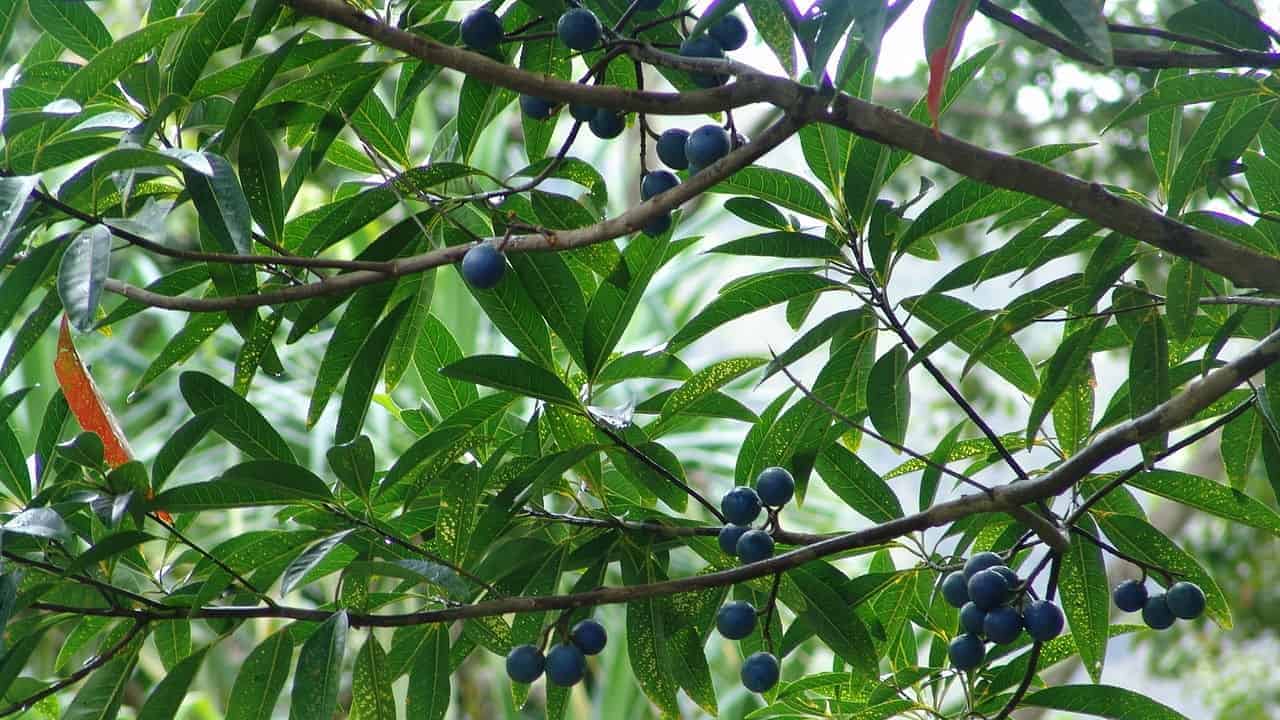
The only blue fruit found to be really blue is the blue quandong, a report published in India Today on Wednesday has revealed.
It added that other fruits such as blueberries, jamun, regarded to be blue aren’t truly blue.
Blue quandong’s vivid colour comes from structural light reflection, not pigment, making it one of nature’s rarest biological illusions, the medium says.
“Walk into any market and pick up a “blue” fruit — blueberries, jamun, even blue corn. Look closely and you’ll spot a truth botanists have been repeating for years: they aren’t really blue. They lean towards purple, indigo or deep violet. Nature almost never makes a perfect blue using pigment,” it notes.
Elaeocarpus angustifolius, popularly known as the blue quandong or blue marble tree, are said to be found across the rainforests of Australia, Papua New Guinea and Indonesia grows.
“Its fruit looks so impossibly bright — a shining metallic cobalt — that many assume the photos are edited. But the colour you see is exactly what the forest sees.
“The blue quandong does something extraordinary. It produces no blue pigment at all. Instead, its glossy skin is built from ultra-thin layers of cellulose arranged like microscopic glass plates.
“When white light hits these layers, only blue wavelengths bounce back. All other colours get cancelled out.
“This trick is called structural colouration — the same science behind a peacock feather’s shimmer or the wings of a morpho butterfly. But unlike animals that use special cells, this fruit creates the effect with layers of plant fibre and air pockets. In fact, it’s one of only six fruits in the world known to create colour this way,” the report asserts.
It is also found that when crushed, the fruit produces no blue colour at all — the material turns grey because the blue comes purely from its physical structure. Birds with strong blue and UV vision help spread its seeds, as the fruit remains vividly blue even on the forest floor.
Comments