


Oludayo Sofoluwe receives Dratech Engineering Leadership Excellence Award 2024

 Quick Read
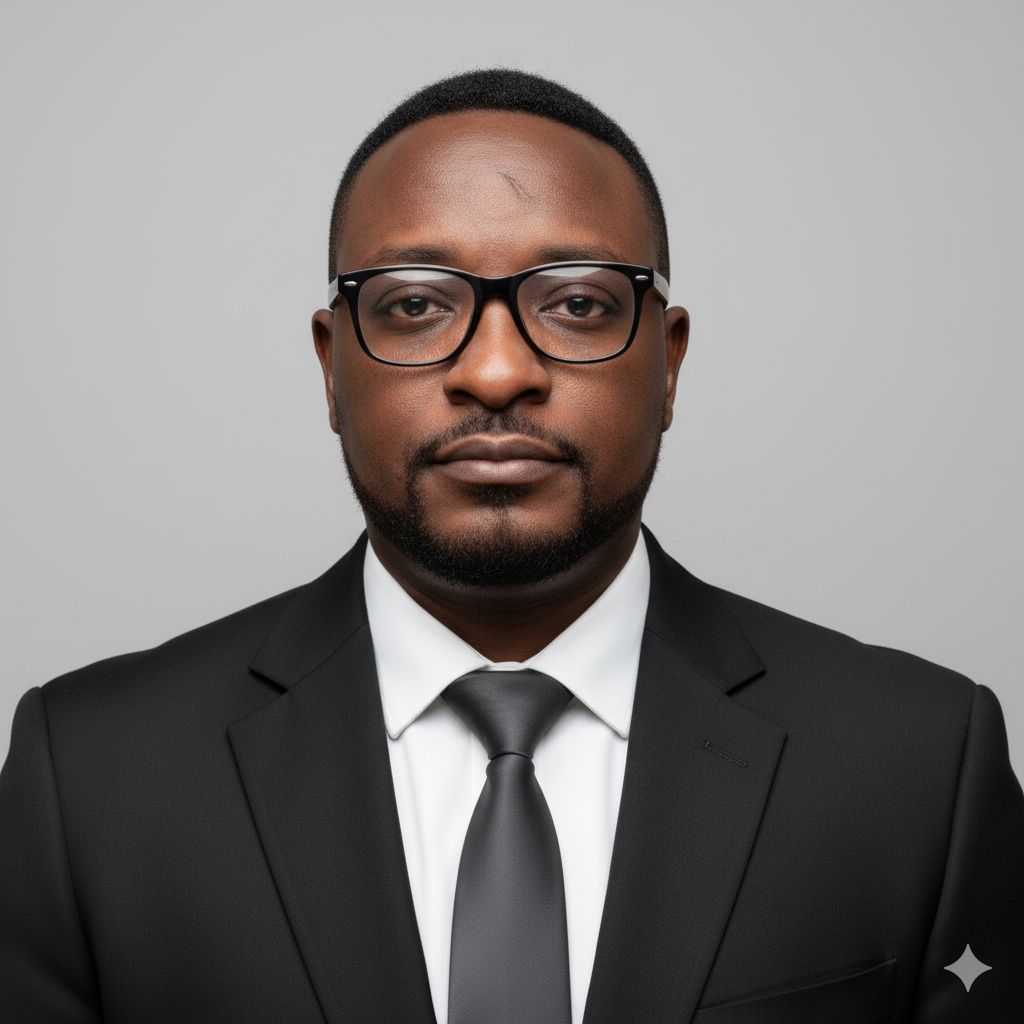
The Dratech International Conference closed on a confident note this evening as the organisers announced Mr. Oludayo Sofoluwe as one of the winners of the Dratech Engineering Leadership Excellence Award 2024, a category that recognises professionals who have shaped the reliability and safety of modern energy operations.
By Mfon Imeh
The Dratech International Conference closed on a confident note this evening as the organisers announced Mr. Oludayo Sofoluwe as one of the winners of the Dratech Engineering Leadership Excellence Award 2024, a category that recognises professionals who have shaped the reliability and safety of modern energy operations.
He was selected from 15 nominees and emerged among the top 10 recognised winners after meeting every judging criterion set for this year’s edition.
His name drew a warm response across the hall, partly because his career has been closely associated with the demanding world of offshore operations, and partly because colleagues in the sector understand the discipline required to keep deepwater systems functioning safely and efficiently. For a national audience following the announcements, his recognition helps spotlight the type of engineering leadership that often works quietly in the background but carries major influence on production stability and operational standards.
The award, confirmed moments after the final session of the conference, honours individuals who approach high stakes technical operations with clarity, steady judgment and a proven ability to guide teams through complex engineering work. In this context, Mr. Sofoluwe’s record stood out.
Mr. Oludayo Sofoluwe’s professional footprint spans more than two decades of work in offshore oil and gas, subsea systems and field operations. Over the years, he has developed a reputation for turning complicated engineering challenges into practical solutions that hold up under operational pressure. His work has touched multiple layers of the upstream system, from early field design to subsea maintenance and day to day technical support.
Much of his career has been shaped by his long association with TotalEnergies in Nigeria, where he has led teams responsible for subsea maintenance, life-of-field operations and special engineering projects. These are roles that require quiet consistency, strong coordination skills and the type of risk awareness that grows only through repeated exposure to offshore realities.
Within these assignments, he has overseen routine and emergency subsea interventions, contributed to urgent troubleshooting efforts and supervised work that has direct impact on production continuity. He has managed key service contracts, supported new and ongoing projects with technical guidance and helped refine operational methods that reduce operating costs, strengthen asset integrity and improve field reliability.
Those who have worked with him describe a professional who approaches each problem methodically, who respects the operational limits of subsea equipment and who insists on clarity when teams are dealing with critical interventions. In settings where small decisions can influence large outcomes, this type of leadership holds real value.
Long before becoming a familiar figure in subsea operations, Mr. Sofoluwe built his experience across a range of technical functions. As commissioning site leader for a major deepwater development, he coordinated the start-up of subsea production systems, aligned offshore and onshore teams around shared commissioning plans and ensured systems were brought online safely during a sensitive transition period.
The demands of that role required a balance of technical judgment, hands-on coordination and careful attention to operational risk.
Earlier, as a subsea support engineer, he provided technical assistance offshore, helping to troubleshoot equipment issues and support field decisions in real time. Before that, he worked as a facilities and petroleum engineer overseeing flow station upgrades, gas lift systems and production improvement initiatives. His time as a reservoir engineer exposed him to exploration, appraisal and development studies, strengthening his understanding of how reservoir behaviour shapes long term field performance.
He also spent part of his early career as a projects and facility engineer, where he handled well hook-ups, pipeline work and process facility installations from design to start-up. Those responsibilities gave him an end-to-end perspective on how fields are planned, built, brought online and eventually maintained.
This wide range of experience is uncommon, and it has shaped his ability to understand how individual engineering decisions fit into the broader life of a field. It has also allowed him to guide teams with a clear understanding of the constraints that shape offshore work.
Alongside his field experience, Mr. Sofoluwe has maintained a strong academic foundation. He holds a degree in Mechanical Engineering from the University of Ilorin, a discipline that prepares engineers for system design, structural thinking and steady problem solving. He later earned a master’s degree in Petroleum Engineering from Heriot Watt University in the United Kingdom, where he studied reservoir behaviour, production systems and the science that underpins field development planning.
His current pursuit of an Executive Master of Management in Energy at IFP School and BI Norwegian Business School reflects a recognition that the industry is entering a new era shaped by evolving policies, shifting market expectations and the wider energy transition. This programme is deepening his understanding of the strategies, business models and regulatory frameworks that will define the next phase of global energy production.
Taken together, his academic work supports his ability to operate confidently at the intersection of technical detail and strategic direction.
According to the judging committee, his selection was driven by one consistent theme: steady leadership in high stakes engineering environments. The committee noted that he has repeatedly guided complex subsea and deepwater projects from planning through execution, and that his decisions have helped maintain safe operations, protect assets and stabilise production systems.
The citation for his award highlighted several key contributions:
He approaches engineering challenges with clarity and discipline, allowing teams to work confidently even in difficult situations.
He has strengthened asset integrity through careful supervision of subsea maintenance and life-of-field operations.
He has refined operational processes to reduce downtime and improve predictability.
He has mentored younger engineers, helping them understand both the technical and human aspects of offshore work.
He has supported innovations that reduce operating costs and protect the long term health of offshore systems.
One example that strongly influenced the judges was his work as commissioning site leader for a major deepwater development. The committee noted that the success of this project required him to coordinate multidisciplinary teams, interpret technical requirements into workable field strategies and bring systems online safely during a critical transition period. The project was described as a defining moment that reflected the blend of judgment, communication and technical grounding that the award seeks to honour.
His win is significant for the wider engineering and energy community because it highlights a form of leadership that does not always receive public attention. Deepwater and subsea operations rely on people who can make steady decisions in environments where margins for error are slim. These decisions influence safety, production, asset longevity and the long term health of energy systems.
By selecting him as one of the top 10 winners from a highly competitive field of 15 nominees, Dratech International is sending a clear message about the qualities that matter as the energy industry evolves. These include technical competence, an understanding of operational realities, a commitment to building teams and a willingness to adapt to changing expectations around cost, efficiency and environmental responsibility.
Mr. Sofoluwe’s profile fits neatly within this framework.
As this year’s ceremony concludes and the sector begins to look ahead, his recognition serves as a reminder of the impact that careful, disciplined engineering leadership can have on complex systems. It also sets the tone for the next edition of the awards.
Dratech International has already indicated that the 2025 programme will open its nomination window later in the year. Engineers, technologists, researchers and innovators across the continent are encouraged to prepare their entries early and document work that demonstrates practical impact, operational value and a clear contribution to the future of the energy sector.
In celebrating Mr. Oludayo Sofoluwe’s achievement tonight, the industry is also looking forward to the next wave of leaders who will shape the coming decade.
Comments