



The messy war between Dangote and Farouk Ahmed

 Quick Read
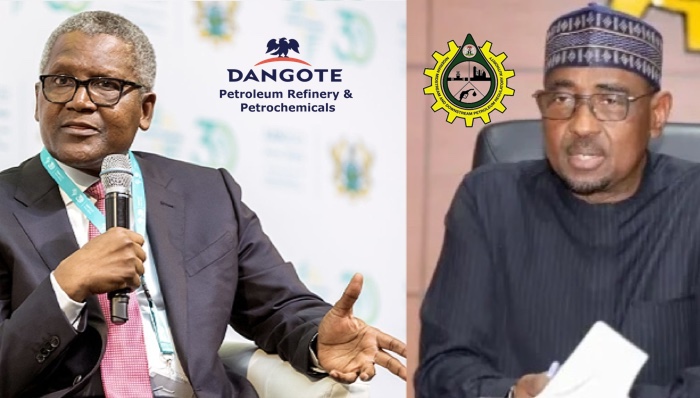
What began as sparring over product quality and regulatory oversight has metastasised into a full-blown public confrontation between Aliko Dangote, Africa’s most prominent industrialist and Engr. Farouk Ahmed, the chief executive of the Nigerian Midstream and Downstream Petroleum Regulatory Authority (NMDPRA).
By Kazeem Ugbodaga
What began as sparring over product quality and regulatory oversight has metastasised into a full-blown public confrontation between Aliko Dangote, Africa’s most prominent industrialist and Engr. Farouk Ahmed, the chief executive of the Nigerian Midstream and Downstream Petroleum Regulatory Authority (NMDPRA). The fight is about far more than personalities: it exposes fault lines in Nigeria’s energy politics, competing visions for industrialisation, and how power is played between private capital and the state.
The flashpoint is the Dangote Refinery, a $20-plus billion bet on Nigeria’s ability to end decades of fuel import dependency. From the start the refinery, touted as a national game-changer, has faced supply, licensing and political headaches. Regulators and rivals have questioned aspects of its operations; Dangote and his team have fired back, arguing those critiques are part of a campaign to protect importers and vested interests who profit from the old system. That tension created a combustible atmosphere for any regulator-business clash.
The present phase of the quarrel turned personal and public when Dangote accused Farouk Ahmed of “living beyond his means,” pointing to claims that the NMDPRA boss paid roughly $5 million for the schooling of four children in Switzerland and demanded an official probe into his conduct. The accusation is calibrated to do political damage: it paints the regulator as compromised and morally unfit to manage an industry where procurement, licences and access to crude can make or break refineries. The allegation has been widely reported and amplified across national media.
Farouk’s camp, and several civil society groups, have pushed back. Some NGOs and coalitions have publicly challenged the narrative that the regulator is corrupt, warning against “blackmail” and urging adherence to due process. That response suggests two things: first, Farouk has defenders embedded in the bureaucratic and civic establishment; second, public opinion on the row is contestable and being actively shaped by both sides. The dispute has therefore spilled beyond boardrooms and into the street of public sentiment and media.
Nigeria’s downstream regulation sits at the intersection of national security, revenue flows and everyday politics: petrol prices affect inflation, protests and government popularity. A hit on the NMDPRA’s credibility threatens regulatory stability at a time when the country is trying to make its refineries work, attract foreign capital, and assert a new industrial narrative. Conversely, a successful campaign to discredit the regulator could tilt policy towards import-friendly players and preserve rent streams for middlemen. For Dangote, the stakes are existential, he needs predictable policy, secure crude supply and the ability to sell products domestically without being undercut by cheaper imports
This confrontation blends courtroom threats, media offensives and civil society mobilisation. Dangote has waved the ethics and anti-corruption flag; Farouk’s allies have warned against witch-hunts. The public theatrics are useful to both: Dangote’s stature lends weight to a probe demand and mobilises newspapers and commentators; Farouk’s rebuttals and supportive CSOs muddy the waters and force calls for due process. Expect lawyers and parliamentary committees to become part of the next phase — both because the players can litigate and because politicians smell opportunity to pressure either side for patronage or advantage.
First, Nigeria still runs on networks-private, political and bureaucratic, that determine who gets access to crude, licences and import protections. Second, industrial champions like Dangote are no longer private actors who quietly seek market share; they are political actors with capacity to marshal public opinion and state scrutiny. Third, regulators occupy precarious positions: when they act independently, they invite accusations of bias from private operators; when they’re perceived as captured, they provoke corporate backlash. The result is institutional ambiguity that undermines the very goals both sides claim to pursue: energy self-sufficiency and transparent governance.
A few plausible outcomes stand out. The government could mount an investigation that clears or censors Farouk, either outcome shifts balances: a finding of misconduct would strengthen Dangote’s hand and could trigger administrative reshuffles; a clean bill of health would deepen the institutional stalemate and might lead Dangote to pursue legal redress or alternate political strategies. Another possibility is negotiated rapprochement: back-channel deals that ensure crude flows and operational stability in exchange for regulatory concessions. Whichever way it goes, the sector will be watching for regulatory independence, transparency of procurement, and whether reforms favour industrialisation or entrenched import interests
Track three things closely: official probes and their methodologies; parliamentary or judicial moves (summons, hearings, defamation suits); and market responses, whether importers change behaviour or whether Dangote refines and sells more product domestically. Media framing will matter too: who gets to set the narrative, a billionaire insisting on probity, or a regulator battling for legitimacy will shape public trust and investor confidence for months.
The feud between Dangote and Farouk Ahmed is messy because it sits at the meeting point of money, power, and national aspiration. It’s a cautionary tale about the risks of concentrating national industrial hopes in an environment where governance institutions, market incumbents and political actors still jockey for both economic rents and legitimacy. How Nigeria manages this particular dispute will signal whether its stated aim, to move from importer to industrial producer, is backed by clean, credible governance or by one more round of transactional politics.
Comments