


Fagbemi faults critics of S’ Court’s judgement on Rivers’ emergency rule

 Quick Read
The Supreme Court had on Monday ruled that a sitting president has the power to declare a state of emergency in any state of the federation in a bid to forestall breakdown of law and order or a descent into chaos or anarchy.
By Ebere Agozie
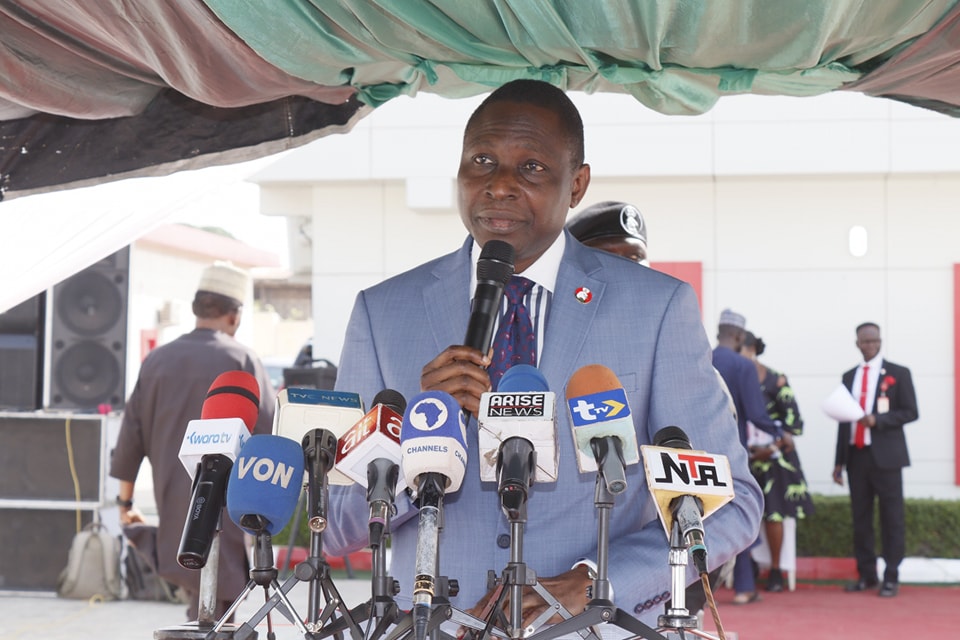
Contrary to claims of some critics, the Attorney-General of the Federation, Mr Lateef Fagbemi (SAN), has said decision by the Supreme Court, affirming the President’s power to declare emergency rule in any state of the federation is a further consolidation to Nigeria’s fledging democracy.
“The landmark judgment has further strengthened the nation’s jurisprudence and added another vital ingredient to consolidate its democracy,” Fagbemi said in a statement issued by Mr Kamarudeen Ogundele, his spokesperson on Tuesday
The attorney-general added that the judgement has cleared whatever doubt anyone might have had about the power of the President to declare a state of emergency.
Fagbemi therefore congratulated all parties in the matter as he claimed the judgment had helped to erase any doubt anyone might have had about the action of the president and the endorsement by the National Assembly.
He said: “Nigeria is for all and he assured Nigerians of the president Tinubu’s administration’s commitment to uphold the tenets of democracy and the Rule of Law at all times”.
The Supreme Court had on Monday ruled that a sitting president has the power to declare a state of emergency in any state of the federation in a bid to forestall breakdown of law and order or a descent into chaos or anarchy.
Justice Mohammed Idris in a split judgement ruled that Section 305 of the Constitution empowers the president to deploy extraordinary measures to restore normalcy where emergency rule is proclaimed.
The judgment was on the suit filed by Adamawa and 10 other Peoples Democratic Party-led states challenging the validity of the state of emergency declared by President Bola Tinubu in Rivers State, during which Gov. Siminalaye Fubara and elected state officials were suspended for six months.
In the split decision of six to one, the apex court held that the president, during an emergency rule, can suspend democratically elected officials, but insisted that such suspensions must be for a limited period of time.
It held that Section 305 is not specific on the nature of the extraordinary measures, thereby granting the president the discretion on how to go about it.
It had earlier upheld the preliminary objections raised by the two defendants, the Attorney General of the Federation, and the National Assembly, against the competence of the suit.
In upholding the objections, Idris held that the 11 PDP States failed to establish any cause of action capable of activating the original jurisdiction of the apex court.
Consequently, the Jurist struck out the suit for lack of requisite jurisdiction, and proceeded to also determine the case on the merits, and dismissed it.
But in a dissent opinion, Justice Obande Ogbuinya held that the case succeeded in part.
Ogbuinya stated among others, that although the president could declare a state of emergency, he cannot use such power as a tool to suspend elected state officials, including governors, deputy governors, and members of the parliament.
However, some critics, including the opposition Peoples Democratic Party have criticised the judgment as giving power to the President to sack elected government officials.
(NAN)
Comments