


Christmas without movement: How fear is redefining travel across Nigeria

 Quick Read
As Nigerians prepare for Christmas, the mood on the highways is no longer festive. Instead, it is marked by caution, prayer and tough choices, as insecurity, bad roads and economic strain redefine December travel across the country.
By Paul Dada, Michael Adesina, Oluwapelumi Oluwayemi and Jethro Ibileke
“I am supposed to travel to Osogbo, but I am scared because of the level of insecurity in the country,” Aisha Raheem, a Lagos-based trader, told a PM News reporter. When reminded that travelling within the South-West is generally considered safer, she said the threat appeared to be drawing closer.
Like Raheem, many residents of Nigeria’s South-West are growing increasingly anxious that recent bandit attacks in Kogi and Kwara states, both in the North-Central region, could signal a looming security spillover into the South-West, given the proximity of the two states.
While it is evident that Nigerian authorities have intensified efforts to tackle banditry, terrorism and related crimes following the recent surge in attacks on schools, places of worship and communities, fear of road travel is increasingly seen by many residents as a prudent response in the world’s most populous Black nation.
December Travel in Nigeria: Fear, Faith and Fractured Roads
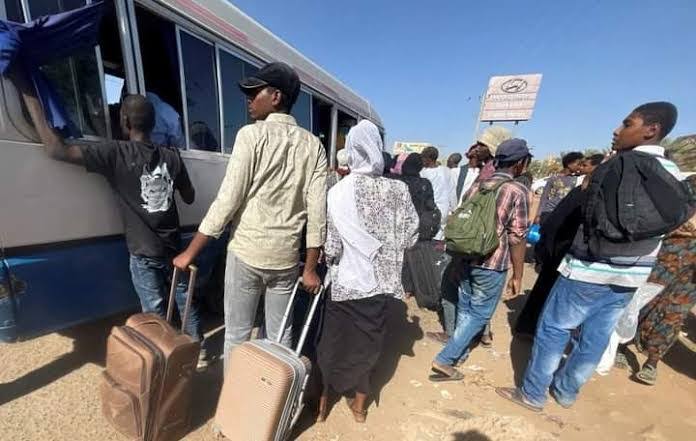
As Christmas approaches, Nigeria’s once-busy highways tell a different story. Fear, crumbling roads, prolonged security checks and worsening economic hardship are reshaping December travel, leaving bus parks unusually quiet and turning routine journeys into exhausting ordeals that now stretch across days.
Empty Parks, Longer Journeys
Findings by PM News at major transport hubs in Lagos reveal a sharp drop in passenger turnout, traditionally at its peak during the festive season. Operators say journeys that once took less than a day now extend into two days, as drivers increasingly avoid night travel and high‑risk corridors associated with kidnappings, robberies and failed road infrastructure.
Commercial drivers plying northern and eastern routes confirmed that insecurity is compounded by poor road conditions, which slow vehicles and expose them to attacks.
Musa, a long‑distance driver on the Lagos–Abuja route, explained that movement becomes difficult once vehicles leave the Lagos-Ibadan axis.
“From Lagos to Ibadan, the road is manageable. Once you enter Osun, the problems start,” he said, adding that sharp objects are sometimes placed on highways to puncture tyres and force vehicles to stop.
Another driver, Yakub, identified sections of Kogi State and the Ore–Benin corridor as major danger zones, especially at night. As a result, buses now frequently stop overnight to assess security conditions before continuing.
“Abuja has become a two‑day journey,” another driver said. “We stop and wait until it is safe to move.”
Checkpoints: Safety or Setback?
While security agencies maintain checkpoints along major highways, many travellers say the stops often increase delays rather than provide reassurance.
A passenger who recently travelled from Lagos to Akwa Ibom recounted repeated military and police checks that slowed the journey considerably.
“At almost every stop, the driver had to come down. Sometimes it took over an hour,” he said, noting that buses were occasionally detained over minor issues by road safety officials.
Ironically, drivers complain that security presence thins out at night, when protection is most needed.
“During the day, you will see officers everywhere, delaying us,” a Lagos–Abuja driver said anonymously. “But once night falls, the road is almost empty. I can drive for three hours without seeing any security operatives,” he lamented.
Another driver, Yusuf, corroborated the account, adding that although some checkpoints exist at night, they are far fewer than those seen in the afternoon. He urged the government to prioritise night patrols instead of daytime extortion.
Fear Shrinks Passenger Numbers
Transport operators across Lagos confirmed that insecurity and rising fares are discouraging travel.
“People are afraid, and many also don’t have the money. If you combine insecurity with high fares, people will stay back,” a transport manager said.
Some companies now advise passengers to limit phone use on certain routes, citing fears that criminal networks rely on informants posing as travellers.
Faith, Caution and the Human Cost
At TTC Tesom Transport Company in Ibadan, manager Mrs Monica said fear alone has never stopped Nigerians from travelling, but the numbers have dropped significantly.
“Staying at home does not exempt one from danger,” she said. “People travel based on belief and trust. We don’t know kidnappers; they can be your neighbour. You just need faith in God. People are travelling, but not as it used to be,” she added.
One of the company’s drivers, Mr Segun Bodunde, described the situation more bluntly.
“The road is bad. No safety, only God is our safety,” he said. He recalled a colleague abducted earlier this year near Nsukka who has not been heard from despite ransom payments.
“Because of the panic, people now have phobia for travelling..Even my family was advised not to travel together. Apart from Lagos-Ibadan, there is no secure road,” Bodunde added.
A businessman travelling to Ebonyi State expressed a contrasting view, insisting that faith gives him peace of mind and dismissing reports of danger as rumours.
Olusanjo’s Journey: Between Fear and Faith
For Victoria Olusanjo’s, the choice between flying and road travel was dictated by cost. A one‑way flight to Enugu was priced at ₦170,000, compared with ₦28,000 by road. Despite fears of bandit attacks, she chose the latter.
Before departure, passengers prayed loudly against attacks. The journey from Ibadan to Ijebu East was calm, but tension rose along the Benin–Ore road. Every checkpoint sharpened her anxiety.
By evening, as checkpoints thinned and officers relied on flashlights and traditional lamps, fear deepened. Relief only came when Enugu’s lights appeared around 9 p.m.
On her return trip, she encountered another ordeal along the Enugu–Onitsha Expressway, where police detained a bus over a television without a paper receipt. After nearly an hour, the matter was resolved only after a ₦5,000 bribe.
“When we finally approached Ibadan that night, I sighed deeply,” she recalled. “Victory at last.”
Her questions remain unanswered: Why is police presence scarce when it matters most? Why are checkpoints poorly equipped? And why does bribery persist on Nigerian highways?
Kidnapping Takes a New Turn in Edo
Beyond poor roads and checkpoints, a disturbing evolution of crime is intensifying travellers’ fears, the rise of locally driven kidnappings in Edo State.
In September 2025, Edwin (not his real name) was kidnapped while travelling along the Benin–Akure road. Though his abductors demanded ₦20 million, the ransom was negotiated down to ₦5 million and reportedly paid within Benin City, close to a police station.
While in captivity, Edwin was told that local collaborators provided information about his movement and even handled ransom collection. He later concluded that the description matched local internet fraudsters, popularly known as ‘Yahoo Boys’.
Further investigations and arrests by the Edo State Special Security Squad have reinforced fears that internet fraudsters are now deeply involved in kidnapping, sometimes buying victims from other criminal groups and inflating ransom demands.
Despite demolitions of properties linked to suspected kidnappers and increased security operations, residents say general insecurity has worsened, especially in Edo Central and North districts.
Night Travel and Vanishing Security
Travellers have also raised concerns about the near absence of security operatives on highways at night. Sandra, who travelled from Cross River State to Lagos, said checkpoints were frequent during the day across several states but almost disappeared once her journey entered Edo at night.
“You can imagine when we needed them most, they were not there,” she said. “This is one of the biggest threats commuters face this season,” she added.
A Season of Caution
Transport operators insist that poor infrastructure remains at the heart of the crisis.
“If roads are good, drivers won’t slow down and criminals won’t have the advantage,” a senior official said, recalling how last year’s government fare interventions eased festive travel.
As Nigerians prepare for Christmas, the mood on the highways is no longer festive. Instead, it is marked by caution, prayer and tough choices, as insecurity, bad roads and economic strain redefine December travel across the country.
Comments