


A critic review of Momoposh clothing’s Ewaade Collection: Where heritage becomes contemporary power

 Quick Read
In a global fashion ecosystem increasingly attentive to cultural authenticity and responsible storytelling, Momoposh Clothing’s Ewaade collection arrives with clarity of intent and quiet authority.
Dimeji Alara
In a global fashion ecosystem increasingly attentive to cultural authenticity and responsible storytelling, Momoposh Clothing’s Ewaade collection arrives with clarity of intent and quiet authority.
Rather than treating African aesthetics as surface-level inspiration, the brand positions heritage as both process and philosophy—an approach that places Ewaade within serious global conversations around cultural preservation, design integrity, and contemporary luxury.
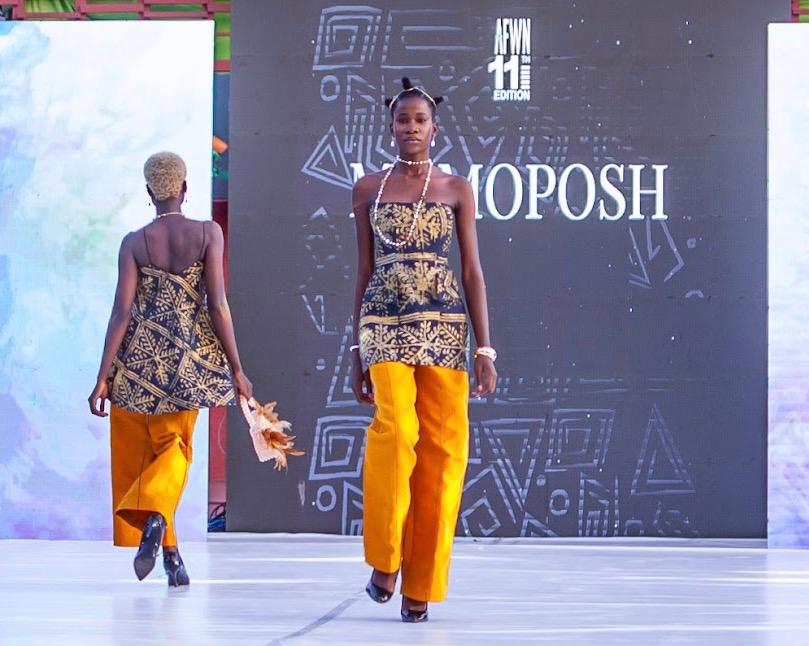
Translated as “Crowned in Beauty,” Ewaade is not merely a collection title but a conceptual framework. Rooted in Adire, one of West Africa’s most historically significant textile traditions, the collection reflects a commitment to safeguarding indigenous dyeing techniques while recontextualizing them for modern silhouettes and international wearability. The result is a body of work that resists nostalgia, choosing instead to reinterpret tradition as a living, evolving design language.
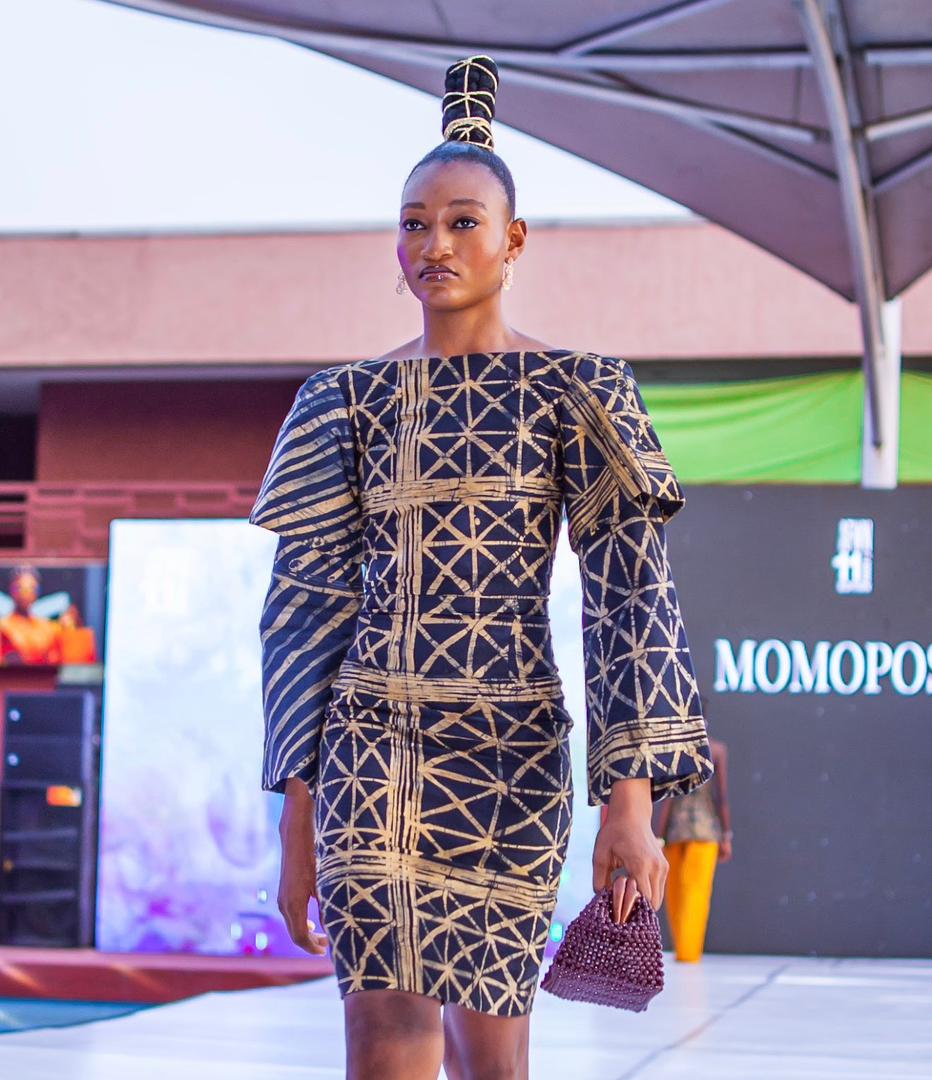
Visually, Ewaade is confident and deliberate. Deep indigos anchor the collection, supported by earthy tones that evoke land, lineage, and ritual. Symbolic motifs are applied with restraint, allowing meaning to emerge organically rather than theatrically. The silhouettes—graceful, structured, and contemporary—demonstrate Momoposh Clothing’s understanding of proportion and movement, ensuring the garments resonate beyond cultural borders without diluting their origins.
The collection’s presentation in partnership with Africa Fashion Week Nigeria (AFWN) further reinforces its global relevance. AFWN, as an internationally recognized platform for African creativity, offers a rigorous stage where craftsmanship, concept, and execution are scrutinized. Ewaade’s presence there signals not only cultural pride but also competitive readiness within global fashion circuits.
What distinguishes Momoposh Clothing in this collection is its refusal to separate luxury from legacy. Ewaade does not rely on spectacle or trend-driven excess; instead, it elevates African royalty as an internalized ethos—expressed through fabric, form, and narrative coherence. This measured confidence aligns the brand with a new generation of African designers who are shaping global fashion discourse on their own terms.
As a body of work, Ewaade sets a benchmark for Afrocentric fashion that is intellectually grounded, aesthetically refined, and globally adaptable. It positions Momoposh Clothing not simply as a cultural brand, but as a credible contributor to the future of fashion—one where tradition and innovation coexist without compromise.
Comments