


Why Lagos can no longer afford to treat Waste as Afterthought

 Quick Read
For a city as vast, dense and relentlessly dynamic as Lagos, waste is not just an environmental issue, it is a governance test. Every overflowing bin, clogged drainage channel and refuse-strewn road is a referendum on leadership.
By Kazeem Ugbodaga
For a city as vast, dense and relentlessly dynamic as Lagos, waste is not just an environmental issue, it is a governance test. Every overflowing bin, clogged drainage channel and refuse-strewn road is a referendum on leadership. That is why the Lagos State Government’s decision to procure 100 new CNG-powered compactor trucks next year, as part of a sweeping 10-year waste management development plan, deserves more than routine applause. It deserves serious public reflection.
At a recent media engagement in Alausa, the Managing Director of the Lagos Waste Management Authority, Muyiwa Gbadegesin, laid bare a truth many residents already know but few policymakers have openly acknowledged: Lagos cannot remain clean with improvisation. A megacity of over 20 million people requires scale, structure and stamina.
Waste, by its very nature, has weight and volume. You cannot live on top of it; it must be moved. Once that reality is accepted, waste management immediately reveals itself not just as a sanitation concern, but as a logistics challenge layered on top of scientific, environmental and behavioural considerations.
In Lagos, this challenge is amplified by both structure and behaviour. The city operates a Private Sector Participation (PSP) model with about 450 operators, while households are expected to pay monthly waste collection fees. These payments vary widely, from about ₦1,000 in some communities to ₦20,000 and above in places like Banana Island. In principle, the system is simple: residents pay for waste to be collected and disposed of safely.
In practice, however, compliance remains the weakest link.
The unspoken question many residents ask is blunt: Why should I pay someone to take my waste away? Why can’t I just dump it somewhere myself? This mindset, more than the absence of trucks or bins, sits at the heart of Lagos’ waste crisis.
From a social and behavioural science perspective, waste is one of the least emotionally engaging aspects of urban life. Most people do not think deeply about what they throw away, largely because they do not see waste as something with economic value. When something is perceived as useless, it is easily discarded, often irresponsibly.
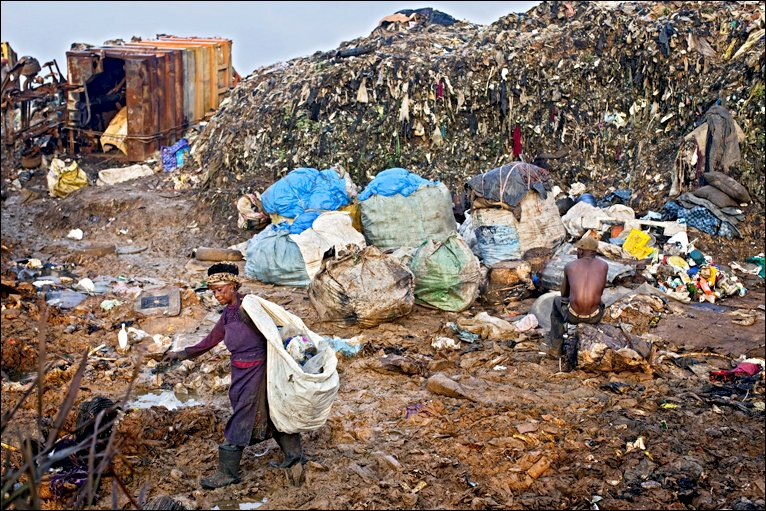
Ironically, long-term Lagos residents often display less appreciation of waste value than migrants from northern Nigeria or neighbouring countries. Across the city, an estimated 3,000 informal waste pickers earn a living collecting recyclable materials, quietly proving every day that waste is not rubbish, but raw material.
What Lagos urgently needs is not only more trucks, but a shift in perception. Waste is not useless. Plastics, beyond PET bottles, include HDPE and other polymers with ready markets locally and internationally. Paper and cardboard are valuable commodities; in some countries, recycled paper is more expensive than virgin paper. Metals tell an even stronger story.
In 1999, abandoned vehicles littered Lagos and much of the South-West. By the mid-2000s, scrap dealers, some reportedly from Asia, began collecting and smelting these materials. Today, scrap metal is so valuable that railings are stolen for resale. Aluminium cans are rarely discarded anymore; they are picked up almost instinctively because people know they are money.
This is what happens when value becomes visible: behaviour changes.
Against this backdrop, LAWMA’s projection that Lagos needs about 2,000 compactor trucks, 1,000 for daily operations and another 1,000 as backup, makes sobering sense. The plan to introduce 100 CNG trucks in 2026, followed by 200 to 250 trucks annually, signals rare long-term thinking in public service.
Equally important is the proposed statewide enumeration and automated billing system. Under this model, households will be formally captured, billed by the state, and PSP operators paid only after service delivery is confirmed. This directly tackles the trust deficit that has plagued waste management for years.
In the words of LAWMA MD, “Lagosians are not unwilling to pay for services; they are unwilling to pay for failure.”
The termination of 22 underperforming PSP operators IN 2025 is another signal that tolerance for inefficiency is wearing thin. Waste management is not charity work; it is a service with clear expectations. If operators fail, they must be replaced.
At the same time, the planned rollout of 500 mobile compactor tricycles by mid-2026 reflects an understanding of Lagos’ physical reality. Many communities are inaccessible to large trucks due to narrow roads and informal layouts. The pilot scheme in Ibeju-Lekki has shown that smaller, flexible solutions can work—and can even absorb cart pushers into structured, salaried employment. This is how sanitation policy becomes social policy.
The indiscriminate dumping of waste does more than dirty the city; it multiplies costs, damages ecosystems and punishes communities living near dump sites. One dumpsite located close to a major hospital and a school of nursing had to be shut down due to its impact on public health, even though this created short-term disposal challenges elsewhere.
This experience underscores a critical truth: waste must stop growing unchecked.
Lagos’ geography makes this non-negotiable. The state covers about 3,570 square kilometres, with roughly 22 per cent of its area covered by water. Even on dry land, groundwater is often encountered just five to ten metres below the surface. This high water table severely limits the feasibility of new landfill sites.
Sustainable waste management is therefore not aspirational, it is unavoidable.
About 90 per cent of what Lagosians throw away has economic value. Sorted at source, collected efficiently and channelled into existing recycling industries, waste becomes wealth. Experts estimate that Lagos’ waste economy could be worth up to $2.5 billion if properly harnessed. This is not theory. It is survival strategy.
LAWMA’s vision-cleaner trucks, smarter billing, stricter enforcement and a decisive shift towards recycling, offers Lagos a narrow but real path forward. But no policy can succeed without behavioural change. Government must deliver reliable service; citizens must comply; operators must perform.
Cleaning Lagos is no longer optional. It is a defining test of whether Africa’s largest city can match its ambition with discipline and whether it is finally ready to treat waste not as a burden, but as opportunity.
-Kazeem Ugbodaga, a Veteran Journalist writes from Lagos
Comments