



Restructuring not solution to Nigeria’s problems, says Jeyifo at 80


 Quick Read
Professor Biodun Jeyifo, renowned scholar, literary critic, public intellectual, Marxist and committed trade unionist, has criticised the manner in which successive Nigerian governments and political leaders promote restructuring as the panacea to the country’s deep political and economic challenges, arguing that it offers no real solution.
By Nehru Odeh
Professor Biodun Jeyifo, renowned scholar, literary critic, public intellectual, Marxist and committed trade unionist, has criticised the manner in which successive Nigerian governments and political leaders promote restructuring as the panacea to the country’s deep political and economic challenges, arguing that it offers no real solution.
According to him, what Nigeria urgently needs is not mere restructuring but the redistribution of wealth.
“What is superficially called restructuring, in my preferred Marxist term, is redistribution. They never talk about redistribution of wealth. You can restructure administratively on paper and still not redistribute wealth. So we must change that slogan. It’s not restructuring,” Jeyifo said.
Quoting William Shakespeare’s King Lear, he added: “Redistribution should undo excess and each man have enough.”
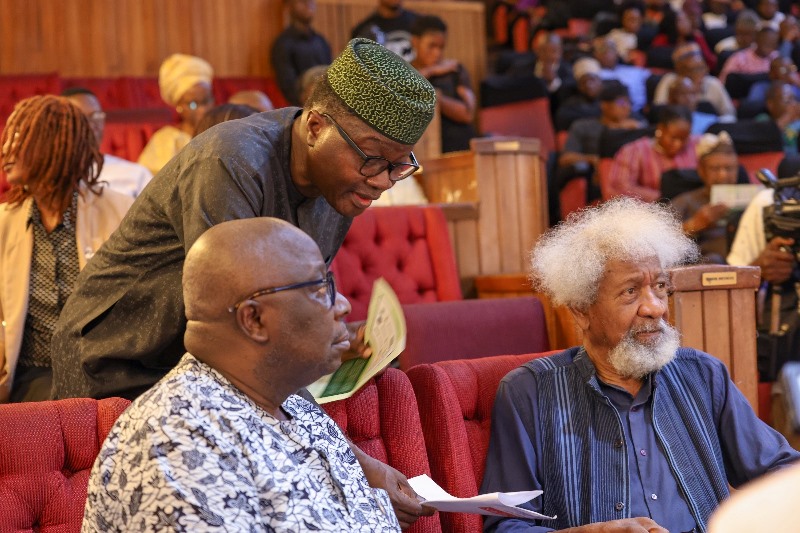
Jeyifo made the remarks while speaking at a symposium organised to mark his 80th birthday by the Wole Soyinka Centre for Investigative Journalism (WSCIJ), held at the MUSON Centre, Onikan, Lagos, on January 5.
The theme of the symposium, which brought together scholars, former students and activists to reflect on his life, intellectual contributions and political legacy, was “Pedagogy, Curriculum and Decolonisation: Then and Now.” Nobel Laureate Professor Wole Soyinka also graced the occasion.
Jeyifo lambasted Nigerian leaders for paying lip service to restructuring, describing it as a shallow administrative exercise incapable of addressing entrenched inequality.
“Restructuring without redistribution changes nothing,” he said, arguing that administrative reorganisation that fails to address how wealth and resources are shared merely reproduces colonial-era injustices under new political arrangements.
He supported his position by citing what he described as reversed statistics on life expectancy and poverty, which, he said, show that Nigeria has made little progress over the decades. He remarked that he was fortunate to reach the age of 80, as many of his contemporaries had not.
According to him, while life expectancy in Nigeria has increased only marginally, poverty levels have worsened significantly.
“In 1975, the year I returned to Nigeria after my postgraduate studies in the United States, life expectancy was roughly 45 years. Twenty years later, it had risen by only about 10 years to 54. Can you imagine? My generation is gone,” he said.
He also spoke personally about the losses in his family, noting that only two of his seven siblings survived, a reality he described as a damning indictment of Nigeria’s healthcare, education and social systems.
“I’m very lucky to make it to 80. There is a deep anguish and sadness in my life because I cannot begin to rehearse the names of people I loved and who loved me, people from primary school, secondary school and university. It feels as if they left only a week ago,” he said.
Jeyifo further highlighted the worsening poverty situation.
“In 1975, about 47 per cent of Nigerians lived in poverty. Today, it is about 62 per cent. That is a reversal of the other statistic,” he lamented, adding that young people account for the majority of those affected.
While expressing gratitude to former students and colleagues for the celebration, Jeyifo said the event was not only about him.
“I was extremely lucky to belong to a generation of intellectuals and human beings,” he said, naming colleagues such as Bala Usman, Claude Ake, Edwin Madunagu and his wife, Bene.
“I have been deeply moved by all the sessions. I have been lucky in my students; many became like younger brothers and sisters to me. The places I feel safest and most cherished are with my former students,” he said.

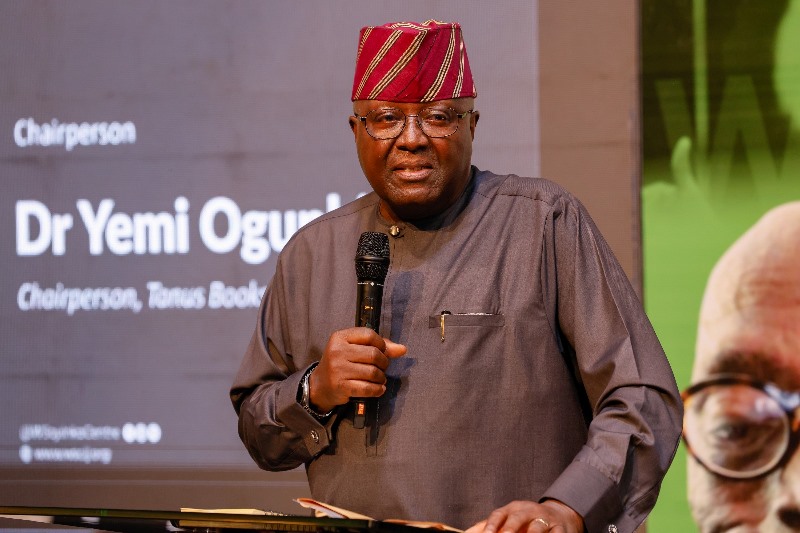
Delivering the keynote address, Professor Priyamvada Gopal of the University of Cambridge called for a renewed and expansive understanding of decolonisation, situating it within contemporary crises in the Global South and the ongoing genocide in Palestine.
She argued that decolonisation remains unfinished decades after political independence across Africa and Asia, as new forms of domination-nationalism, ethnicity, religion and racism, have emerged.
According to her, post-independence elites merely replaced colonial rulers while continuing to serve imperial interests.
“For nowhere in the world has decolonisation come to fruition. It was initiated and then diverted, hijacked or twisted into something else entirely,” Gopal said.
She warned against reducing decolonisation to national sovereignty alone, stressing its connection to economic justice, social transformation and resistance to exploitation.
Referencing the 1955 Bandung Conference and the 1956 Congress of Black Writers and Artists in Paris, she noted that thinkers such as Frantz Fanon and Aimé Césaire saw independence as a beginning rather than an endpoint.
Addressing Palestine, Gopal described Israel’s actions in Gaza as settler-colonial violence reaching what she called “a genocidal conjuncture,” questioning the muted response of Global South countries and blocs such as BRICS.
Former students, colleagues and activists paid glowing tributes to Jeyifo across several panel sessions.
They included Sam Omatseye, Dr Bisi Anyadike, Dr Ogaga Ifowodo, Kunle Ajibade and others, who described his teaching as intellectually rigorous and personally transformative.
They said his emphasis on close reading, critical thinking and linking literature to social realities left a lasting impact on their lives.
Human rights lawyer and Senior Advocate of Nigeria, Femi Falana, recalled Jeyifo’s role in protecting radical scholars and students during periods of military repression and praised his leadership within ASUU.
Earlier, WSCIJ Executive Director, Motunrayo Alaka, said the celebration recognised Jeyifo’s enduring influence on African literary studies and critical thought.
The event ended with the cutting of the birthday cake, closing an afternoon of tributes to a scholar whose work has profoundly shaped Nigerian and African intellectual life.
Comments