



Where are Nigerian referees?

 Quick Read
The poor recognition of Nigerian referees at the international level, is hugely bothershome. Reversing this trend is not impossible. But it requires gargantuan reforms. All hands must be on deck. And these hands inlcude those of the Nigerian Football Federation, the Nigerian Professional Footbal League and even the National Sports Commission.
By Paul Dada
On Saturday, the 10th of this month, when the Super Eagles of Nigeria clash in a titanic quarter-final battle with the Desert Foxes of Algeria, the match will be officiated by centre referee Omar Artan from Somalia.
Unlike Nigeria, Somalia is a Liliputian in African football. By any measure, Nigeria is a heavyweight in African football. The Super Eagles are perennial contenders at the Africa Cup of Nations.
Apart from that, Nigerian clubs have rich continental histories. The country also exports players to top leagues around the world. Yet, glaringly absent from this influence is one critical component of the game: refereeing.
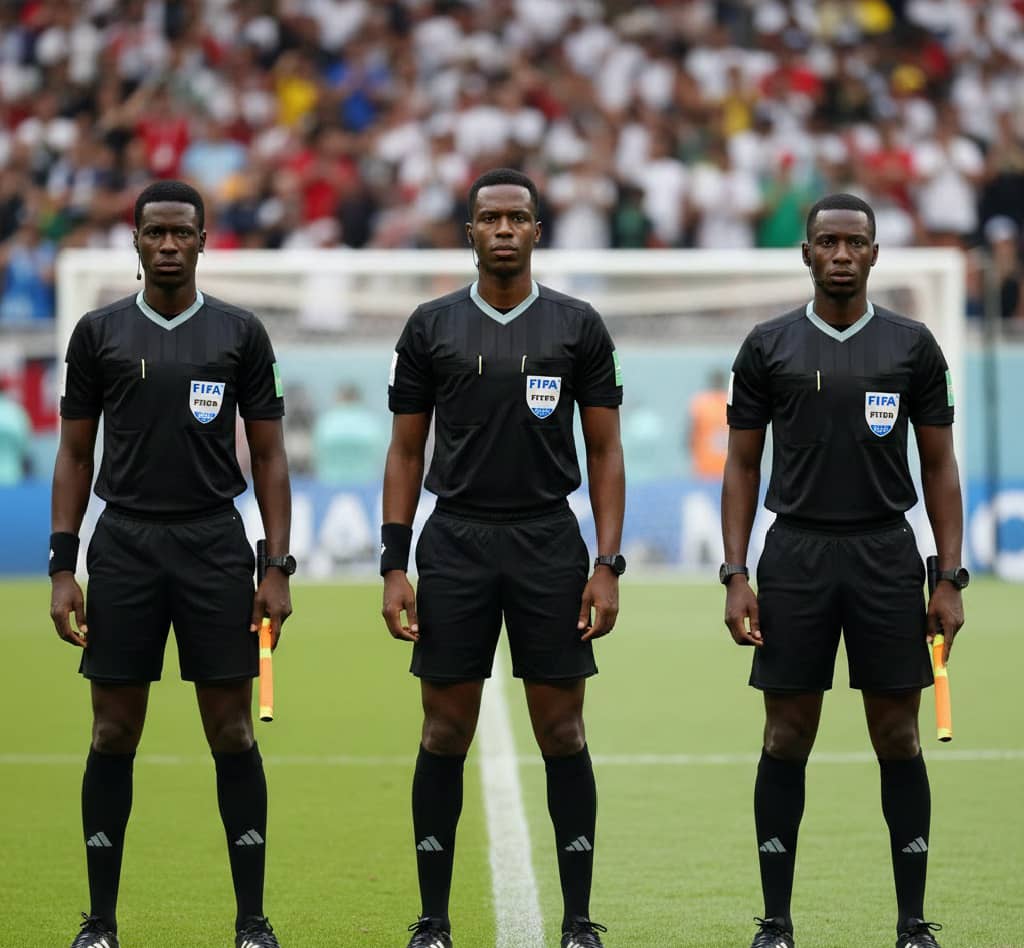
It is disturbing fact; at major tournaments such as the Africa Cup of Nations (AFCON) and the FIFA World Cup, Nigerian referees are rarely seen in the middle of the pitch. They are also rarely seen, if ever, as serving assistant referees. This absence has become so pronounced that it now raises uncomfortable questions: why has Africa’s most populous nation, with one of its most vibrant football cultures, failed to produce referees trusted at the highest level of the game?
This problem is multi-layered as the answer does not not in a single factor. It is caused by a variety of factors which include stuctural weaknesses, historical setbacks and evolving standards that Nigeria has struggled to meet.
Officiating at AFCON or the World Cup is not an entitlement. It is a privilege earned through a manifestly competitive process. CAF and FIFA select referees based on performance metrics, fitness tests, integrity records, VAR competence and sustained excellence in high-pressure matches.
Across Africa, countries such as Egypt, Morocco, Algeria, Senegal and South Africa have mastered this system. Their referees consistently officiate CAF Champions League and Confederation Cup matches, especially in the latter stages where scrutiny is highest. These assignments boost their rankings, visibility and trustworthiness.
Nigeria, on its part, has struggled to keep referees on CAF’s elite list long enough to benefit from this exposure.
Like politicians from this country, Nigerian referees are faced with the damging obstacle of negative perception by others. This perception is ostensibly largely shaped by the past.
It is belived that over the years, a handful of Nigerian officials were involved in controversial decisions and integrity-related incidents at both domestic and international levels. While these cases may not have represented the entire refereeing community, their impact was far-reaching. In elite officiating circles, trust once lost is painfully slow to regain.
CAF, perhaps, elects to err on the side of caution by sidelining referees from countries perceived as vulnerable to pressure, controversy or inconsistency are often quietly sidelined, even in the absence of formal sanctions.
But the worst problem is perhaps Nigeria’s domestic refereeing structure.
It is no secret that the Nigeria Professional Football League (NPFL) has long battled issues of poor funding, crowd hostility, inconsistent officiating standards and limited use of technology. In such an environment, developing world-class referees becomes extremely difficult.
Nigerian referees also have limited exposure to continental Club Football, CAF places enormous weight on performance in continental club competitions. Referees who handle knockout matches in the CAF Champions League are seen as battle-tested and reliable.
But Nigerian referees, are rarely appointed beyond the early rounds of these competitions. This lack of exposure creates a vicious cycle: without big matches, referees cannot prove themselves; without proven referees, appointments remain limited.
Modern football has evolved rapidly, and officiating has evolved with it. VAR, communication systems, positioning analytics and data-driven performance reviews are non-negotiable features at major tournaments.
Some African countries, Nigeria not included, invested early in VAR training and simulation. As a result, Nigerian referees seem to have lagged behind peers in VAR familiarity. This would be a critical disadvantage in CAF and FIFA selections.
Politics and Administrative Influence
While merit remains central, football administration in Africa is never entirely apolitical. National federations that are stable, influential and strategically positioned within CAF structures are better able to advocate for their referees.
Nigeria’s football administration has been marked by frequent leadership changes, internal disputes and governance crises. These instabilities weaken the country’s voice within CAF and reduce its ability to push referees into elite consideration.
The poor recognition of Nigerian referees at the international level, is hugely bothersome. Reversing this trend is not impossible. But it requires gargantuan reforms. All hands must be on deck. And these hands include those of the Nigerian Football Federation, the Nigerian Professional Football League and even the National Sports Commission.
Comments