



From Raids to Shootings: How ICE’s brutality is tearing America apart

 Quick Read
For years, the United States Immigration and Customs Enforcement (ICE) has occupied a central and increasingly controversial role in U.S. immigration policy.
By Kazeem Ugbodaga
For years, the United States Immigration and Customs Enforcement (ICE) has occupied a central and increasingly controversial role in U.S. immigration policy. Originally founded after the 2001 terror attacks to focus on immigration and customs enforcement, ICE has evolved under successive administrations into a powerful, heavily funded agency whose actions have drawn sharp criticism for rights abuses, aggressive policing, and deadly force, often against people with no criminal history. Recent events highlight both long-standing structural issues and an alarming escalation in violence that has intensified public scrutiny and civil unrest.
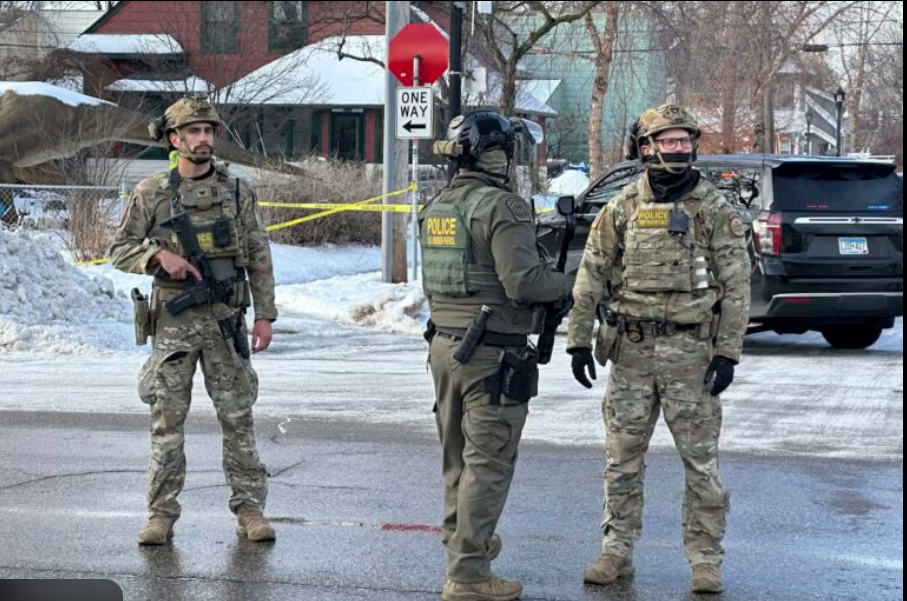
At the heart of the controversy is a deadly incident in Minneapolis on 7 January 2026, when an ICE agent shot and killed Renée Nicole Macklin Good, a 37-year-old woman, during a large-scale enforcement operation. Good, a U.S. citizen, was in her vehicle when federal agents confronted her; video footage analysed by multiple news outlets suggests she was manoeuvring away from officers when she was shot through her windshield.
Federal officials have described the encounter as self-defense, claiming Good attempted to weaponise her vehicle against agents, a narrative strongly rejected by city leaders and bystanders. Mayor Jacob Frey denounced the federal account as “garbage” and called for accountability, while family members and local residents portrayed Good as a peaceful community member who posed no imminent threat at the time of the shooting.
The Minneapolis killing did not occur in isolation. Data tracked by independent organisations show at least 14 shooting incidents involving ICE and federal immigration agents during President Donald Trump’s intensified immigration enforcement campaign, resulting in several fatalities and multiple injuries. These include earlier fatal shootings such as the 2025 killing of Silverio Villegas González in a Chicago suburb, where an ICE agent fired at him during a vehicle stop despite questions about whether the threat warranted lethal force.
Days after the Minneapolis shooting, another encounter off the West Coast stoked further alarm. In Portland, Oregon, federal immigration agents were involved in a vehicle-related shooting that wounded a man and a woman during what authorities said was a targeted stop; local officials and civil liberties advocates responded with scepticism and calls for investigations into whether the use of force was justified.
These episodes form part of a broader pattern of militarised federal enforcement. Civil-rights groups argue that raids, arrests, and aggressive tactics have contributed to a climate of fear in immigrant communities nationwide. Beyond shootings, reports from advocacy organisations and legal networks document physical abuse, sexual mistreatment, and inhumane conditions in detention facilities, including at the sprawling Fort Bliss site in Texas, the largest immigration detention campus in the U.S., where detainees have alleged beatings and sexual violence by staff.
Detention conditions themselves are another major source of contention. Prisoners’ advocates say overcrowding, poor medical care and long confinement periods are routine, with 2025 becoming the deadliest year for detainees in decades as at least 32 deaths in custody were recorded nationwide. Many deaths occurred alongside complaints of delayed medical attention or preventable health crises — a pattern Amnesty International and immigrant rights organisations link to systemic neglect and flawed oversight.
Part of the problem, experts say, stems from structural deficits in monitoring and accountability. ICE’s internal inspection systems, critics argue, lack real independence and often fail to produce meaningful consequences when violations are documented, especially in privately operated detention facilities where contractors can profit from lax standards and large populations of detainees.
The political fallout has been significant. In Minneapolis, the Good shooting sparked widespread protests, with demonstrators clashing with federal agents and calling for the withdrawal of ICE from city streets. Faith leaders, civil rights groups, and local officials condemned what they describe as state-sanctioned brutality and an expansion of federal power at the expense of community safety.
Advocacy organisations such as the American Civil Liberties Union (ACLU) have called for urgent reform, asserting that ICE’s actions endanger both immigrants and broader communities by normalising heavy-handed enforcement and undermining trust in law enforcement overall. In Minnesota, for example, the ACLU argued that the fatal shooting of Good was the predictable outcome of an agency “out of control,” urging federal withdrawal and legal accountability.
Supporters of ICE counter that the agency plays a crucial role in removing dangerous offenders and enforcing immigration laws. Homeland Security officials have defended recent operations as necessary to counter criminal networks and maintain public safety, particularly during what they describe as surges in illegal border crossings and violent crime linked to transnational groups.
But for critics, the data and recent events paint a stark picture: a law enforcement apparatus that has crossed lines into brutality, disproportionately affected vulnerable communities, and resisted meaningful transparency.
Comments