



Car scams on the rise: 5 verified car websites safe for Nigerians in 2026

 Quick Read
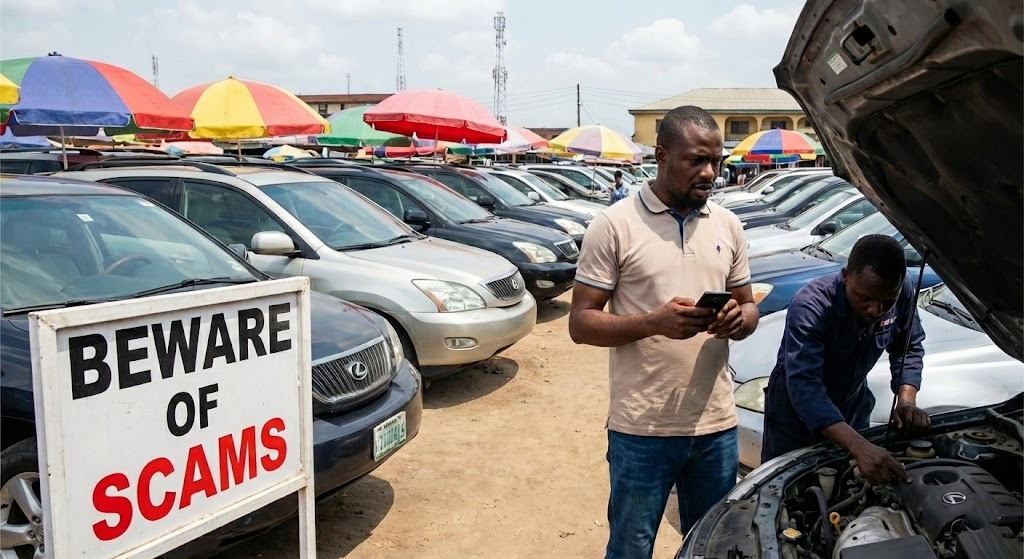
If you are in the market for a car in 2026, you might want to hold onto your wallet a little tighter. Investigations show that as the cost of "Tokunbo" (foreign used) and Nigerian-used vehicles soars, a new wave of sophisticated scams is sweeping across the country.
If you are in the market for a car in 2026, you might want to hold onto your wallet a little tighter. Investigations show that as the cost of “Tokunbo” (foreign used) and Nigerian-used vehicles soars, a new wave of sophisticated scams is sweeping across the country.
From refurbished “accidented” vehicles sold as “clean title” in Lagos to fake customs papers circulating in Abuja, unsuspecting buyers are losing millions daily. The days of simply walking into a roadside car stand and trusting the dealer are effectively over.
However, amidst this rising tide of fraud, technology is offering a lifeline. A handful of verified platforms have emerged as safe havens, using digital tracking, rigorous inspections, and transparent financing to protect buyers.
Based on market data and consumer reliability scores, here are the top 5 verified websites Nigerians can trust in 2026 to avoid stories that touch.
1. Carlots.ng: The New Consumer Favorite
Verdict: Best for variety and fraud protection.
In a market vacuum left by the closure of older giants like Naijauto, Carlots.ng has risen rapidly to become the most trusted aggregator in the country. For the average Nigerian buyer, this platform addresses the biggest fear: hidden history.
Unlike open marketplaces where anyone can post a car, Carlots.ng has integrated what industry watchers call a “Transparency Engine.” This system flags vehicles with questionable histories—such as flood damage or salvage titles from the USA—before a buyer even makes a call.
Key features driving its popularity in 2026 include:
The Verification Badge: Sellers must pass strict checks to be listed.
Price Transparency: It prevents the “dealer markup” games common in Berger and Festac, allowing buyers to see the true market value.
Financing: Through partnerships with fintechs, they offer “Drive Now, Pay Later” options that are actually accessible to salary earners.
2. Autochek: The Financing Heavyweight
Verdict: Best for installment payments.
Autochek continues to dominate the corporate and financing space. If you are a salary earner who cannot afford to drop N12 million in bulk, this is your safest route.
Their model operates less like a car lot and more like a bank. Every car listed on Autochek has undergone a 150+ point inspection. Their engineers check the engine health, transmission, and bodywork, giving you a report that is often more reliable than your mechanic’s word.
Safety Net: Because they handle the financing and paperwork, the risk of buying a stolen car or one with fake custom papers is virtually zero.
3. Cars45 (Jiji Verified): The “Swap” King
Verdict: Best for trading in old vehicles.
While Jiji remains an open marketplace that requires caution, its integrated Cars45 section remains a fortress of safety. They have perfected the art of the “swap.”
For Nigerians looking to upgrade, Cars45 offers a structured, safe environment. You drive your old car in, get it graded (A to E), and use that value to purchase a verified upgrade. Their grading system is brutally honest—if a car needs work, they will tell you. This honesty is a rare commodity in the current market.
4. Carloha Nigeria: The “Tear Rubber” Alternative
Verdict: Best for warranty and peace of mind.
Carloha is targeting the premium buyer who is tired of mechanic workshops. They specialize in Certified Pre-Owned (CPO) vehicles.
In a move that challenges the standard Nigerian practice of “sold as is,” Carloha offers limited warranties on engines and transmissions for specific periods. When you buy a Toyota or Lexus here, it has been refurbished to meet near-factory standards. It is the closest thing to buying a brand-new car without paying brand-new prices.
5. Affordable Cars Ltd: The Corporate Choice
Verdict: Best for luxury and business fleets.
With the exit of players like Betacar, Affordable Cars has consolidated its position as the go-to for high-end, reliable purchases. They are not an online marketplace in the traditional sense; they are a verified dealership with a massive digital inventory.
For buyers who want to avoid the “online” risk entirely, Affordable Cars offers a physical guarantee. Their inventory is physically present, papers are original, and their after-sales support is rated highly among corporate clients in Lagos.
“Shine Your Eye”: How Scammers Are Operating in 2026
Even with these trusted platforms, our investigations reveal three major red flags every buyer must watch for this year:
1. The “Customs Auction” Trap Scammers are creating fake websites and WhatsApp groups claiming to sell “Customs Auction” cars at ridiculous prices (e.g., a 2020 Camry for N2 million).
Fact: The Nigeria Customs Service does not sell cars via WhatsApp or direct bank transfer to personal accounts.
2. The “Remote Location” Trick A seller claims the car is in a different state (e.g., “The car is in Osogbo, pay for delivery to Lagos”).
Advice: Never pay a dime for a car you have not physically inspected and test-driven.
3. The VIN Switch Dealers show you a clean report for a different car, then sell you a damaged one.
Action: Always check the VIN (Vehicle Identification Number) on the dashboard yourself and run it through an independent checker.
Conclusion
The rising cost of vehicles has made the market attractive for fraudsters, but it has also forced legitimate businesses to step up.
In 2026, the safest way to buy a car is to avoid the “too good to be true” roadside deals and stick to verified platforms like Carlots.ng and Autochek. It is better to pay a premium for a verified car today than to buy a liability that will spend more time in the mechanic’s workshop than on the road.
Comments