



Iran warns ‘finger on trigger’ as Trump says Tehran wants talks

 Quick Read
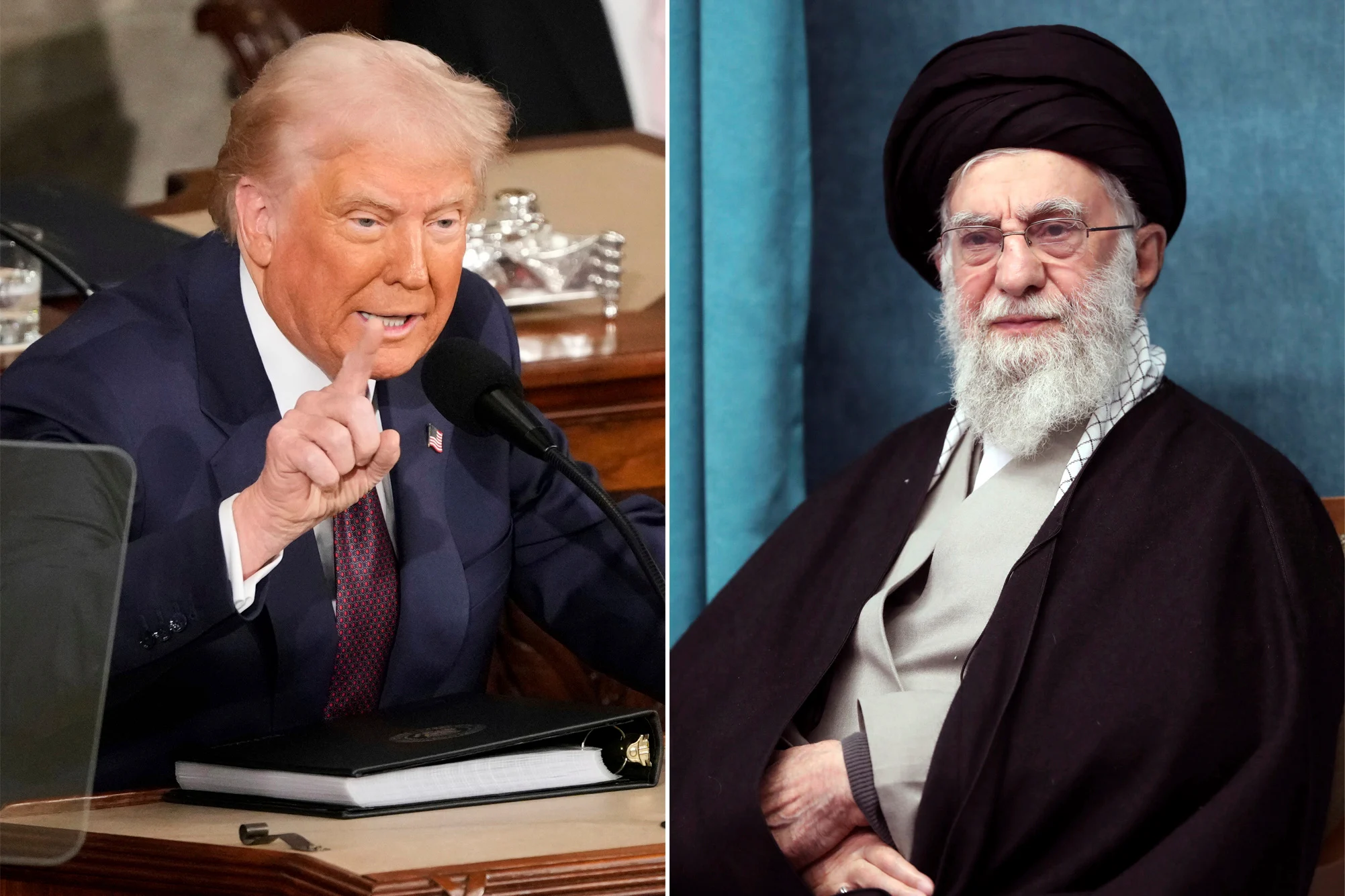
Iran’s Revolutionary Guard Corps (IRGC) has warned the United States and Israel against any miscalculation, saying it has its “finger on the trigger,” even as U.S. President Donald Trump said Tehran still appeared open to dialogue.
Iran’s Revolutionary Guard Corps (IRGC) has warned the United States and Israel against any miscalculation, saying it has its “finger on the trigger,” even as U.S. President Donald Trump said Tehran still appeared open to dialogue.
The warning came on Thursday amid lingering tensions following mass protests that recently rocked Iran and after Washington backed Israel during a 12-day conflict in June that targeted Iran’s nuclear and ballistic missile programmes.
Speaking at the World Economic Forum in Davos, Trump said the United States struck Iranian uranium enrichment facilities last year to prevent Tehran from developing nuclear weapons.
“We can’t let that happen,” Trump said, adding that Iran was still willing to engage in talks. “Iran does want to talk, and we’ll talk.”
Despite the rhetoric, the prospect of immediate U.S. military action appears to have eased in recent days, with both sides signalling a willingness to give diplomacy a chance, even as U.S. media reports suggest Trump is still weighing his options.
Iran was recently shaken by nearly two weeks of nationwide protests that began in late December. While the demonstrations have subsided following a heavy security crackdown, activists say thousands were killed and the unrest was accompanied by an unprecedented internet shutdown.
In a statement carried by Iranian state television to mark the national day celebrating the Revolutionary Guards, IRGC commander General Mohammad Pakpour warned Washington and Tel Aviv to learn from the recent conflict.
“The Islamic Revolutionary Guard Corps and dear Iran have their finger on the trigger, more prepared than ever, ready to carry out the orders of the supreme commander-in-chief,” Pakpour said, referring to Supreme Leader Ayatollah Ali Khamenei.
He cautioned the United States and Israel to avoid actions that could lead to what he described as a “more painful and regrettable fate.”
Another senior Iranian military official, General Ali Abdollahi Aliabadi, who heads Iran’s joint command headquarters, said any U.S. attack would make American interests legitimate targets.
“All U.S. interests, bases and centres of influence will be legitimate targets for the Iranian armed forces,” he warned.
Meanwhile, Iran’s Foreign Minister, Abbas Araghchi, in an opinion article published in The Wall Street Journal, said Iran would respond decisively if attacked but reiterated that Tehran remained open to “real and serious negotiations.”
Iranian authorities on Wednesday released their first official death toll from the protests, saying 3,117 people were killed. Of that number, the government claimed 2,427 were “martyrs,” describing them as members of security forces or civilians, while others were labelled “rioters.”
Rights groups, however, dispute the figures, alleging that security forces opened fire on protesters and that the actual death toll could be significantly higher, possibly exceeding 20,000. Verification has been difficult due to the prolonged nationwide internet shutdown, which monitoring group Netblocks described as the activation of Iran’s “national kill-switch.”
Also speaking at the Davos forum, Israeli President Isaac Herzog said Iran’s current leadership was vulnerable, adding that the country’s future could only come through regime change.
“The Ayatollah regime is in quite a fragile situation,” Herzog said.
Comments