



2027: Why Nigeria isn’t ready for real-time electronic election results – Senate Leader

 Quick Read
Opeyemi Bamidele, the Senate Leader, has said Nigeria currently lacks the technical and power infrastructure needed to sustain compulsory real-time electronic transmission of election results across the country.
Opeyemi Bamidele, the Senate Leader, has said Nigeria currently lacks the technical and power infrastructure needed to sustain compulsory real-time electronic transmission of election results across the country.
In a statement released on Sunday by his directorate of media and public affairs, Bamidele said evidence available to the National Assembly shows that a nationwide real-time upload of results cannot be guaranteed under present conditions.
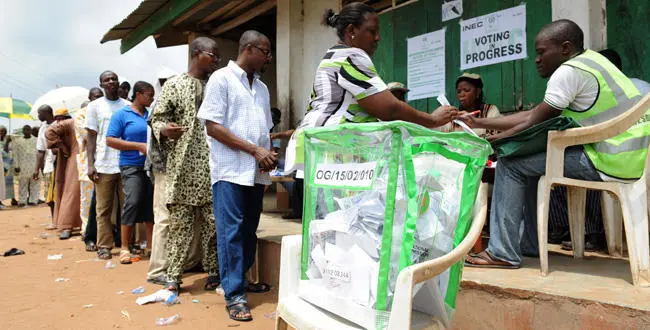
His comments followed the Senate’s review of clause 60(3) of the Electoral Bill, 2026, which mandates that presiding officers transmit polling unit results electronically to the Independent National Electoral Commission (INEC) portal in real time.
While acknowledging the benefits of digital innovation in elections, Bamidele said the legislature resolved to retain electronic transmission of results, but with an alternative arrangement when internet services fail. Under the revised position, Form EC8A will serve as the primary document for collation whenever electronic transmission is not possible.
“The initiative is one that any legislature globally would ordinarily embrace,” Bamidele said, “but our current infrastructure makes its mandatory application difficult.”
Citing data from the Nigerian Communications Commission (NCC), he revealed that broadband coverage in Nigeria stood at 70 per cent in 2025, while internet penetration covered only 44.53 per cent of the population. The Speedtest Global Index ranked Nigeria 85th among 105 countries for mobile network reliability and 129th out of 150 for fixed broadband reliability. Mobile networks averaged just 44.14 Mbps — far below UAE’s 691.76 Mbps and Qatar’s 573.53 Mbps — while fixed broadband averaged only 33.32 Mbps.
Bamidele also flagged electricity supply as a major obstacle, noting that roughly 85 million Nigerians (43 per cent of the population) remain without access to grid power.
Comments