


The Weight of Waiting: A Meditation on Hope, Masculinity, and the Tyranny of Time

 Quick Read
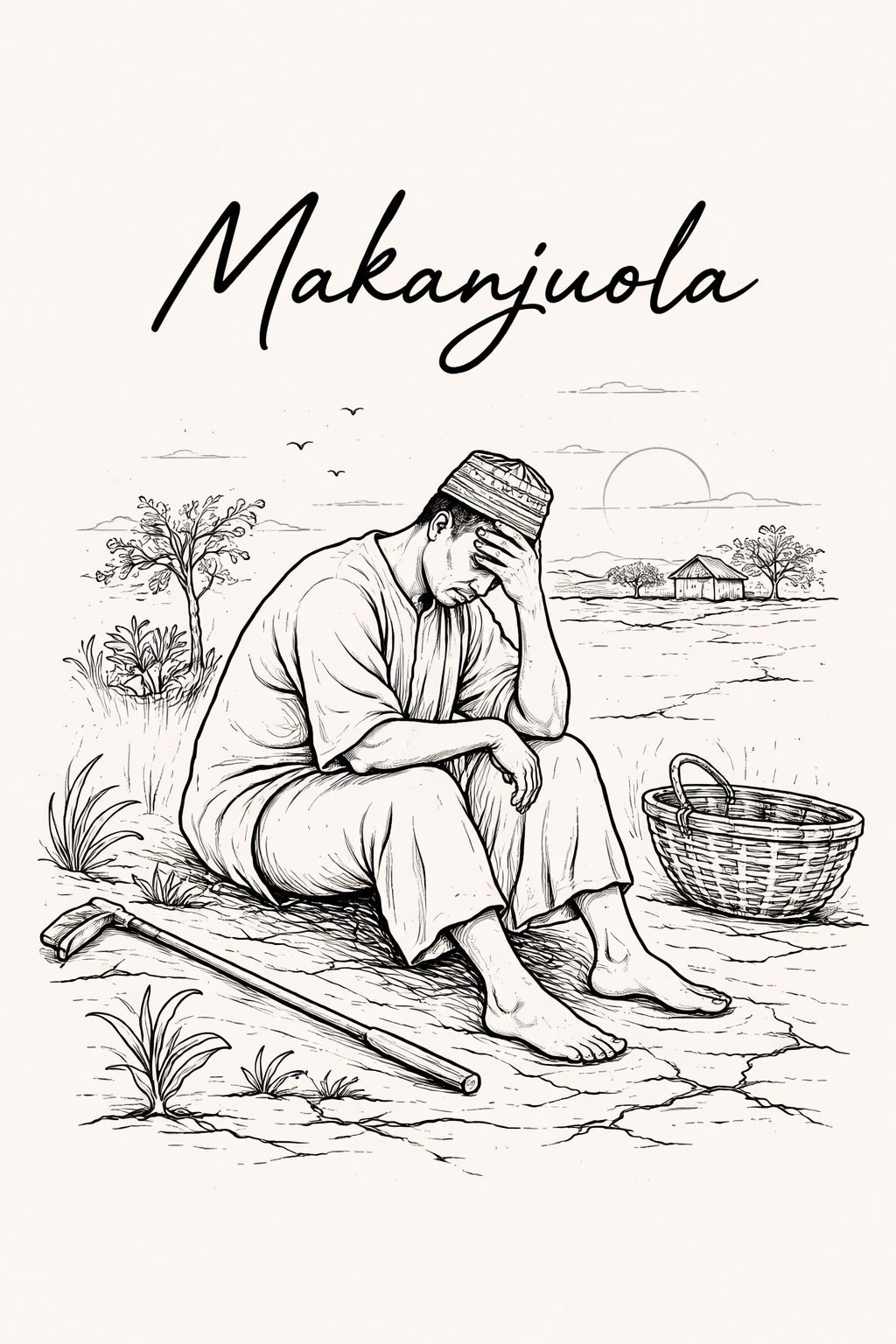
Contained in Voices: A collection of poems that tell stories by Yewande Adenike Adebowale, “Makanjuola” unfolds as a lament steeped in cultural memory, spiritual unrest, and the quiet violence of deferred becoming.
By Sola Adepitan
Contained in Voices: A collection of poems that tell stories by Yewande Adenike Adebowale, “Makanjuola” unfolds as a lament steeped in cultural memory, spiritual unrest, and the quiet violence of deferred becoming. It is a poem that breathes from the interior of longing, one that interrogates hope not as a virtue but as a burden, an inheritance that weighs heavily on those forced to carry it for too long.
The poem opens in a space that resists clarity. Darkness is not merely present. It is redefined. “Darkness too thick to be called darkness” gestures toward an existential saturation, a state beyond language, beyond even despair. The voice does not begin in motion but in suspension, hovering between numbness and the faint tremor of expectation. Hope appears early, not as comfort but as interruption. It speaks. It insists. It refuses silence. And already the poem positions hope as an external force, something that visits rather than something possessed.
The invocation of “Makanjuola” functions as both anchor and echo. It is name, identity, and refrain. Each recurrence feels ritualistic, almost incantatory, as though the speaker is calling himself back into existence. The repetition performs a cultural grounding, situating the poem within Yoruba sensibility, where names carry destiny, lineage, and spiritual implication. The name becomes a site of confrontation. It is where expectation meets fatigue.
What follows is a series of questions directed not outward but inward, addressed to abstractions as if they were errant companions. The speaker negotiates with hope, patience, and sense itself. This rhetorical strategy creates an atmosphere of psychological fragmentation. Hope is personified, patience is interrogated, nonsense demands interpretation. The mind is not stable ground here. It is a marketplace of competing voices.
The poem deepens when it shifts from abstraction into community. Aremu, Akanni, Baami, Yeye, Ayanfe. These are not ornamental references. They represent the social architecture within which the speaker exists. Success is not measured individually but relationally. Age grade, parental expectation, marital obligation, and economic performance converge into a single moral pressure. The speaker’s failure to thrive is not private. It ripples outward, disrupting the rhythm of communal life.
The imagery here is quietly devastating. Ayanfe’s youth “blow[s] out like burnt firewood abandoned after use.” The metaphor is tactile, domestic, culturally resonant. It carries the weight of time squandered, of vitality turned to ash. Love under the mango tree becomes memory rather than promise. The pastoral softness of that image heightens the tragedy. What should have matured has instead withered.
The poem’s critique of material reality emerges with force in the admission that money might indeed be everything. This is not greed speaking. It is exhaustion. It is the recognition that dignity, marriage, filial pride, and social belonging are all mediated through economic stability. The line resists moralizing. It refuses the comfort of idealism. The voice here belongs to someone who has labored, who has obeyed the script, and who has found that obedience does not guarantee arrival.
One of the poem’s most striking achievements lies in its deployment of pattern imagery. Failure becomes textile. Disappointment becomes design. The comparison to adire is especially potent. Adire cloth is intentional, patterned, crafted through resistance and dye. To liken life’s disappointments to adire suggests that hardship is not random. It is structured, repeated, inherited. Sometimes circular, sometimes parallel, always deliberate. The metaphor transforms suffering into something both aesthetic and oppressive. It is beautiful and suffocating at once.
Spiritual inquiry emerges gradually, then urgently. The speaker wonders if the gods have been offended, if some unseen transgression has altered his fate. This moment situates the poem within a cosmology where effort alone does not determine outcome. There are forces beyond the visible, forces that must be appeased, questioned, or endured. The language here is stripped of ornament. The simplicity intensifies the anguish. A man who has “planted [his] seeds in season” and “paid [his] dues” cannot reconcile diligence with deprivation.
The poem’s central tension resides in its treatment of hope. Hope is not discarded. It continues to speak, calm and instructive. It offers patience. It promises time. Yet the speaker resists. He challenges its authority. He asks whether hope is edible, whether it sustains the body the way food does. This question pierces the philosophical with the physical. Hope, in this context, is revealed as a privilege. It nourishes those who are not starving.
There is a philosophical sophistication in the refusal to accept linear optimism. The speaker rejects the assumption that change always bends toward improvement. He introduces the possibility that things can deteriorate, that time does not guarantee relief. This destabilizes the familiar narrative of perseverance. It introduces a realism that borders on defiance.
Stylistically, the poem relies on repetition, rhetorical questioning, and cultural lexicon to build its emotional architecture. The language is accessible but layered, drawing power from its restraint. There is no indulgence in elaborate metaphor for its own sake. Each image emerges from lived experience. Each line carries the cadence of oral storytelling, as though the poem is meant to be spoken in a courtyard at dusk, where testimony and confession intertwine.
What makes “Makanjuola” particularly compelling is its portrayal of masculinity under strain. The speaker is not permitted fragility in his world. He must provide, must marry, must elevate his family’s standing. Failure is not merely personal. It is a rupture in the social contract. Yet the poem allows him vulnerability. He questions, he pleads, he doubts divine justice. This vulnerability becomes the poem’s moral center.
There are moments where the poem risks repetition of sentiment, where the oscillation between hope’s voice and the speaker’s resistance could be tightened to intensify impact. A sharper escalation toward the conclusion might have amplified the final invocation. Still, the cyclical structure mirrors the thematic reality. Disappointment returns. Hope returns. The struggle does not resolve. It continues.
The final line lands with quiet gravity. Hope speaks again, firm now, almost authoritative. The repetition of the name at this point feels less like a call and more like a recognition. The speaker may not believe hope, but he cannot silence it. The poem ends not with resolution but with persistence. That persistence becomes its own form of survival.
“Makanjuola” is, at its core, a poem about endurance in a world that measures worth through visible achievement. It confronts the spiritual exhaustion of waiting, the cultural burden of expectation, and the fragile stubbornness of hope. It does not romanticize struggle. It interrogates it. And in doing so, it offers a portrait of a life suspended between promise and arrival, where even the act of continuing to speak becomes a form of resistance.
Comments