


Yusuf’s defection and the burden of ensuring unity, development

 Quick Read
Interestingly, Governor Yusuf's trademark red cap has been redesigned with President Bola Ahmed Tinubu's cap-signature, re-aligning with the "Renewed Hope Agenda"
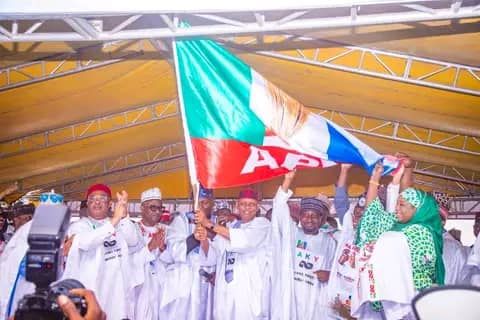
On Monday, February 16, 2026, Kano pulled what has been described as the highest unprecedented crowd in Nigeria’s political space, when Vice President Kashim Shettima, on behalf of President Bola Ahmed Tinubu, led a high-powered delegation and formally welcomed Kano state Governor, Engr. Abba Kabir Yusuf, into the All Progressives Congress (APC). Indeed, Governor Yusuf’s defection from the New Nigeria Peoples Party (NNPP) to the APC, has been described by pundits as a testament of his resolve to put aside personal interest and re-position Kano on the front pew of socio-economic development, with direct connection from the national seat of power—Aso Rock. Governor Yusuf’s exit from the NNPP and the Kwankwasiyya Political Movement, a platform that gave him victory as the number one citizen of Kano state in 2023 came to many, as a huge surprise. No one had believed that the Governor, who had demonstrated unshakeable loyalty to his political benefactor, Engr. Rabi’u Musa Kwankwaso, would take such a decision, at a time when Kwankwaso saw him as a major political tool to revive his political prowess ahead the 2027 general election. Before his defection, Governor Yusuf was the only NNPP Governor in Nigeria. It was on this political platform that Kwankwaso contested the 2023 presidential election against President Tinubu and others. Even though Governor Yusuf said unresolved internal crisis within the NNPP was one of the major reasons he dumped the party, he has consistently maintained that joining the ruling APC was a determination to put “Kano First” a political code that has dominated all his bill boards across the ancient commercial city.
Interestingly, Governor Yusuf’s trade mark red cap has been redesigned with President Bola Ahmed Tinubu’s cap-signature, re-aligning with the “Renewed Hope Agenda,” a signal that he is now singing from the same hymn page with Aso Rock. This development is, indeed, part of his resolve to bring about the needed socio-political cum economic development Kano needs.
Though Kwankwaso declared the day Governor Yusuf dumped the NNPP, January 23, as the “World Betrayal Day,” insisting that his former political godson is a “betrayer,” Governor Yusuf has maintained that his latest political action followed consultations and the endorsement of the elders and stakeholders of Kano, who have given him the go-ahead to align and re-align with the Progressives for the betterment of Kano and the entire people of the state.
Governor Yusuf has continued to make it clear that he is in no political duel with Kwankwaso, but on a mission to redeem the battered political image of Kano which has for so long, hampered development across the state.
History was made in Kano on that fateful Monday, when Vice President Shettima and his entourage touched down at the Malam Aminu Kano International Airport (MAKIA) and headed to the Sani Abacha International Stadium, Kofar Mata, where Governor Yusuf was formally received into the APC during a grand rally that attracted hundreds of thousands of Kano residents. The unprecedented crowd was spontaneous. The people of Kano made their position clear. The message was clear from their homes, and into the streets. The roads from the airport to the stadium were filled. Traders, market women, civil servants and artisans abandoned their businesses and places of work, just to catch a glimpse of the long convoy that conveyed the Vice President and his entourage. The entourage was a conglomeration of progressive governors, party heavyweights, captains of industry and technocrats. Young men climbed rooftops and signposts. Elderly men in flowing babbar riga stood shoulder -to-shoulder with energetic youths waving party flags. The chants rolled like thunder across Airport Road, Fagge quarters and Murtala Mohammed Way, curving through the arteries leading to the heart of the ancient commercial city. The crowd were not hired, they came on their own volition.
When the long convoy snaked into the Sani Abacha International Stadium, the streets had become a sea of human beings. The large stadium was full to the brim, as joy mixed with emotion, giving way for higher expectations. It was, indeed, a testament that Governor Yusuf belongs to the people of Kano, and that the people, in turn, have chosen to move along with him.
Speaking on behalf of President Tinubu, Vice President Shettima stood before the sea of supporters and spoke with deliberate clarity. Kano, he emphasized, is too strategic to be sidelined in Nigeria’s future. His tone blended political realism with historical understanding. He said , ” Kano has always been more than a federating unit; it is a compass in the northern political landscape. When Kano shifts, the national equation adjusts.”
The chairman of the Progressive Governors’ Forum, Senator Hope Uzodinma, described the moment as, “a return home.” He insisted that, indeed, Governor Yusuf has returned to the folds of the progressives—where he truly belongs. The APC National Chairman, Nentawe Yilwatda, spoke of a renewed momentum. He described Governor Yusuf’s arrival into APC as an infusion of strength and progressive energy. Yilwatda’s words suggested that APC sees in Kano not merely numbers, but structure, organization and ideological depth. During a courtesy call to Governor Yusuf at the Government House, the APC National Chairman , re-assured the Governor of the 60-40 power sharing formula. This means that Governor Yusuf is in the APC, not as a new comer, but as the number one party leader. He has the 60 per cent of the party structures, while others like the immediate-past National Chairman of the party, Dr. Abdullahi Umar Ganduje and the Deputy President of the Senate, Dr. Barau Ibrahim Jibrin, and other leaders, have the 40 percent. Interestingly, these APC heavyweights in Kano are not perturbed over the arrangement.
In his speech, Dr. Ganduje declared that the party in the state remains more united than ever. According to him, in Kano politics, unity is not cosmetic; it is strategic currency. A divided Kano diminishes influence. A united Kano commands negotiation of power at the federal level. Dr. Barau Jibrin who before now, was seen as a threat to Governor Yusuf ahead the 2027 governorship election in the state has also made it clear that he has jettisoned his 2027 governorship ambition, urging all his supporters to work for the success of Governor Yusuf’s re-election bid. Senator Barau Jibrin is going back to the Senate in 2027, as he re-shaped his political structure to ensure victory for President Tinubu, Governor Yusuf, and himself to represent Kano North Senatorial District, at the Upper Chamber of the National Assembly.
However, Governor Yusuf, in his remarks, took the careful path. He pledged that aligning with the APC would not disrupt his commitment to fairness and justice. He registered a necessary assurance, that defined political realignment without moral deception. He presented the move as strategic, rather than sentiment. He designed it as a decision aimed at amplifying Kano’s access to federal opportunity to bring about the needed development that would be beneficial to all, irrespective of class and political affiliation.
Former Commissioner for Information and Internal Affairs in the state, Comrade Muhammad Garba, also captured the current political mood in Kano when he wrote: “Governor Abba Kabir Yusuf’s return to the APC may appear dramatic to casual observers, but to students of Kano’s political history, it is neither shocking nor unprecedented. Rather, it represents the latest chapter in a long tradition of political realignments driven by relevance, control, and ultimately, the pursuit of independence.”
Comrade Garba maintained that: “The culture of political defection in Kano dates back to the Second Republic (1979-1983). The historic rift between Malam Aminu Kano of the People’s Redemption Party (PRP) and his protégé, Alhaji Muhammadu Abubakar Rimi, established a lasting precedent. Rimi’s eventual break from Aminu Kano was portrayed by loyalists as betrayal. In reality, it was an early manifestation of a recurring pattern in Kano politics: the godson’s quest for autonomy from an overpowering godfather.”
According to Comrade Garba, although party politics was suspended during military rule between 1984 and 1998, the brief Third Republic provided further evidence of this political flexibility.
Kano politicians largely aligned with the Social Democratic Party (SDP), yet defections to the National Republican Convention (NRC) still occurred, motivated less by ideology than by strategy and internal power struggles. Even then, the lesson was clear: political survival in Kano often required adaptability rather than rigid loyalty.
Comrade Garba, a former President of Nigeria Union of Journalists (NUJ) further stated that: “The Fourth Republic entrenched this culture more deeply. Few figures illustrate it better than Senator Rabi’u Musa Kwankwaso. Elected governor in 1999 on the platform of the People’s Democratic Party (PDP), Kwankwaso initially rose with the support of political heavyweights such as Rimi, the late Alhaji Musa Gwadabe, Dauda Dangalan, and Senator Hamisu Musa. Over time, however, he parted ways with all of them.
“After losing re-election in 2003 to Malam Ibrahim Shekarau of the All Nigeria Peoples Party (ANPP), Kano witnessed one of the earliest major political shifts of the Fourth Republic, as politicians moved between the PDP and ANPP largely in response to electoral fortunes. Internal disputes over succession later weakened the ANPP, creating cracks that would influence future realignments.”
According to him: “In the 2011 elections marked another turning point with Kwankwaso’s return as governor under the PDP. Between 2013 and 2014, Kano experienced one of the most consequential waves of defections in its history when Kwankwaso and his supporters moved en masse to the newly formed APC. This shift reshaped the state’s political landscape and positioned the APC as the dominant force ahead of the 2015 elections.”
Comrade Garba, who was the Chairman, Publicity Committee of Governor Yusuf’s grand reception rally into the APC maintained that: “Kwankwaso’s subsequent political journey from contesting APC presidential primaries to returning to the PDP and later joining the New Nigeria Peoples Party (NNPP), once again underscored the primacy of structure and control over party labels. Under the NNPP, he reasserted firm influence over Kano’s political machinery.”
According to him, “Former Governor Ibrahim Shekarau’s trajectory mirrors this same mutability. From the ANPP to the APC, then to the PDP, the NNPP, and back again, each move was framed as either principled or strategic, even as critics described them as betrayals. Taken together, these movements underline a fundamental truth about Kano politics where party platforms are often secondary to power structures, personal influence, and strategic positioning.”
Comrade Garba recalled that: “In 2015, Kwankwaso handed over power to Dr. Abdullahi Umar Ganduje. Their relationship soon deteriorated, splitting the APC into rival factions. Between 2018 and 2019, high-profile defections followed, with some Kwankwaso loyalists returning to the PDP while others remained in the APC under Ganduje. From 2019 to 2023, cross-carpeting continued as Ganduje consolidated APC control of the state. Kwankwaso formally moved to the NNPP in 2022, and Abba Kabir Yusuf emerged in 2023 as the only governor elected on that platform nationwide.”
He, however, insisted that: “Defections often serve as defining moments in godfather–godson relationships. They mark the transition from dependence to rivalry. Whether initiated by the godson or the godfather, defections disrupt existing hierarchies, redistribute power, and reshape party structures. The pattern remains consistent: once a godson controls state power, the pressure to assert independence becomes almost inevitable. Defection, formal or informal, often becomes the instrument through which that independence is expressed. Similar dynamics have played out across the country. ”
He gave instances that in Borno state, Kashim Shettima gradually distanced himself from Ali Modu Sheriff as he consolidated power, while Sheriff’s eventual defection weakened his influence. In Sokoto, Aminu Tambuwal’s strategic defections diluted the authority of long-standing power brokers. In Zamfara, tensions between Abdul’aziz Yari and Ahmed Sani Yerima exposed how unresolved godfather dominance can destabilise party control.
According to Garba, from Chris Ngige’s rebellion against Chris Uba in Anambra to Godwin Obaseki’s defection from the APC to escape Adams Oshiomhole’s grip in Edo, defections have consistently served as tools of political self-preservation. Where godsons defect successfully, they redefine authority; where they fail, godfathers reassert dominance. Political analysts have long observed that defections often occur when godsons seek independence from godfathers unwilling to relinquish control. In Kano, this dynamic has played out repeatedly. Godfathers interpret independence as betrayal, while godsons view it as political maturity. This context is essential to understanding Governor Yusuf’s current move.
Despite repeated denials, public perception has long held that Senator Kwankwaso exercises significant influence over the Kano State Government. While Kwankwaso has rejected this narrative, recent developments suggest growing strain in the relationship. Governor Yusuf’s return to the APC, therefore, represents more than a change of party platform; it signals an attempt to assert independence and redefine authority. History suggests that no sitting governor can indefinitely operate under the shadow of a dominant godfather without eventually pushing back. His remarks during his official defection to the APC were particularly noteworthy.
Comrade Garba maintained that the APC is not unfamiliar terrain for Governor Yusuf. It is, in many respects, a political home he has previously occupied. His return places him among familiar faces and long-standing associates, including Senator Abdulrahman Kawu Sumaila, Hon. Kabir Abubakar Bichi, Hon. Kabiru Alhassan Rurum, Prince Abdullahi Abbas and Hon. Murtala Sule Garo. However, defection alone does not translate into effective governance. The real challenge ahead lies in uniting the APC structure in Kano. This will require statesmanship, restraint and inclusive leadership. To consolidate his position, Governor Yusuf must engage all tendencies within the party. This includes working with Dr. Abdullahi Umar Ganduje, former national chairman of the APC and a central figure in Kano politics, as well as Senator Barau Jibrin, the Deputy Senate President and one of the most influential political actors in the state today, whose gubernatorial ambitions are well known. Without deliberate efforts to harmonize interests and manage ambitions, internal fractures could undermine both governance and electoral prospects.
Comrade Garba vividly pointed out that history consistently shows that ruling parties often lose power not because of opposition strength, but because of internal discord. Governor Yusuf will also face stiff opposition from his former political base. Senator Kwankwaso is expected to deploy every available political tool to challenge him, particularly if a Peter Obi/Kwankwaso ticket eventually materializes. In his context, unity within the APC is not optional, it is essential. Kano, alongside Rivers state, is also likely to attract heightened national and international attention in future elections. This reality underscores the need for caution. Political momentum at the centre or the advantage of incumbency should not breed complacency, as broader electoral dynamics can significantly shape outcomes at the state level. Comrade Garba recalled that during a critical stakeholders’ meeting of the APC family following Governor Yusuf’s official defection, the Governor reaffirmed his firm commitment to unity and raised several key issues aimed at keeping the state on a steady and progressive path, with the interests of the people of Kano placed first. He emphasized the imperative of unity, the urgent need to end politics of rivalry, thuggery and other social vices and proposed the establishment of a Committee of Elders to serve as an advisory body for the state.
In their remarks during the stakeholders’ meeting, both Dr. Ganduje and Senator Jibrin underscored the importance of strengthening party cohesion and working collectively to ensure the overall development of Kano state. Indeed, the APC in Kano remains a formidable political force with deep grassroots support and national relevance. However, it is also a party shaped by years of intense internal competition and ambition. Unity, not dominance,
remains the central challenge facing its leadership.
If Governor Yusuf prioritizes cohesion and inclusion, his presence in the APC could significantly strengthen the party at both state and national levels. A united APC in Kano would be formidable; a divided one will remain vulnerable, regardless of numerical strength. Ultimately, political realignments should serve the broader goals of stability and effective governance. Kano’s political complexity demands leadership that understands that unity is not a courtesy, but a necessity. If Governor Yusuf’s return to the APC is to succeed, uniting the party must not be optional, it must be his first and most important task.
With Governor Yusuf’s Deputy, Comrade Aminu Abdusallam Gwarzo still with the NNPP and the Kwankwasiyya Political Movement, pundits believe that the game is not yet over. The Deputy Governor is often seen at public functions aligning with Senator Kwankwaso and his political ideologue. However, the clear message remains that Governor Yusuf’s latest political steps have reshaped the political landscape of Kano. Even as Senator Kwankwaso has vowed to re-capture Kano Government House come 2027, pundits are still wondering how and through which political party he would perform the magic. But Senator Kwankwaso, two-time Governor of the state and a former Defence Minister, is widely regarded as one politician wearing the “iron shoe,” of Kano politics. The question remains: will Senator Kwankwaso perform this magic with the crisis-ridden NNPP or is he moving to the African Democratic Congress (ADC), as being predicted by many political watchers across the country? All eyes on Kano as the 2027 politicking begins.
Comments