



De Creature Exhibition: Temitope Johnson Fagade Presents the Ijaw Fisherman at Mimshak Art Gallery

 Quick Read
Art has always been an essential part of human society. It has always been a way for people to share their ideas, culture, and daily life. Through the art of sculpture, these ideas come alive through physical forms and become very easy to see and understand.
By Ozolua Uhakheme
Art has always been an essential part of human society. It has always been a way for people to share their ideas, culture, and daily life. Through the art of sculpture, these ideas come alive through physical forms and become very easy to see and understand. In the work of Temitope Johnson Fagade, art speaks about the existence of labour, survival, and the human connection to nature. His sculptures have defined different ways of life in both individualistic and holistic point of view, and sometimes often focus on ordinary people and usual ways of life.
On July 19, 2024, these ideas were presented at Mimshak Art Gallery, Ogun state, Nigeria. It took place during a group exhibition titled De Creature. The exhibition brought together different artists from different societies with different artistic perspectives, who explored nature and the physical environment in their works. Also were several visitors and viewers who were present to explore the exhibited works, including that of Temitope Johnson Fagade.
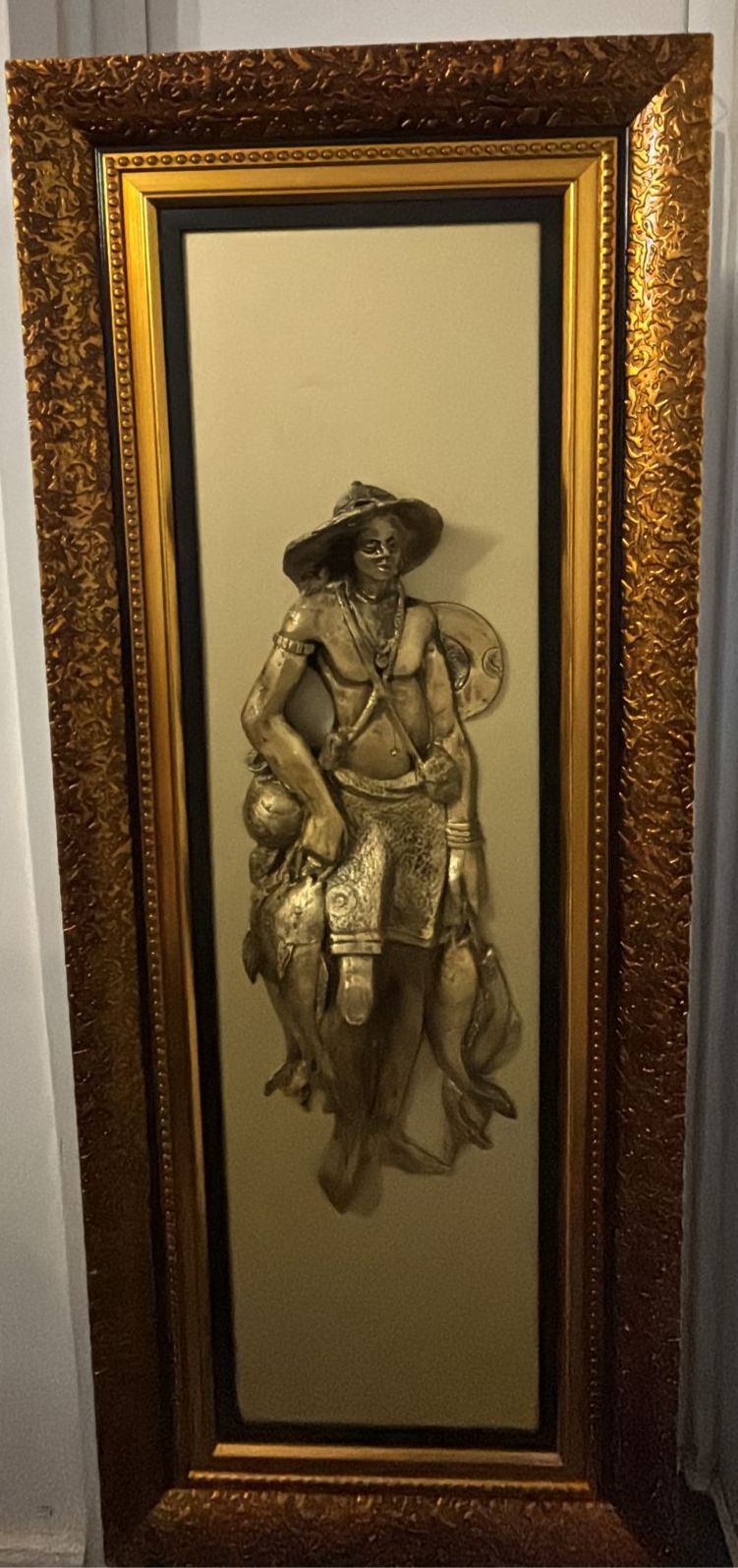
Temitope Johnson Fagade’s sculptural work of art was one of major points of interest, sustaining the curiosity of the viewers as they studied its details. The sculpture reveals a man who appears to be an Ijaw fisherman. He stands tall and firm, with a bounteous catch of fishes in his hands. His wide hat covering his head indicates the long hours under the sun during fishing. The figure’s appearance was a vivid reflection of the nature of labour, patience, and dignity, which many viewers could easily relate to.
The sculpture of the Ijaw fisherman undoubtedly fits well into the theme of the group exhibition tagged De Creature. It tells the story of humans’ interdependence on other creatures for survival. The careful details on the sculpture, initially enabled the viewers to understand the dynamics of labour and effort behind the figure’s daily life.
In the exhibition hall, especially from different viewing angles, the figure appears almost alive and real. The rough texture of the fisherman’s hat and the figure of the caught fishes holding onto the fisherman’s hands might have caught the attention of many viewers. These details made by Temitope Johnson Fagade encouraged close observation.
On the figure surface, the bronze, gold, and dark brown tones of the sculpture corresponded well to the lighting in the Mimshak Art Gallery, allowing soft shadows around the figure and the fish. These shadows weren’t just there, they added depth to the sculpture and made it seem alive. The visitors or viewers could definitely change their viewing position and see how light showers beauty to the figure.
The gold colour frame that surrounds the sculpture gave the fisherman’s figure a strong presence in the gallery purview. It made the figure appear worthy and respectable. Temitope Johnson Fagade made this presentation to help communicate his message that hard work and the production of food for survival deserves recognition in human society.
For viewers in the exhibition, the sculpture has the ability to tell its story without words. The presence of the fishes caught by the fisherman suggest a successful labour. The artwork also helped the viewers or audiences imagine the fisherman’s environment and daily life.
The De Creature exhibition created opportunity and space for reflection and discussion among artists and audiences of diverse cultures and ideologies. Temitope Johnson Fagade’s work stood out as a beautiful representation of what labour constitutes, its connection with human culture, and how it breeds survival. The audience’s curiosity around Temitope Johnson Fagade’s sculpture reveals how art can connect people to stories beyond their own, making it one of the most unforgettable art works in the De Creature exhibition.
Comments