


Madagascar reopens its mines: public-relations gambit or strategic shift?

 Quick Read
Mining represented 43.8% of national exports and 4.5% of GDP in 2022. With growth above 4% in 2024, momentum appeared to be building. The lifting of the moratorium is thus presented as a catalyst. According to the Bureau du Cadastre Minier de Madagascar (BCMM), at least ten companies stand ready to develop large-scale projects, and permits could begin to be issued within three months.
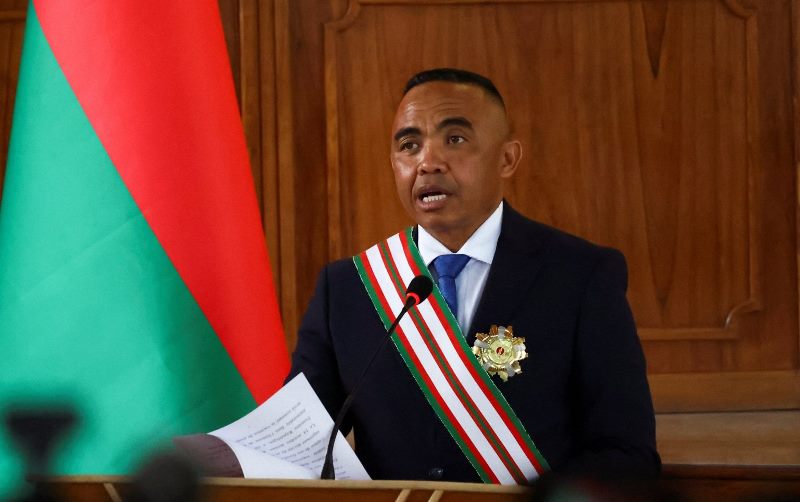
After 16 years of freezing new mining permits, Madagascar’s junta, led by Michel Randrianirina, announced at the end of January 2026 that it would lift a moratorium that had paralysed the sector. The declaration swiftly drew the attention of major powers eager for the island’s strategic resources. Yet the gap between headline and reality remains considerable.
Some gestures speak louder than speeches. On January 29th 2026 Madagascar proclaimed, with much fanfare, through its mines minister, Carl Andriamparany, the end of the moratorium that had stalled the issuance of new mining licences since 2010—gold excepted. Sixteen years of bureaucratic bottlenecks; roughly 1,650 applications reportedly pending, according to the latest Extractive Industries Transparency Initiative (EITI) report; and an island whose subsoil contains minerals increasingly coveted amid the global energy transition. The announcement had all the hallmarks of a bold signal. On closer inspection, however, it looks less like structural reform than a political calculation by a junta short on legitimacy since overthrowing President Rajoelina last October.
Exceptional geology, questionable governance
Madagascar’s geology is undeniably rich. Nickel, cobalt, graphite, ilmenite, rare earths: resources now central to industrialised economies—America, China and Europe—as the race for critical minerals intensifies. The island already hosts major projects. Anglo-Australian giant Rio Tinto has long extracted ilmenite-rich mineral sands through its subsidiary QMM, exporting around 556,000 tonnes in 2022. Ambatovy, the country’s largest nickel and cobalt operation, accounted for more than 70% of mining exports between 2021 and 2023, repatriating $3.9bn in foreign currency in 2023 alone. America’s Energy Fuels continues to pursue rare-earth prospects despite the prevailing uncertainty.
Mining represented 43.8% of national exports and 4.5% of GDP in 2022. With growth above 4% in 2024, momentum appeared to be building. The lifting of the moratorium is thus presented as a catalyst. According to the Bureau du Cadastre Minier de Madagascar (BCMM), at least ten companies stand ready to develop large-scale projects, and permits could begin to be issued within three months.
Yet official enthusiasm struggles to conceal systemic weaknesses. A new mining code, adopted under Andry Rajoelina’s government in 2023 and promulgated in July 2024, promises competitive taxation—royalties set at 2% and a 25-year stability clause—alongside a Social Mining Fund for local communities. Implementation, however, is less clear. No regulatory guidance has been made public regarding the treatment of some 3,000 pending applications, according to the BCMM’s acting director-general, Arison André Lovasoa. Civil-society groups warn of opacity should the National Office for Environmental Evaluations (ONE) become overwhelmed.
Politics first
To gauge the true significance of the thaw, one must look beyond economics. The junta, headed by Colonel Michel Randrianirina, has faced twin pressures since October’s controversial transition: domestic stagnation and mounting social expectations on one side, and contested legitimacy abroad on the other. The January 29th announcement did not emerge from nowhere; it culminated a process gradually advanced under the previous administration. Minister Andriamparany had prepared the ground at a meeting with operators in Toliara in December 2025. What changed was the media choreography: national television, press conferences, the language of revival. The communication targeted foreign chancelleries as much as Malagasy entrepreneurs.
Observers also note the timing, coinciding with the junta’s overtures towards Moscow. Several regime figures are described as maintaining close ties with Russia, a diplomatic tilt that has cooled relations with Paris and Brussels. By reopening its mines—implicitly to Western, Australian and American capital—the new leadership seeks to hedge its bets, converting geological assets into diplomatic currency and, ultimately, political consolidation. Minerals as leverage for legitimacy is a familiar equation across African capitals adept at balancing great powers.
For some analysts, then, the move appears less a carefully structured sectoral reform than an exercise in geopolitical repositioning aimed at bolstering international credibility.
Investors remain cautious
What the government presents as a turning point, private investors greet warily. Rio Tinto has repeatedly emphasised that political and regulatory stability is a prerequisite for expansion. In a capital-intensive industry where projects span decades, institutional predictability matters as much as ore grades.
Structural bottlenecks are well known. Ports—chief among them Toamasina—are chronically congested, though modernisation efforts begun under Rajoelina are under way. The road network is inadequate for scaling up extractive activity. Electricity supply remains unreliable in a country with limited access to power. Land-rights disputes persist, with mining and customary claims overlapping in legal ambiguity only partly addressed by the new code. Meanwhile environmental, social and governance (ESG) standards—non-negotiable for firms listed in London, Toronto or Sydney—add further scrutiny.
The continued moratorium on gold illustrates unresolved governance challenges. Officially declared gold output stands at just 13 kilograms—a negligible figure compared with widespread artisanal mining. Unable to regulate the sector effectively, the state has postponed reform indefinitely. The admission undercuts broader claims of transparency.
Governance is decisive
Africa’s economic history offers ample precedent: abundant resources do not automatically generate development. What matters is a state’s capacity to provide predictability, enforce contracts, distribute rents fairly and protect affected communities. On all four counts Madagascar begins at a disadvantage that the mere lifting of a moratorium does not erase.
Chinese, Australian and American interest in Madagascar’s resources is real. Whether that interest translates into sustained investment, jobs and durable fiscal revenues depends less on a cabinet decree than on the country’s long-term political trajectory. Stability of governance—not the announcement itself—will determine whether Madagascar’s mining sector develops coherently. Given current political and social strains, prospects appear more uncertain than before.
Meanwhile, the island’s subsoil continues to hold treasures the world covets. And Antananarivo continues to learn how to make them glitter.
Comments