


How volunteer doctors are strengthening child health in Nigerian communities

 Quick Read
On a humid Saturday morning in a semi-urban community outside Abuja, plastic chairs are arranged beneath a canopy. Mothers arrive with toddlers on their hips, teenagers sit in small clusters, and local health workers prepare screening forms.
On a humid Saturday morning in a semi-urban community outside Abuja, plastic chairs are arranged beneath a canopy. Mothers arrive with toddlers on their hips, teenagers sit in small clusters, and local health workers prepare screening forms. There are no hospital corridors or appointment desks here, yet the stakes are just as high. For many families, this outreach program may be the only direct encounter with a medical doctor all year.
Across Nigeria, where access to structured pediatric services remains uneven, volunteer-led health initiatives have become an essential complement to the public system. In communities where distance, cost, and limited awareness restrict hospital visits, preventive education and early screening can determine whether minor concerns escalate into chronic or life-threatening conditions.
According to the World Health Organization, preventive interventions, including caregiver education and early detection of childhood illnesses, are among the most cost-effective strategies for improving long-term health outcomes. In Nigeria, however, gaps in access mean that prevention often depends on community-based initiatives rather than facility-based care alone.
Nigeria’s public health system continues to face structural pressures, including the uneven distribution of healthcare facilities and workforce shortages in rural and peri-urban areas. The Federal Ministry of Health, Nigeria, has repeatedly emphasized the need for stronger community engagement and preventive programming to reduce avoidable childhood morbidity.
Volunteer-led initiatives have emerged as part of that response. Non-governmental organizations, faith-based groups, and local foundations organize periodic outreach campaigns that bring doctors directly into communities. These programs typically combine free health screenings with caregiver education on nutrition, hygiene, vaccination awareness, and infectious disease prevention.
One such organization is the Lady Helen Child Health Foundation, a non-governmental group focused on improving healthcare access for children and vulnerable populations. Through scheduled outreach campaigns, volunteer doctors collaborate with community health workers to provide screenings and structured educational sessions.
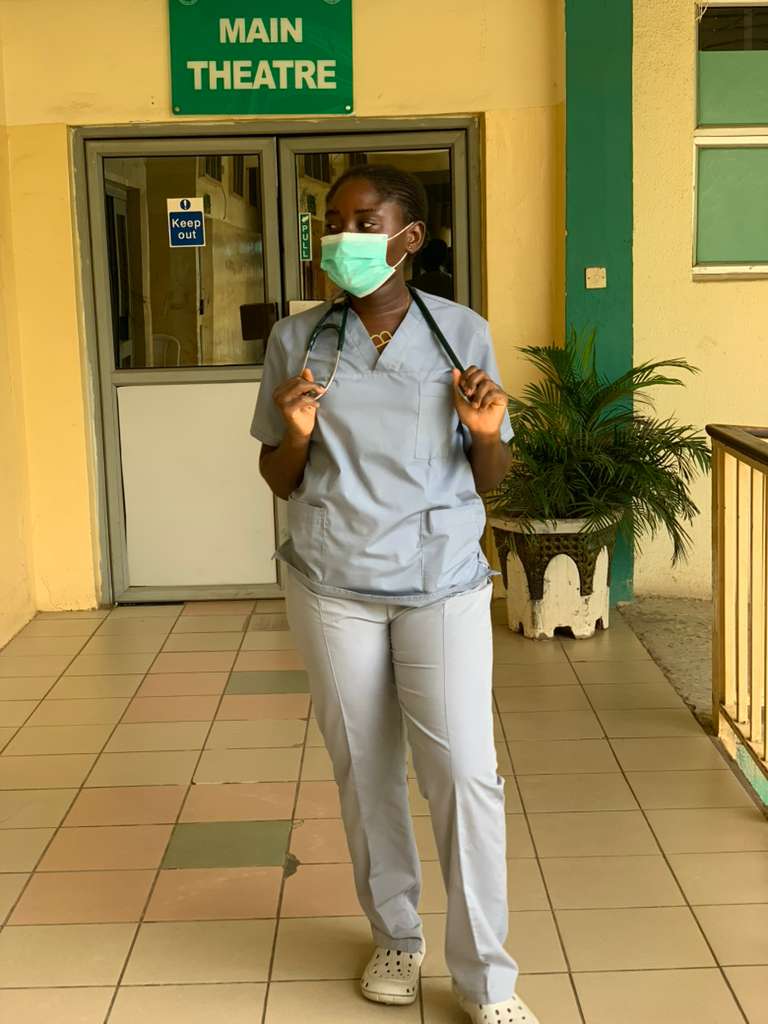
Among the medical professionals who have participated in these initiatives is Dr. Blessing Agbaza, a Nigerian physician who joined a team of volunteer doctors during a 2020 child health outreach campaign organized by the Lady Helen Child Health Foundation.
Her responsibilities during these campaigns included assisting with caregiver education sessions and conducting preventive health screenings for children. Outreach activities often involved small group discussions and one-on-one engagements designed to address practical concerns parents face daily, from dietary choices to hygiene practices.
Dr. Chinedu Eze, a family physician, and Dr. Fatima Lawal, a pediatric registrar, have also contributed to similar outreach efforts. Their involvement underscores a broader pattern: many Nigerian doctors extend their professional responsibilities beyond hospital walls to address systemic gaps at the grassroots level.
In a 2021 interview conducted for this feature, Dr. Amina Yusuf, a senior public health physician involved in community health programming, emphasized the significance of physician-led volunteerism.
“Volunteer health initiatives are essential in child health and HIV prevention,” she said. “When trained doctors commit their time to these programs, it strengthens community trust and improves health awareness at the grassroots level.”
Health experts consistently identify education as a cornerstone of improving child health. According to guidance from the United Nations Children’s Fund, caregiver knowledge directly influences childhood nutrition, sanitation practices, and adherence to vaccination schedules.
During outreach programs, topics often include child nutrition, hygiene practices, stress management for caregivers, and HIV/AIDS awareness. Sessions are structured to encourage participation rather than passive listening, allowing parents to ask questions specific to their households.
Mrs. Ngozi Okorie, a community health coordinator who works with volunteer doctors during outreach programs, highlighted the importance of communication during a 2021 telephone interview.
“Dr. Agbaza has a calm and approachable manner,” she said. “Parents feel comfortable asking questions, and she takes time to explain health issues clearly. But all the doctors we work with bring different strengths, and that diversity helps us serve the community better.”
Her observation reflects a broader principle in community health: trust determines impact. When caregivers feel heard and respected, they are more likely to adopt preventive practices and seek follow-up care when necessary.
Volunteer medical outreach is rarely a solo endeavor. It relies on collaboration between physicians, nurses, community health workers, and local coordinators who understand the social context of each community.
Dr. Tunde Balogun, a senior medical officer in a public-sector clinic who has participated in separate volunteer initiatives, described medical volunteerism as both a professional responsibility and a civic contribution.
“Volunteer medical work shows a doctor’s dedication to preventive care and public education,” he said. “Many physicians contribute quietly to community health programs across the country. It’s a collective effort.”
Public health analysts note that while volunteer programs cannot replace systemic investment in healthcare infrastructure, they serve as important bridges. By reaching families who may not regularly access hospital-based services, these initiatives can reduce the long-term burden on secondary and tertiary facilities.
As Nigeria continues to confront public health challenges related to child welfare and infectious diseases, community-based preventive programs remain indispensable. Volunteer-led initiatives help reinforce national health objectives by promoting early detection, awareness, and behavioral change at the household level.
Doctors like Dr. Blessing Agbaza and her colleagues operate at the intersection of formal healthcare training and grassroots engagement. Their outreach contributions may not appear in official hospital rosters or administrative reports, yet they shape outcomes in tangible ways, from improved caregiver knowledge to earlier identification of health risks.
Ultimately, strengthening child health in Nigeria will require sustained institutional reform, expanded funding, and equitable access to services. But alongside these systemic measures, the quiet commitment of volunteer medical professionals continues to play a meaningful role.
In communities where a single outreach event can change how a parent approaches nutrition or vaccination, the impact of volunteer-led initiatives extends far beyond the day’s screenings. It reinforces a simple but powerful truth: preventive care begins with presence, and progress often starts where professionals choose to show up.
Comments