


VIOs banned after commercial drivers’ protest

 Quick Read
The administration also announced that the daily ticket for tricycle riders had been cut from ₦1,200 to ₦500. However, tricycle operations will now end at 6 p.m. daily, as night operations have been permanently banned.
The government of Cross River State has banned roadside operations by Vehicle Inspection Officers (VIO), confining the officials to office-based duties following protests by commercial transport operators over alleged harassment and excessive penalties.
Governor Bassey Otu announced the directive in Calabar on Saturday after a meeting with transport stakeholders, according to a statement issued by his Chief Press Secretary, Linus Obogo.
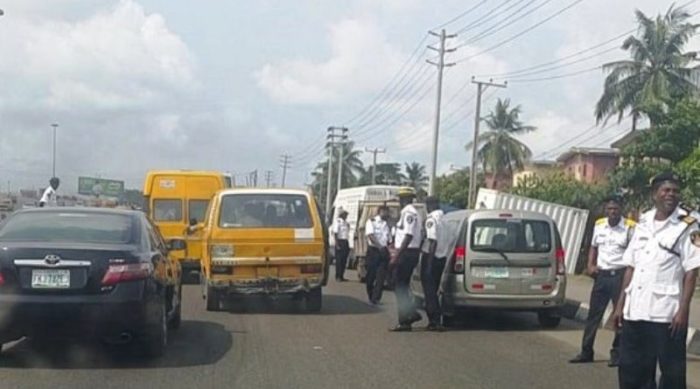
The decision came amid mounting complaints from commercial bus drivers and tricycle operators who accused enforcement teams of issuing high tickets, imposing excessive fines and harassing motorists on the roads.
Under the new measures, VIO officials will no longer conduct road operations across the state. Their duties will now be limited to office-related activities, while other transport regulatory agencies will operate strictly within their statutory mandates.
As part of the reforms aimed at easing the burden on transport operators, the government also approved a reduction in daily transport ticket fees from ₦850 to ₦500, while the penalty for failure to purchase a ticket was slashed to ₦10,000.
Governor Otu further directed that all traffic-related fines be reduced by 50 per cent and paid only into designated Cross River government accounts to curb illegal collections.
The administration also announced that the daily ticket for tricycle riders had been cut from ₦1,200 to ₦500. However, tricycle operations will now end at 6 p.m. daily, as night operations have been permanently banned.
In addition, commercial bus drivers and tricycle operators will no longer be required to purchase tickets on Saturdays, Sundays and public holidays, a move the government said would provide relief for operators.
The governor said the reforms were designed to restore order in the state’s transport system while reducing the financial burden on drivers.
He explained that the Commercial Transport Regulatory Agency (CTRA) would henceforth concentrate on vehicle registration and ticket sales at approved rates, while enforcement officers must operate strictly in proper uniforms and with verifiable identification.
Governor Otu also directed the Traffic Management and Regulatory Agency (TRAMRA) to limit its activities to traffic management duties.
The directives will take effect from March 9, with the governor urging residents and transport operators to cooperate with the relevant authorities.
Despite the announcement, some drivers expressed reservations, arguing that the measures did not address certain enforcement practices.
A commercial driver, Johnson Ade, said the government should issue an official list of traffic infractions and the corresponding fines to eliminate ambiguity and prevent impersonators from exploiting the directive.
“Slashing fines by 50 per cent is vague. The specific amounts payable for each offence should be clearly stated,” he said.
Similarly, Mr Sunday Dennis, Metropolitan Chairman of the Road Transport Employers Association of Nigeria (RTEAN), said the union would convene an emergency meeting to review the governor’s directives.
The latest intervention follows a series of protests by commercial bus drivers and tricycle operators, which earlier forced the government to suspend all transport ticket collections across the state.
Comments