



From pain to enterprise: Film depicts Chibok mothers rebuilding through farming

 Quick Read
For the mothers whose daughters were abducted during the 2014 school attack by terrorists, the work has become both survival and healing.
By Joan Odafe, News Agency of Nigeria (NAN)
In the quiet farmlands of Chibok in northeastern Nigeria, the steady rhythm of women cracking groundnuts and sorting harvests now carries a meaning deeper than livelihood.
For the Chibok mothers whose daughters were abducted during the 2014 school attack by terrorists, the work has become both survival and healing.
What began as a response to grief has gradually grown into a small but meaningful enterprise, one rooted in farming, peanut processing and the determination of mothers to rebuild their lives and secure a future for their children.
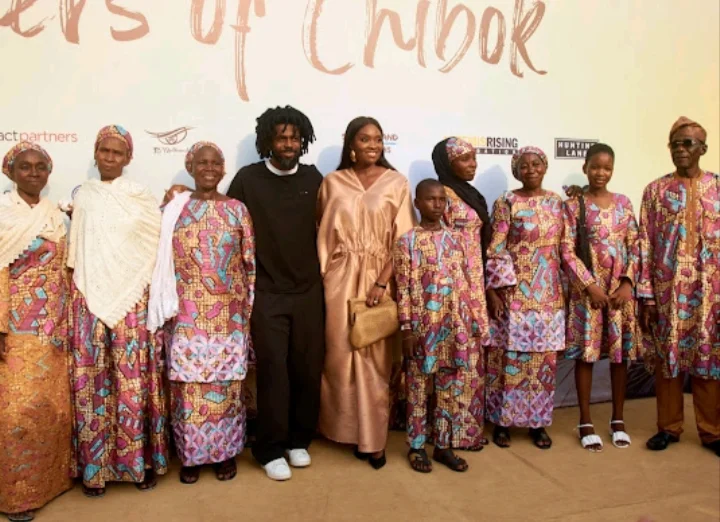
Their story is documented in the film, ‘Mothers of Chibok’, by Nigerian filmmaker, Joel Kachi Benson, which moves beyond the moment of the abduction to focus on the everyday lives of the women who continue to live with its consequences.
In the film, the camera lingers on the rhythm of daily labour: women tending farms, negotiating land prices, planting corn and groundnuts, and later selling the groundnuts that have become central to their community enterprise.
One scene captures a mother negotiating to rent farmland. The landowner initially demands N100,000 but after persistent bargaining the woman brings the price down to N35,000, a small victory that reflects her determination to keep farming in spite of financial hardship.
Groundnuts have become the backbone of their livelihood. After harvest, the women sort, roast and process the peanuts, adding value before they are sold.
The enterprise not only sustains their farming activities but also provides income to support their families and pay school fees for their children.
Scenes in the documentary show women sitting together in courtyards and fields, cracking shells and drying harvests under the sun.
The work is demanding but it carries a quiet sense of solidarity among the mothers.
For many of them, motherhood remains the strongest source of motivation.
In one scene, a mother sits with her children during a home lesson, gently encouraging them through their reading.
“Myself well done. Try it another day. Mango and banana for Mau,” she sings as a reward for a lesson completed.
In spite of the trauma that reshaped their lives, education remains central in the community.
The mothers continue to send their children to school, determined that fear will not define the future of the next generation.
The film also captures moments that reveal the emotional weight many of the women still carry.
In one poignant sequence, a mother receives a phone call informing her that her daughter has been rescued and will soon return home.
Earlier in the film, she had been shown carefully arranging her daughter’s clothes, preserving them as if preparing for the day she will come back.
Elsewhere, another mother breaks down after learning that her daughter was not among those rescued.
Through these moments, the documentary presents the mothers not as symbols of tragedy but as women navigating grief, hope and everyday survival.
Benson said the film took about three years to complete, allowing the production team to build trust within the community and document realities that rarely make headlines.
Comments