


Update: Why Appeal Court upheld ban on PDP’s Ibadan convention

 Quick Read
This woould give some legitimacy to the Nyseom Wike-backed faction which is led by a Caretaker Committee with Mohammed Abdulrahman as Acting National Chairman and Samuel Anyanwu as Acting National Secretary.
By Paul Dada
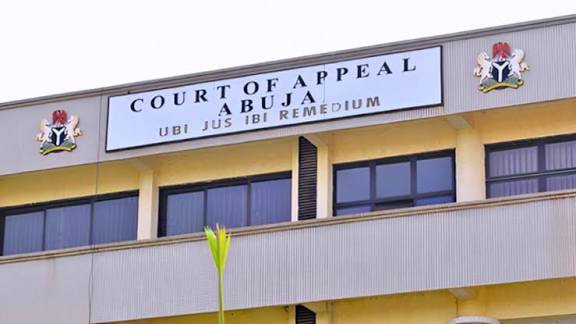
The Court of Appeal in Abuja on Monday upheld a lower court decision stopping the Seyi Makinde-backed faction of the Peoples Democratic Party (PDP) from holding its disputed national convention in Ibadan after ruling that it failed to comply with statutory and constitutional requirements guiding such meetings.
In a unanimous judgement, a three-member panel led by Justice Mohammed Danjuma dismissed appeals filed by the faction led by Kabiru Turaki (it national chairman) which had challenged the jurisdiction of the Federal High Court to hear the matter.
This woould give some legitimacy to the Nyseom Wike-backed faction which is led by a Caretaker Committee with Mohammed Abdulrahman as Acting National Chairman and Samuel Anyanwu as Acting National Secretary.Court
The appellate court in its verdict held that the Federal High Court was right to intervene because the case involved alleged breaches of the law, including the provisions of the Electoral Act 2022 and the Constitution of the Federal Republic of Nigeria 1999, rather than a mere internal dispute within a political party.
According to the Appeal Court, the appellants could not “repackage a clear violation of the party constitution and that of the Constitution of the Federal Republic of Nigeria as an internal party affair.”
The judgement affirmed an earlier ruling delivered on Oct. 31, 2025, by Justice James Omotosho, which restrained the electoral umpire from recognising the outcome of the planned convention.
The lower court had found that the PDP failed to meet essential conditions before fixing the convention, including conducting valid state congresses in 14 states that would produce delegates eligible to vote at the gathering.
It also held that the notice for the convention was signed only by the party’s national chairman without the endorsement of the national secretary, a development the court described as legally defective.
Comments