



APC, Vietnam join forces as Bilateral Trade hits $1 billion milestone

 Quick Read
The APC National Chairman further highlighted the economic progress being made under the current administration, stating that "the country's macroeconomic environment has been stabilised and is currently recording growth of about four percent annually."
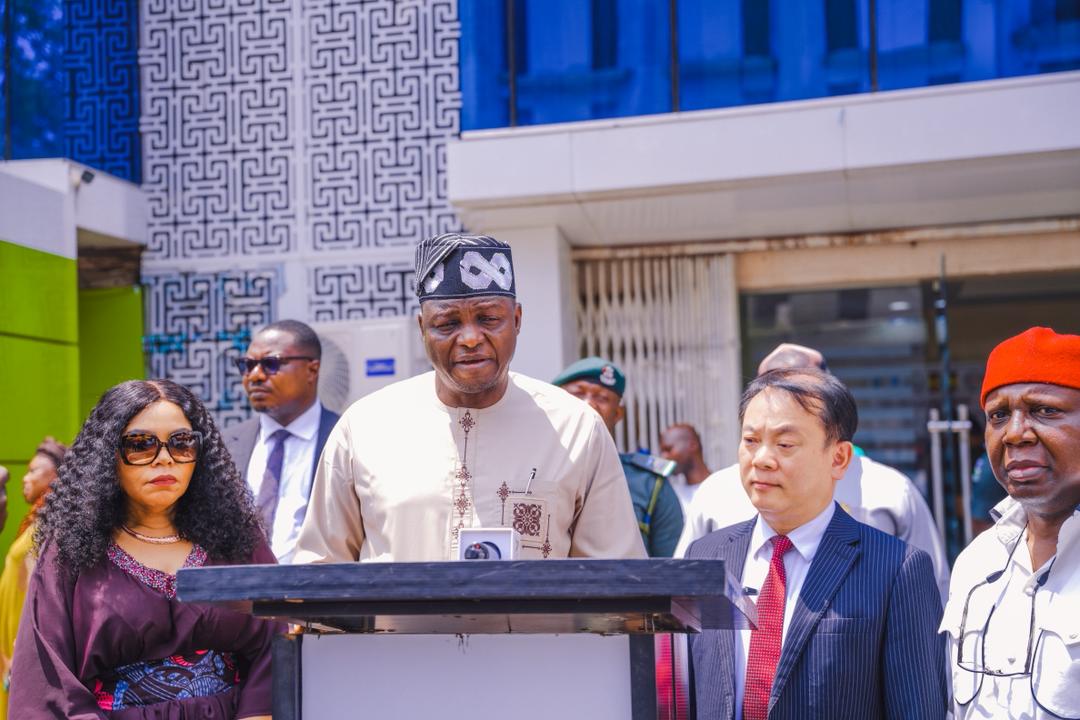
The National Chairman of the All Progressives Congress (APC), Professor Nentawe Yilwatda, and the Ambassador of the Socialist Republic of Vietnam to Nigeria, Bui Quoc Hung, have held extensive discussions on strengthening bilateral relations, with trade between both nations reaching a historic milestone of one billion dollars.
During a courtesy visit by the Vietnamese Ambassador to the party’s national secretariat in Abuja, both leaders explored expanded areas of cooperation spanning agriculture, infrastructure, trade, and party-to-party relations.
The APC National Chairman congratulated the government and people of Vietnam, as well as the Communist Party of Vietnam, on the historic attainment of its 80th anniversary.
He described the milestone as “a remarkable demonstration of political stability and continuity,” noting that Vietnam’s long-standing political tradition provides “an important example of sustained national development.”
Yilwatda observed that Nigeria’s democratic journey had been interrupted for many years by military rule, which slowed the country’s growth and institutional development.
However, he expressed appreciation to the many Nigerians who fought tirelessly for the restoration and consolidation of democracy.
The APC Chairman particularly acknowledged the role played by President Bola Ahmed Tinubu in the struggle for democratic governance in Nigeria.
He noted that “the President endured imprisonment, persecution and exile in the course of the pro-democracy movement, while also helping to mobilise the strongest voices against military dictatorship.”
According to him, “the sacrifices of pro-democracy activists paved the way for the return to civilian rule in 1999.”
Since then, Nigeria has sustained democratic governance for 26 uninterrupted years, representing the longest democratic stretch in the nation’s history.
The APC National Chairman further highlighted the economic progress being made under the current administration, stating that “the country’s macroeconomic environment has been stabilised and is currently recording growth of about four percent annually.”
Yilwatda explained that “Nigeria’s per capita economic growth now ranks among the strongest in Africa, while the country’s contribution to global GDP reached approximately 1.5 percent last year.”
He described this progress as “evidence of the resilience of the Nigerian economy and the effectiveness of ongoing economic reforms.”
He also noted that recent government policies have “stabilised the naira and created a more conducive environment for business growth. As a result, businesses are expanding while imports have reduced significantly, leading Nigeria to record trade surpluses over the last two years.”
The Chairman further stated that Nigeria has significantly reduced its dependence on imported petroleum products, adding that “over 90 percent of the crude oil consumed in the country is now produced locally.”
He stressed that the APC-led government remains committed to social protection programmes aimed at supporting vulnerable citizens.
According to him, “the government has introduced health insurance coverage for the poorest Nigerians in order to ensure that no segment of society is left behind as the country pursues economic growth and national development.”
Speaking on infrastructure development, the APC National Chairman highlighted the Sokoto–Badagry highway project, describing it as “the longest road project in Nigeria’s history.”
He explained that the project will incorporate “more than 300 dams to support irrigation and year-round agricultural activities, thereby strengthening food production and improving the transportation of agricultural produce across the country.”
He also referred to the Lagos–Calabar Coastal Highway project, which is designed to “connect major seaports across the country and enhance the movement of goods and people.”
According to him, “the government is investing heavily in roads, railways and seaport infrastructure as part of a long-term strategy for sustainable national development.”
The Chairman further emphasised Nigeria’s vast agricultural potential, noting that “the country possesses some of the most fertile lands in the world.”
He added that expanding agricultural production would also help reduce insecurity by “addressing the challenge of ungoverned rural spaces and creating economic opportunities for local communities.”
Yilwatda explained that Nigeria already serves as “a major food supply hub for neighbouring countries such as Niger, Burkina Faso, Chad and Sudan,” adding that investment in Nigeria offers access to broader regional markets.
He also referenced ongoing rail development projects aimed at linking Nigeria with neighbouring countries, “particularly Niger Republic, in order to strengthen regional trade and economic integration.”
In his remarks, Ambassador Bui Quoc Hung commended the cordial and steadily growing relationship between Nigeria and Vietnam, noting that cooperation between both countries has expanded in several areas including politics, trade, defence and people-to-people exchanges.
Hung revealed that economic collaboration is now a major focus for both countries, with renewed efforts aimed at expanding trade and investment.
According to the Ambassador, “bilateral trade between Nigeria and Vietnam reached a historic milestone of one billion dollars in the 2024/2025 period, the first time such a level has been attained in the history of relations between the two nations. Prior to this period, trade between the two countries hovered around six hundred million dollars annually.”
He explained that “Vietnam currently imports crude oil and other raw materials from Nigeria, while exporting textiles and other goods to the Nigerian market.”
Looking ahead, Ambassador Hung expressed Vietnam’s interest in deepening cooperation in the agricultural sector, particularly in rice production.
He noted that “Vietnam is among the world’s leading rice exporters and possesses advanced agricultural technologies that could support large-scale rice cultivation in Nigeria.”
Rather than exporting rice to Nigeria, he proposed a collaborative arrangement that would involve “cultivating rice directly on Nigerian soil by combining Nigeria’s fertile land with Vietnam’s agricultural expertise and technology.”
Comments