



5 Northern Nigerian Artists Taking Afrobeats to Global Stage

 Quick Read
For years, the industry functioned on a model where Lagos was the center and everywhere else was the periphery. Artists from other regions either moved to Lagos or accepted that they would never reach the highest levels of commercial success. That model is breaking down.
The Nigerian music industry has always been a story of regional dominance. For decades, the South, particularly Lagos, has been the undisputed center of commercial music success. Artists like Wizkid, Burna Boy, and Davido built global Afrobeats empires from that foundation, and the world has largely come to see Nigerian music through that lens.
But something fundamental is shifting. Northern Nigerian artists are not just participating in the industry anymore. They are creating their own movement, blending traditional Hausa sounds with modern Afrobeats production in ways that are forcing the entire industry to pay attention. And unlike previous generations, these artists are building their careers with a level of financial intelligence that goes far beyond music sales alone.
The Southern Dominance That Defined an Era
To understand what’s happening now, you need to understand what came before. For years, mainstream Nigerian music was almost exclusively a southern affair. The infrastructure was there, the studios, the radio stations, the club scenes, the media networks. Artists from the South had access to resources that simply did not exist in the North on the same scale.
The rise of Afrobeats as a global genre made that imbalance even more visible. When Asa, Rema, Burna Boy, Wizkid, and Davido started winning international awards and selling out arenas across Europe and North America, they carried the Afrobeats banner with them. The genre became so dominant that even artists who started in rap felt the pull to adapt their sound.
That dominance created an environment where northern artists faced an uphill battle. Breaking through meant either relocating to Lagos or finding a way to build an audience strong enough that the industry had no choice but to acknowledge them.
The New Northern Wave
What we’re seeing now is a generation of northern artists who have decided to do both—and they’re doing it on their own terms.
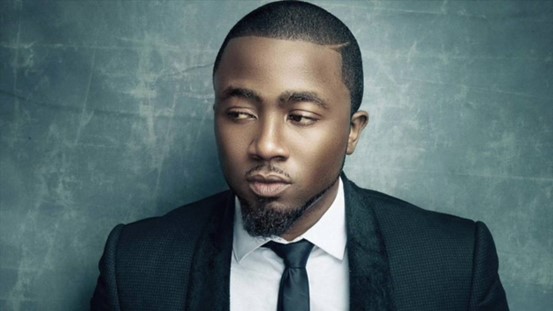
Ice Prince was one of the first to prove it was possible. Coming from Jos in Plateau State, he broke through with “Oleku” and became a household name across Nigeria. But even with his success, he remained somewhat of an outlier. The industry treated him as an exception rather than the beginning of a trend.
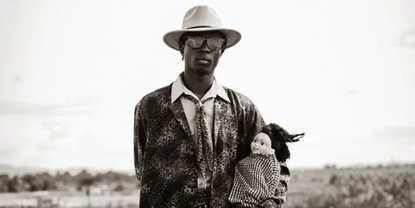
FirstKlaz represents something different. He’s part of a new generation that refuses to be treated as exceptions. His fusion of Fuji, Afrobeats, and Arewa sounds has gone viral not because he adapted to Southern expectations, but because he brought something fresh that the South couldn’t offer. His Gen-Z series captured a younger audience that was hungry for something beyond the standard Afrobeats formula.

DJ AB out of Kaduna has built an entire career on blending rap, Afrobeats, and Hausa influences in a way that speaks directly to northern audiences while still crossing over into mainstream conversations. He’s ranked consistently as one of the top acts in Arewa music, and his success has shown other northern artists that they don’t need to abandon their identity to succeed commercially.

Then there’s OG Abbah, birth named Mohammed Abubakar, whose track “Wayyo Allah Na” became a viral hit that spread far beyond the North. he puts his energy into crafting a sound that’s uniquely his, rooted in Hausa culture and passion.
His story is particularly instructive because it shows how northern artists are using digital platforms to bypass traditional industry gatekeepers entirely.

Magnito rounds out the list as another artist who has successfully bridged the gap between northern authenticity and national appeal. His music carries the weight of northern cultural identity while remaining accessible enough to chart across the country.
The Business Side: Why Today’s Artists Think Like Entrepreneurs
Here’s what makes this generation of northern artists different from those who came before them: they understand that music alone is not a sustainable business model in Nigeria.
The industry has always been unpredictable. Streaming pays poorly, radio airplay is often pay-to-play, and live performances were disrupted entirely during the pandemic. Smart artists recognized early that diversification wasn’t optional, it was survival.
Many of these northern artists are building income streams that extend far beyond music. Some are investing in real estate. Others are launching clothing lines, tech startups, or entertainment companies. They’re treating their music careers as one component of a larger business ecosystem rather than the entire business itself.
This approach isn’t unique to Northern artists, but they’ve embraced it with particular urgency because they don’t have the same access to traditional industry funding that Southern artists often take for granted. They’ve had to be more creative, more resourceful, and more willing to build businesses outside of music to fund their music careers.
For anyone looking to follow that model, whether you’re an artist or just someone trying to build financial stability in Nigeria, there are practical lessons here. The same entrepreneurial mindset that’s helping northern musicians build sustainable careers can work in other fields too.
What This Means for the Future of Nigerian Music
The rise of northern artists isn’t just a regional success story. It’s a structural shift in how Nigerian music operates.
For years, the industry functioned on a model where Lagos was the center and everywhere else was the periphery. Artists from other regions either moved to Lagos or accepted that they would never reach the highest levels of commercial success. That model is breaking down.
Northern artists are proving that you can build a national and even international audience without surrendering your regional identity. They’re showing that audiences are hungry for sounds beyond the standard Afrobeats formula. And they’re demonstrating that financial sustainability in the music industry requires thinking beyond music itself.
Ice Prince, FirstKlaz, DJ AB, OG Abbah, and Magnito are just the beginning. Behind them is a generation of younger artists watching, learning, and preparing to push even further. The industry they inherit will look very different from the one that existed even five years ago, and northern artists will have played a central role in that transformation.
If you’re a young artist from the North, the message is clear: you don’t need to move to Lagos to matter. Build your sound, build your business, build your audience, and the industry will come to you. And if you’re anyone else watching this unfold, pay attention. The future of Nigerian music is being shaped right now, and it’s being shaped by people who refused to accept the limits the industry tried to place on them.
Comments