


Edo State International Film Festival 2023 Concludes as a Platform for Global Stories and Local Dialogue

 Quick Read
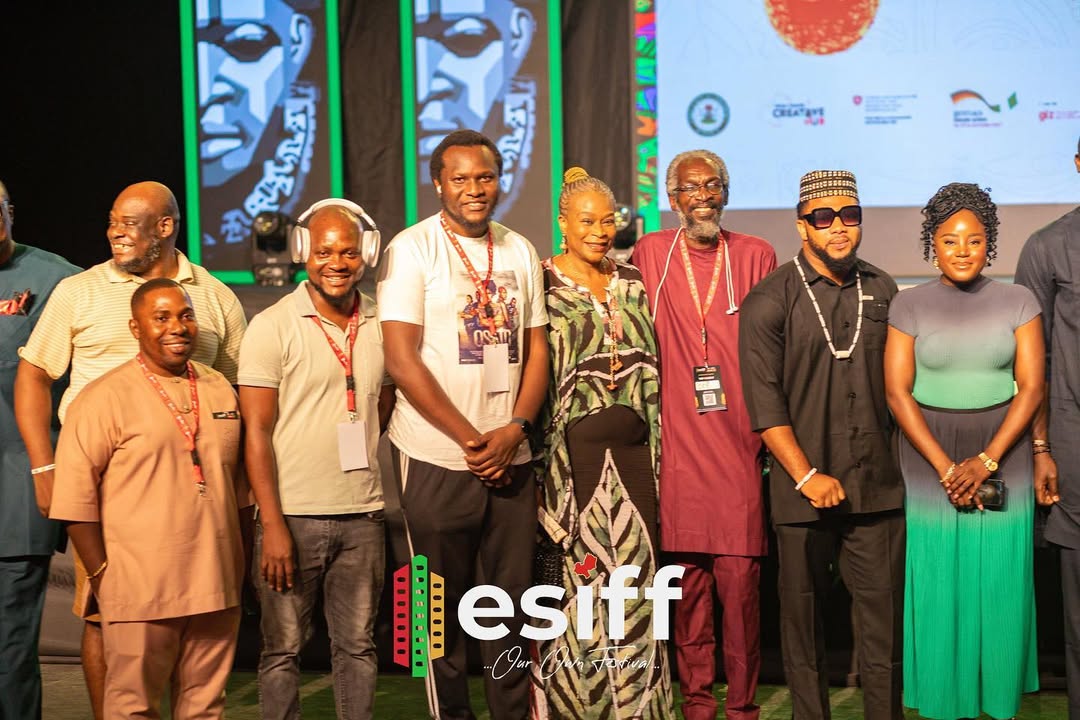
The 2023 edition of the Edo State International Film Festival (ESIFF) concluded after three days of screenings, conversations, and industry exchange, reaffirming its growing role as a meeting point for filmmakers, policymakers, and cultural leaders.
The 2023 edition of the Edo State International Film Festival (ESIFF) concluded after three days of screenings, conversations, and industry exchange, reaffirming its growing role as a meeting point for filmmakers, policymakers, and cultural leaders. Held from November 30 to December 2, the festival drew participation from across Nigeria and beyond, positioning Edo State as an increasingly visible hub for film culture and creative dialogue.
Across its programme, ESIFF balanced cinematic exhibition with critical engagement, using film not only as entertainment but as a tool for reflection on society, identity, and economic development.
One of the most striking indicators of the festival’s growth was the scale of its submissions. The 2023 edition received 3,217 films from over 80 countries, a notable increase that underscored ESIFF’s expanding international reach. From this pool, 486 films were officially selected, comprising 446 short films and 40 feature-length titles.
The selection process was guided by a curatorial focus on diversity, narrative impact, and global relevance. Speaking on the scope of submissions, Jide Oladele, who served as Lead Curator for Film Selection, noted that the challenge was less about scarcity and more about coherence. He added that many strong films did not make the final cut due to programming balance, runtime constraints, and the need to maintain a cohesive festival flow.
ESIFF 2023 opened with ‘Scar,’ produced by Rok Studios and directed by Chris Eneng. The film explores the complexities of religious conflict in Northern Nigeria, weaving themes of faith, survival, and redemption into a tightly framed drama. Its selection as the opening title established a reflective and socially conscious tone for the festival, signaling ESIFF’s interest in stories that engage directly with lived realities.
Over the three days, the festival attracted a wide range of film and entertainment figures, including Carol King, Alibaba, Paul Obazele, Fred Amata, Lancelot Imasuen, Ibrahim Suleiman, Victor Sanchez Aghahowa, Mary Njoku, Judith Audu, Jay Franklyn Jituboh, Kenneth Gyang, Linda Osifo, Uzee Usman, Etinosa Idemudia, and many others. Their presence reinforced the festival’s role as a space for professional exchange and industry-wide conversation.
Beyond screenings, ESIFF placed strong emphasis on dialogue. Fireside chats and panel sessions examined culturally relevant storytelling, script acquisition, film marketing, and audience development. Speakers such as Victor Sanchez Aghahowa, Jay Franklyn Jituboh, Adedeji Babalola, and Kabat Esosa Egbon offered insights into both creative and commercial considerations shaping the industry.
A central panel on the second day focused on film, culture, and development in Edo State, featuring Governor Godwin Obaseki, Mary Njoku, Olubukunola Oloyede, Edu Okeke, Alhaji Adedayo Thomas, and Aghahowa as anchor. The discussion highlighted education, job creation, and initiatives such as Edo Jobs and the Edo Creative Hub as key pillars for building a sustainable creative economy.
The sessions closed with conversations around long-term growth and international collaboration. Mark Szilagyl of Film Akademie emphasized skills development and announced plans for a German-Nigerian science-fiction production scheduled to shoot in Edo State in 2025, a signal of increasing global interest in the region.
The festival concluded with a glamorous awards night at the Victor Uwaifo Creative Hub, where excellence across categories was formally recognized. Addressing attendees, Governor Godwin Obaseki emphasized that ESIFF was conceived as more than a showcase.
He described the festival as a marketplace for films, designed to encourage creative exchange, industry partnerships, and long-term growth within the Nigerian film ecosystem.
Award Highlights Included:
- Best Feature Film: Ifediche (Winner)
- Best International Film: Obito (Winner)
- Best Short Film: Edeleyo (Winner)
- Best Director: Obito (Winner)
- Best Student Film: The Mail Thief (Winner)
- Best Actor (Male): Jinmi Ahmed (The Delectable Azeezah Samah)
- Best Actor (Female): Phyna (Osato)
- Best Actor (Child): Ek Bhagavad Ek Gita
- Best Cinematography: Ek Bhagavad Ek Gita
- Best Costume: Ek Bhagavad Ek Gita
- Best Makeup: Sleeping Dogs
- Best Animation: Dead Silent
- Best Screenplay: Obito
- Best Documentary: I Will Never Leave You
- Best Use of Technology: Teacher’s Day
- Best Sound: Obito
- Best Editing: The Book of Martin
Addressing concerns around sustainability, Governor Obaseki announced plans to establish an industry trust, stating that it would comprise a broad spectrum of stakeholders from across the film sector. The initiative, he explained, is intended to ensure the festival’s long-term relevance and continuity beyond political cycles.
As the curtains closed on ESIFF 2023, the festival stood out not only for its scale and programming but for its role in advancing conversations around industry structure, creative growth, and international collaboration. In doing so, ESIFF reinforced its position as one of Nigeria’s most ambitious state-backed film festivals, and a promising platform for the future of African cinema.
Comments