


What Jide Oladele’s Je Ka Faaji Gets Right About Culture

 Quick Read
Je Ka Faaji didn’t feel like an attempt to recreate the past. It felt more like a conversation with it. The 90s references weren’t nostalgia for nostalgia’s sake; they were tools for connection. Everyone seemed to understand the language instinctively.
I arrived in Oyo town not entirely sure of what to expect from Je Ka Faaji. I had heard it described as a festival, a party, or a cultural gathering, sometimes all three in the same sentence. But nothing quite prepared me for how participatory it felt. This wasn’t an event you watched from the sidelines; it was one you stepped into.
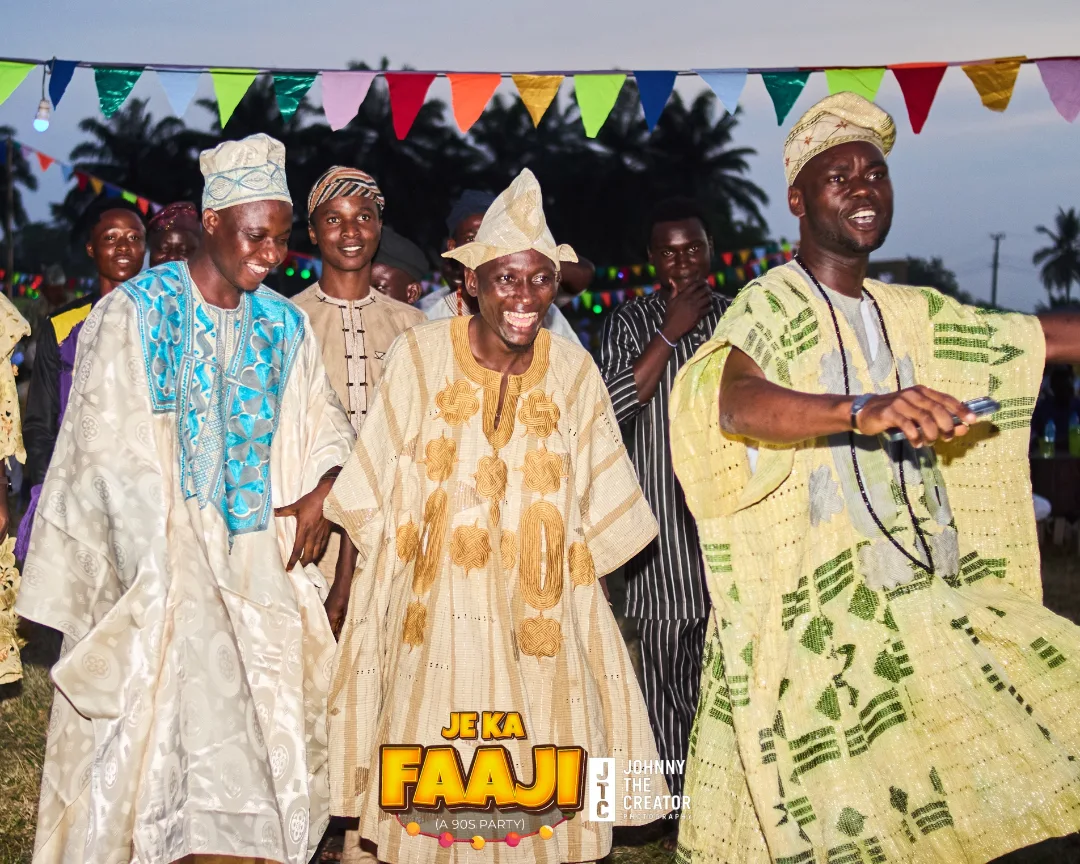
By early evening, the town had begun to shift. Groups arrived dressed in deliberate throwbacks, bold prints, oversized shirts, beaded accessories that nodded unmistakably to Yoruba fashion of the 1990s. There was laughter before the music even peaked, the kind that suggests people were already comfortable, already at home.
At some point between the dancing and the processions, I found myself speaking with Jide Oladele, the Festival Director. He wasn’t hovering or micromanaging, he moved through the space like someone hosting a large family gathering.
I asked him why Je Ka Faaji needed to exist in the first place.
Why was this festival important to you?
“I just wanted people to enjoy culture without feeling like they were being taught,” he said. “Culture can be joyful. It doesn’t always have to be serious.”
That philosophy showed in the details. Nothing felt overly choreographed, yet everything felt intentional. When the Sabo community arrived on horseback, the crowd didn’t rush forward. People paused. Phones went down. For a brief moment, the noise softened into reverence, not because anyone was instructed to do so, but because the moment demanded it.
Later, I asked him what the biggest challenge had been in pulling it off.
What was the hardest part of directing Je Ka Faaji?
He laughed. “Timing and money. Always timing and money.”
Despite that, the festival never felt under-resourced. It felt carefully scoped. You could sense decisions had been made to prioritise atmosphere over excess.
As the night unfolded, people danced with strangers, then realised they weren’t strangers at all. There was a looseness to the crowd, a reminder that festivals, at their best, dissolve social boundaries.
I asked him if there was a moment that made the stress worth it.
Was there a point where you thought, ‘Okay, this worked’?
“When I saw people fully commit,” he said. “The outfits, the dancing, the way they stayed till late—that’s when I relaxed.”
Je Ka Faaji didn’t feel like an attempt to recreate the past. It felt more like a conversation with it. The 90s references weren’t nostalgia for nostalgia’s sake; they were tools for connection. Everyone seemed to understand the language instinctively.
As the night wound down, I asked one final question.
If you were doing this again, what would you change?
He paused. “I’d add more ways for people to get involved. Workshops, small moments. Less watching, more doing.”
That answer lingered with me on my way out. Because Je Ka Faaji already felt participatory, but it also felt unfinished in the best way. Like something designed to grow with its audience.
By the time I left Oyo town, it was clear this wasn’t just another December event. It was an experiment in how culture can be shared, lightly, generously, and without gatekeeping. And for a first-time attendee, it felt less like covering a festival and more like being welcomed into one.
Comments