


Iran hangs 19-year-old Wrestling champion, two others in public execution

 Quick Read
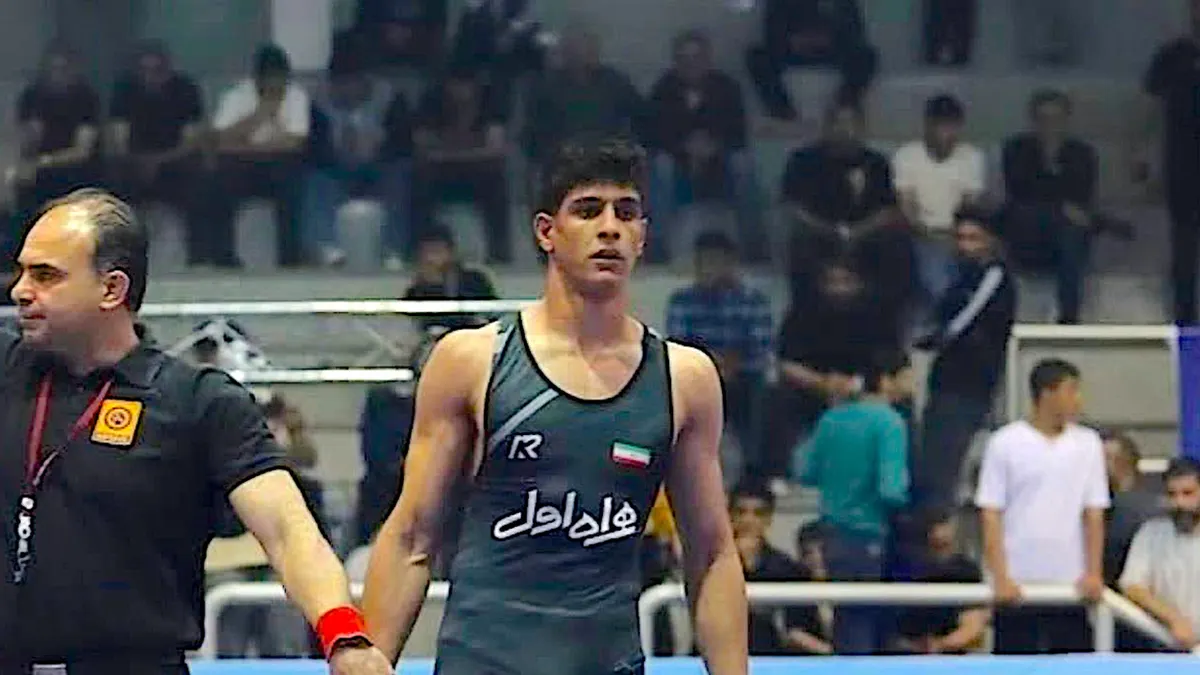
Saleh Mohammadi, who had only turned 19 last week, was a nationally celebrated wrestling champion who won bronze for Iran at the Saytiyev International Cup in Russia.
By Kazeem Ugbodaga
Iran hanged three men in public on Thursday, including a 19-year-old wrestling champion, in the first executions officially linked to the nationwide anti-government protests that swept the country in January, according to the judiciary’s Mizan news agency.
The executions were carried out in the city of Qom “in the presence of a group of people,” Mizan reported, after what it described as the completion of legal procedures including the presence of defense lawyers and approval by Iran’s Supreme Court.
The men were identified as Mehdi Ghasemi, Saleh Mohammadi, and Saeed Davoudi. Mizan said they were convicted for their role in the killing of two law enforcement officers at a police station during the January 8 protests, using “cold weapons” including swords, knives, and machetes.
The judiciary additionally charged them with “carrying out operational actions” in favour of Israel and the United States, a common accusation Iranian officials have leveled against protesters they alleged are foreign-backed.
They were convicted of the capital crime of “moharebeh,” waging war against God.
Saleh Mohammadi, who had only turned 19 last week, was a nationally celebrated wrestling champion who won bronze for Iran at the Saytiyev International Cup in Russia.
His case had drawn international attention, including a statement from the United States in January expressing deep concern and calling on Tehran “to halt the execution of Mohammadi and all individuals who have been sentenced to death for seeking to attain their fundamental rights.”
Rights groups condemned the executions as grossly unjust. The Norway-based Hengaw human rights organization reported that the men gave their confessions after being tortured, and were found guilty despite there being no witnesses, evidence, or CCTV placing them at the scene. Their families had testified they were elsewhere at the time.
Amnesty International said Mohammadi was denied “adequate defence and forced to make ‘confessions’ in fast-tracked proceedings that bore no resemblance to a meaningful trial.”
An informed source told Amnesty that Mohammadi had suffered a hand fracture from beatings.
Iran Human Rights (IHR) stated the three “had been sentenced to death following an unfair trial, based on confessions obtained under torture,” calling the executions “extrajudicial killings, carried out with the intent of creating terror to suppress political dissent.”
Iranian legal monitor Dadban added they were “deprived of effective access to independent counsel and the right to defence.”
Nationwide anti-government protests erupted across Iran in late December 2025 and intensified in early January 2026, fueled by economic turmoil, a collapsing currency, and broader anger at clerical rule.
Activists described it as the most significant unrest in decades.
Iranian authorities responded with a brutal crackdown. Tehran has acknowledged to the United Nations that 3,117 people were killed during the unrest, attributing the violence to “terrorist acts.”
However, the US-based Human Rights Activists News Agency (HRANA) has recorded more than 7,000 killings, warning the toll could be far higher. Rights groups say tens of thousands were killed by Iran’s own security forces.
The crackdown included mass arrests, with hundreds facing charges that could carry the death penalty. The Independent International Fact-Finding Mission on Iran warned this week that several detainees “face execution, in violation of international due process and fair trial rights.”
Amnesty International placed the number of those at risk at 30, including two minors.
Comments