


Forex market tension grows as Naira slips to N1,383/$

 Quick Read
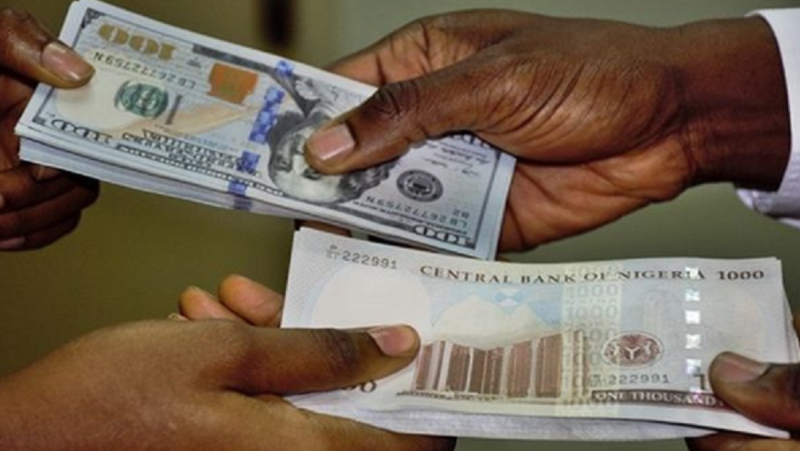
The naira weakened slightly to N1,383.5 per dollar on Tuesday, down from N1,383 per dollar recorded on Monday, as pressure from declining external reserves and cautious global market sentiment persisted.
The naira weakened slightly to N1,383.5 per dollar on Tuesday, down from N1,383 per dollar recorded on Monday, as pressure from declining external reserves and cautious global market sentiment persisted.
Figures released by the Central Bank of Nigeria (CBN) showed the currency traded within a range of N1,372 to N1,389 per dollar during the session. The marginal depreciation highlights continued strain in the foreign exchange market, largely driven by a steady drop in the country’s reserves.
Market data indicated moderate liquidity, with trading remaining stable but cautious in the Nigerian Foreign Exchange Market (NFEM). The naira posted a simple average exchange rate of N1,381.86 per dollar, while total interbank turnover reached $83.44 million across 88 deals.
Nigeria’s external reserves declined to $49.6 billion as of March 23, 2026, down from $49.8 billion recorded on March 18. The dip reflects ongoing pressure on the nation’s foreign exchange buffers, even as the naira shows relative short-term stability.
Globally, currency markets remained subdued amid geopolitical tensions and shifting monetary policy expectations. Investors continue to track developments in tensions involving the United States and Iran, which are influencing overall market sentiment.
The euro and British pound recorded slight gains of 0.1%, while the New Zealand dollar remained unchanged.
The U.S. dollar held firm against the Japanese yen, supported by signals from the Bank of Japan regarding possible future rate hikes.
Meanwhile, the U.S. dollar index slipped marginally by 0.1% to 99.126, reflecting generally muted global currency movements.
Expectations around U.S. monetary policy are also shaping global currency trends. The likelihood of a 25-basis-point rate hike by the Federal Reserve in December rose to 30.2%, up sharply from 8.2% the previous day. Federal Reserve Governor Michael Barr noted that interest rates may remain elevated for longer due to inflation staying above the 2% target.
Rising geopolitical risks in the Middle East, alongside fluctuations in global oil prices and capital flows, continue to pose challenges for emerging markets like Nigeria.
Earlier in the week, the CBN announced a medium-term inflation target of 6–9% as part of its move toward a full inflation-targeting framework.
The apex bank projects that external reserves will increase to $51.04 billion in 2026, up from $45.01 billion in 2025, supported by improved inflows and ongoing structural reforms.
Comments