



UNICEF tasks journalists on ethical reportage of children activities, incidents

 Quick Read
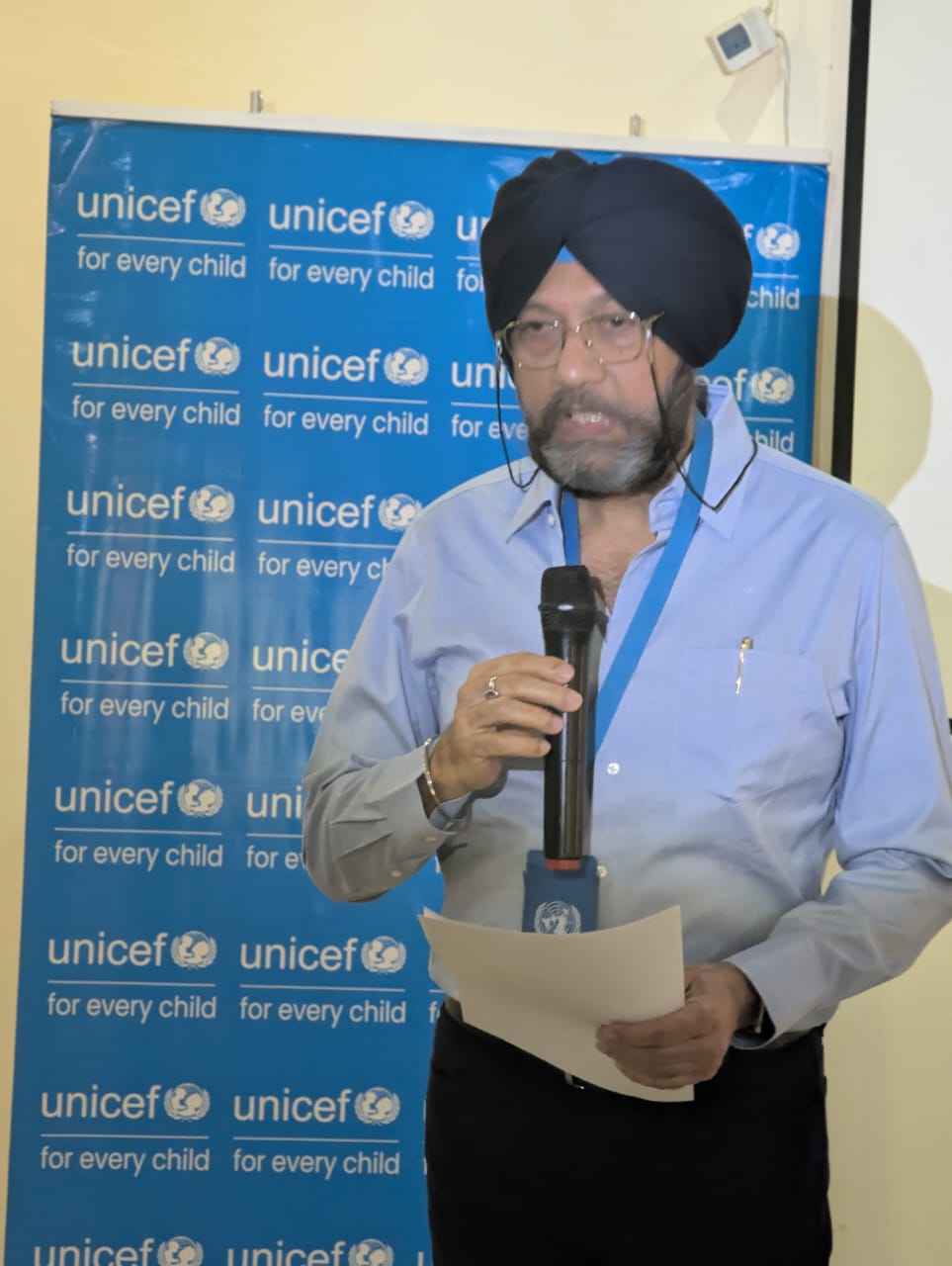
UNICEF Field Office, Kano, Dr. Karanveer Singh charged journalists to, at all times, ensure that whatever they report on issues concerning children are accurate, fair, balanced, and in line with ethical standards.
By Maduabuchi Nmeribeh/Dutse
The Kano Field Office of the United Nations Children’s Fund (UNICEF) has tasked journalists on the need to strictly abide by ethics, while reporting activities and incidents concerning children.
UNICEF harped on the importance of protecting children’s rights and privileges as laid down in the Child Rights Act (CRA), during reportage of incidents involving children in the society.
UNICEF made the appeal during a workshop it organized in conjunction with Kano Radio Corporation, in Dutse, Jigawa state.
Participants of the workshop were selected journalists, editors, and state correspondents for print and electronic media, drawn from Kano and Jigawa states.
During the workshop, journalists were urged to adopt ethical and professional approaches while reporting incidents involving children.
The media practitioners were also advised to avoid presentation of reports that could cause harm or deepen trauma on the children.
In his keynote address, the Officer-in Charge/Chief of Field Office (CFO), UNICEF Field Office, Kano, Dr. Karanveer Singh charged journalists to, at all times, ensure that whatever they report on issues concerning children are accurate, fair, balanced, and in line with ethical standards.
Dr. Singh further stated that journalists play a vital role in safeguarding the rights and dignity of children, describing them as leaders of tomorrow, whose interest have to be protected by the media.
According to him, northern Nigeria is currently facing significant challenges on protection of children’s rights, making it even more important to ensure children grow up in a safe and supportive environment.
Dr. Singh explained that the training was designed to highlight key ethical practices, including avoiding the use of children’s photographs without consent and refraining from publishing graphic or distressing details of violence or trauma involving minors.
He also advised against interviewing children, without consent of their parents or guardians, insisting that forceful or subtle interview of the child is a clear action of violating the child’s right.
Dr Karanveer Singh, however, noted that journalists, “work in a complex environment, often at great personal risk, to bring truth and information to the public.
Your role is not just a job; it is a vital service to democracy and community.”
He insisted that: “Ethical Reporting of Children is important, and it matters a lot in Nigeria – it is not just another theme for a workshop.
It is, in my view, the very bedrock of a functioning society, and it is especially crucial for the future of the children in this region.
“Ethical Reporting Builds Trust and Heals Division. In a nation or society with diverse ethnicities, religions, and perspectives, the media is the glue that can hold people together—or the wedge that can drive them apart! Ethical journalism, characterized by accuracy, fairness, and balance, is the antidote to misinformation and hate speech.
“When you verify a fact before publishing, when you present multiple sides of a story, you are not just being professional; you are building a foundation of trust with your audience.
“In the fragile context of northwest Nigeria, where insecurity and tension exist, responsible reporting can cool tempers, promote dialogue, and foster peace. At the same time, Irresponsible reporting can inflame passions with devastating consequences.”
Dr. Singh, however, urged journalists to be stickler for factchecking “in the race to break news, let accuracy be your compass. Always ask yourself: ‘Am I protecting the vulnerable in this story?”
“Let the best interests of the child be a non-negotiable principle. Balance your stories. Seek out multiple perspectives to give your audience a complete picture. Hold each other accountable. Champion ethics within your newsrooms and among your peers.
“I challenge all media practitioners to deploy their professional skills and outlets to set agenda on child rights issues – to put issues of child survival, development, protection and well-being to the front burner of discourse in media content offerings, regionally and nationally.”
In his welcome remarks, the Managing Director of Kano State Radio Corporation, Alhaji Abubakar Rano, represented by the Deputy Director of Programmes, Aisha Usman who doubles as UNICEF Focal Person, underscored the critical roles of journalists in shaping public opinion and influencing government decisions, in favour of the child.
According to her, “children are vulnerable and need protection. If we report carelessly, we may harm their dignity, expose their identity, or create stigma.”
In a presentation titled Ethical Principles in Reporting Children’s Issues, UNICEF Kano Communications Specialist, Samuel Kaalu, maintained that countries that are signatories to the United Nations Convention on the Rights of the Child are legally bound to implement its provisions, which are monitored by the Committee on the Rights of the Child.
Kaalu named four guiding principles of the convention to include: non-discrimination, the best interests of the child, the right to life, survival and development, and respect for the views of the child.
Another facilitator, Dr. Jide Johnson, described the media as the protector, not the violator of the child’s right.
Mr. Lekan Sote, in his presentation, drew a line when a journalist should report issues concerning children, and when not to report, with great emphasis on the kind of words used in reporting children, according to the circumstances surrounding the incidence.
Jumoke Falayi, a renowned female journalist, also discussed considerations and challenges of reporting children through the television, radio, digital media and the social media.
The workshop was designed to strengthen ethical journalism principles, reduce sensationalism, and curb the spread of misinformation, in the reportage of incidences and circumstances involving children.
Comments