


Naira slips to N1,387/$ as Nigeria’s reserves fall below $50bn

 Quick Read
The Central Bank of Nigeria expects reserves to rise to about $51 billion by the end of 2026 as part of its economic stabilization plans.
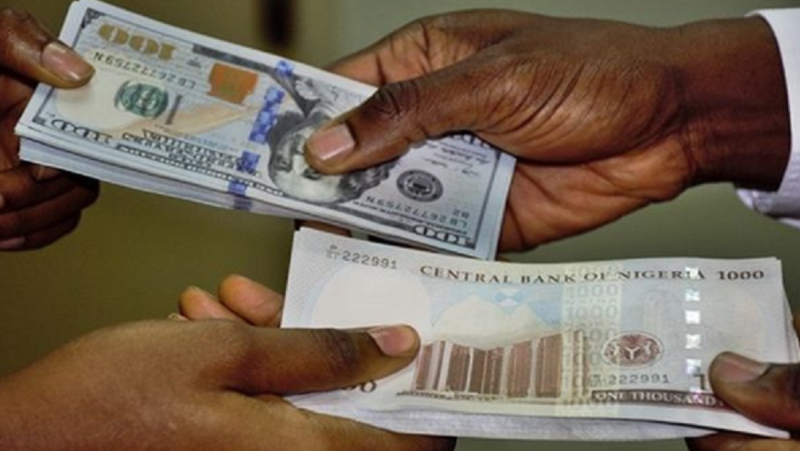
The Nigerian naira weakened slightly to N1,387 per dollar on Tuesday, compared to N1,386.75 per dollar recorded the previous day, according to data from the Central Bank of Nigeria (CBN).
This small drop comes as Nigeria’s foreign reserves declined to $49.29 billion by the end of March 2026.
The foreign exchange market showed moderate activity, with a total of $30.95 million traded across 44 deals in the official market.
What the data shows
Recent figures highlight a slight weakening of the naira alongside a steady fall in external reserves:
The naira dropped marginally from N1,386.75/$ to N1,387/$
During the day, it traded between N1,385.5/$ and N1,388/$
The average exchange rate stood at N1,386.69/$
Foreign reserves fell from $50.03 billion on March 11 to $49.29 billion on March 30
This represents a decline of about $547 million
The data suggests that pressure on the naira is ongoing but still under control, while reserves are gradually decreasing rather than falling sharply.
Background
The naira’s movement reflects Nigeria’s ongoing foreign exchange reforms. Since mid-2023, the CBN has adopted a more market-driven exchange rate system.
While this has improved transparency and reduced the gap between official and parallel market rates, it has also made the naira more sensitive to market forces, leading to occasional fluctuations.
Global context
Global currency markets remained mostly stable:
The U.S. dollar index fell slightly by 0.03% to 99.70
The euro rose by 0.21% to $1.1576
The Japanese yen strengthened to 158.55 per dollar
The British pound also gained 0.21% to $1.3247
Earlier gains in the dollar were linked to geopolitical tensions in the Middle East, but easing concerns have reduced its strength.
What you should know
Nigeria’s foreign reserves are important for supporting the naira and meeting international financial obligations.
The Central Bank of Nigeria expects reserves to rise to about $51 billion by the end of 2026 as part of its economic stabilization plans.
This projection is tied to improvements in the oil sector, especially increased production from the Dangote Refinery, which is expected to boost capacity significantly in the coming years.
Comments