



The Gains of Challenges

 Quick Read
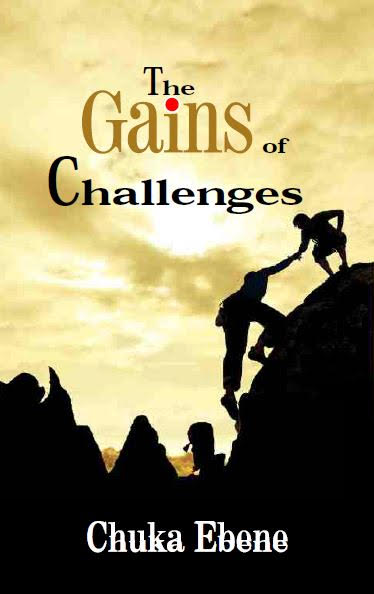
What are challenges, and how can they be overcome? These are the central questions explored in The Gains of Challenges, a thought-provoking book written by Chuka Ebene, an estate agent and pastor at Living Faith Church Worldwide.
Published by Chuka Ebene
What are challenges, and how can they be overcome? These are the central questions explored in The Gains of Challenges, a thought-provoking book written by Chuka Ebene, an estate agent and pastor at Living Faith Church Worldwide.
In the book, Ebene examines how individuals can overcome life’s difficulties, noting that challenges come in different forms but can be conquered with faith, resilience and purpose. Drawing from the biblical story of David and Goliath, he illustrates how what appears impossible to many can become achievable through trust in God. While others saw Goliath as an insurmountable obstacle, David viewed him as a challenge that could be overcome.
Ebene argues that challenges often serve as platforms for revealing God’s glory. He explains that what may be intended for harm can ultimately become a stepping stone to success. Using the analogy of a painter, he notes that a portrait may initially appear unclear, but gradually takes shape into something meaningful and beautiful.
The author also stresses the importance of growth through experience, asserting that “one cannot manage what one has not earned.” He cites the statistic that 75 per cent of American millionaires are self-made, using it to reinforce the idea that success is often built through persistence and overcoming setbacks.
According to Ebene, failure should not be defined by falling, but by the refusal to rise again. He maintains that challenges and afflictions help align individuals with their divine purpose, shaping character and strengthening resolve.
He further likens life’s difficulties to bends in a journey, explaining that what may seem like a long and exhausting path often brings one closer to the destination than realised. Nature itself, he adds, reflects this pattern, where difficult processes eventually produce beneficial outcomes.
In another example, Ebene notes that personal experience can enhance empathy and effectiveness, arguing that a former drug addict may be better equipped to counsel others struggling with addiction than someone without such experience.
Overall, The Gains of Challenges presents life as a learning process in which individuals are shaped for the goals they pursue. The book offers encouragement and perspective, positioning challenges not as obstacles, but as essential tools for growth, success and fulfilment.
Comments