


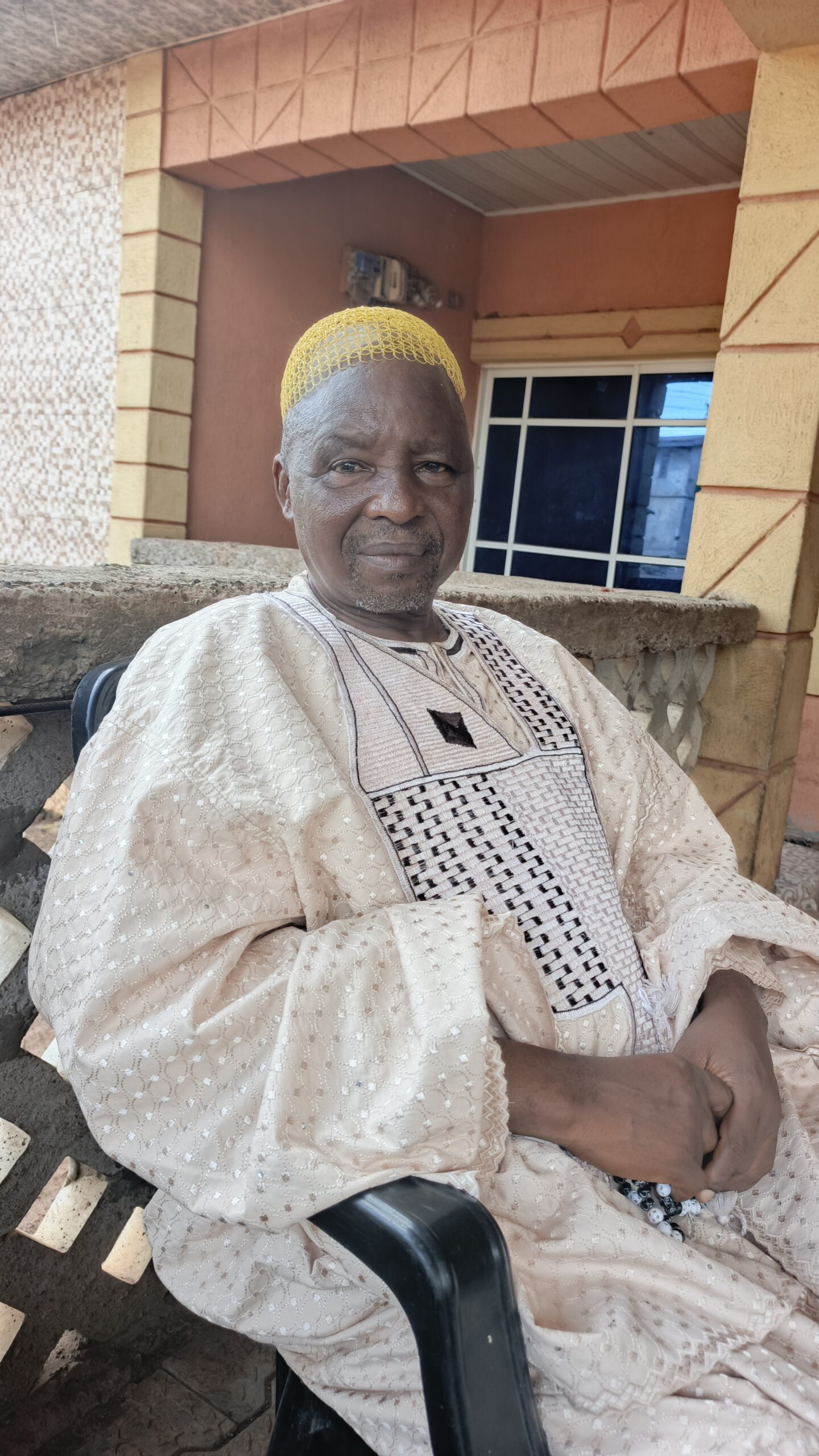
16 years in darkness: The lamentations of an Ekiti traditional ruler

 Quick Read
“We first had electricity in 1995. But one day, there was a heavy rainfall that damaged electric poles in the community. So since 2010, we have not had public electricity supply."
By Paul Dada
There is a lot to like in Itapaji-Ekiti, a rural settlement in the Ikole Local Government Area of Ekiti State in the south-western part of Nigeria. Although the community, which is roughly between 120 km and 150 km away from Omu-Aran in Kwara State, may not have much to offer in terms of tourism, its peaceful countryside setting, agrarian lifestyle, lush vegetation, close-knit community life, and the friendliness of its people to visitors are a big plus for the settlement.
It is, perhaps, a community that a visitor would want to visit again, if they do not mind doing so, despite the fact that the community lacks public electricity supply, a situation that has lingered for 16 painful years.
In a chat with PMNEWS, the Olu of Itapaji, the traditional ruler of the rural town, the soft-speaking and shy-looking Oba Karim Azeez Adebanjo, lamented the absence of vital public infrastructure in the community.
“I became the monarch on the 6th of November 1977. I will be 70 in June. As of the time I became king, we had public water. Only two Ekiti towns, Ado-Ekiti and Iyin-Ekiti, had public water before Itapaji. We had public water before all other towns. That gave us a sense of pride. But this is no longer the situation,” the monarch said, with the tone of someone who had resigned to a negative fate.
Looking crestfallen and forlorn, Oba Adebanjo told PMNEWS about the community’s challenge with public electricity. He said: “We first had electricity in 1995. But one day, there was a heavy rainfall that damaged electric poles in the community. So since 2010, we have not had public electricity supply.
“But last year, we heard that there was a plan to revitalise the power infrastructure. We were all excited. The state government only came with a generator for the commissioning. But we didn’t even have public power supply for a minute.”
Oba Adebanjo said, despite promises by the state government, nothing had been done to change the situation. “Many times, we have sent SOS in the form of written petitions to the state government, but nothing has happened. All we have been hearing are empty promises to fix the problem. However, politicians still come here to campaign for votes during electioneering seasons. Without power supply, many of us have had to depend on solar. Some use generators,” said the 69-year-old monarch.
According to him, “the major good thing we got from the government was when the administration of a former governor, Segun Oni, tarred the road passing through Itapaji to the boundary of Kwara State.”
“The other good thing is that civil servants are paid regularly,” he said.
The Olu of Itapaji, however, lamented the lack of enough teachers in the main primary school in the small town. “The state of our major primary school isn’t desirable. It has only five teachers: the headmaster and four class teachers. How can they be effective? We have also petitioned government over this, but there has been no favourable response.”
However, the monarch’s chat with PMNEWS was not just filled with complaints. He also had positive things to say. Amid the mind-boggling stories of bandit attacks in parts of the south-west, he said Itapaji had been spared that horror, although neighbouring communities such as Oke-Ago, Iyemero and Omu were not so lucky.
Oba Adebanjo also painted a picture of religious tolerance and harmony between Christians and Muslims in the community.
“We do things in common. During Eid-Kabir, Christians go with us to the Muslim praying ground. During Easter religious gatherings, Muslims join Christians. We feast together. We are united. My own father was a Muslim but his immediate younger brother was a Christian,” said the monarch.
Comments