



The Shadow of 1953 – Why Hope Uzodimma’s senate ambition rekindles debate over regional balance

 Quick Read
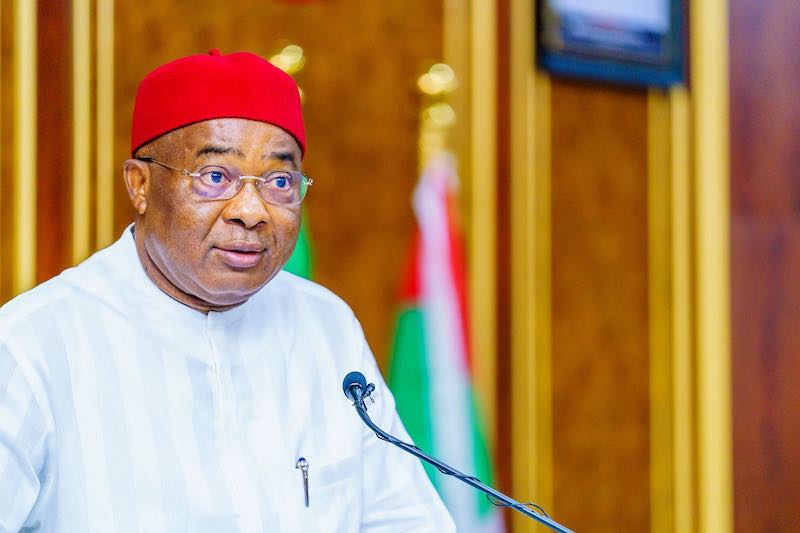
Reports suggesting that Imo State Governor Hope Uzodimma may be interested in the Senate Presidency have sparked renewed conversations about regional balance, political zoning, and historical sensitivities between the South-East and South-South regions of Nigeria.
Opinion by John William
Reports suggesting that Imo State Governor Hope Uzodimma may be interested in the Senate Presidency have sparked renewed conversations about regional balance, political zoning, and historical sensitivities between the South-East and South-South regions of Nigeria.
For many political observers in the Niger Delta, discussions around the leadership of the National Assembly are often viewed through the lens of historical experiences and long-standing concerns about representation and fairness within the Nigerian federation.
Some commentators continue to reference the political developments of 1953, particularly the collapse of the government led by Professor Eyo Ita, as a defining moment in the political relationship between majority and minority interests in the old Eastern Region. While interpretations of those events differ among historians and political actors, the episode remains significant in the political memory of many in the South-South.
Fast forward to today. The South‑South’s patience has limits. During the Fourth Republic, when the Senate Presidency went to the South‑East — and South‑South senators refrained from contesting — that restraint was an act of political good faith. It was not a licence for entitlement or a blank cheque for power grabs. Yet reports now suggest a serving South‑East governor is prepared to abandon his office and trample convention to chase the Red Chamber. That is not ambition; it is audacity dressed up as legitimacy.
Critics of any potential South-East bid for the Senate Presidency argue that the issue goes beyond individual ambition and touches on broader expectations surrounding zoning and power rotation among regions. They point out that political accommodation and restraint have often played a role in maintaining cooperation between the South-East and South-South.
Some political stakeholders in the South-South also reference developments during the Fourth Republic, when the Senate Presidency was zoned to the South-East and many South-South senators reportedly chose not to contest the position in the interest of regional cooperation and political stability. According to those who hold this view, such decisions reflected political goodwill and mutual understanding between both regions.
Against that backdrop, recent speculations surrounding a possible Senate Presidency ambition involving a serving South-East governor have generated fresh debate among commentators who believe regional conventions and existing political expectations should be handled with caution and sensitivity.
Supporters of this position argue that respecting informal political understandings helps strengthen trust, preserve regional relationships, and maintain stability within the broader southern political bloc. They warn that actions perceived as disregarding such expectations could deepen feelings of political exclusion and strain long-standing alliances between both regions.
At the same time, others maintain that every qualified politician has the constitutional right to seek elective office, including leadership positions within the National Assembly, regardless of regional calculations. They argue that democratic competition should not automatically be interpreted as hostility toward another region.
The debate also highlights wider concerns about how Nigeria manages political inclusion, regional representation, and power-sharing arrangements in a diverse society. Over the years, zoning and rotational arrangements have often been used by political parties and stakeholders as tools for balancing competing interests across the country.
Political analysts warn that disagreements over such arrangements should be handled carefully to avoid unnecessary regional tension or rhetoric that could further divide communities with long-standing historical and cultural ties.
Observers also note that the South-East and South-South have historically shared common political interests on several national issues and have frequently worked together in advocating for greater regional development and inclusion.
As conversations around the Senate Presidency continue, many stakeholders are calling for dialogue, mutual respect, and political maturity in managing differing expectations among regions.
Ultimately, the ongoing debate reflects the broader challenge of balancing democratic ambition with the expectations of equity, inclusion, and political stability within Nigeria’s evolving political landscape.
Comments