


Lagos Targets Revenue Leakages In 80 State Agencies

 Quick Read
The Lagos State Government has intensified oversight and performance monitoring across its parastatals and government-owned agencies as part of sweeping reforms aimed at boosting revenue generation, enforcing accountability and strengthening institutional governance across the state.
The Lagos State Government has intensified oversight and performance monitoring across its parastatals and government-owned agencies as part of sweeping reforms aimed at boosting revenue generation, enforcing accountability and strengthening institutional governance across the state.
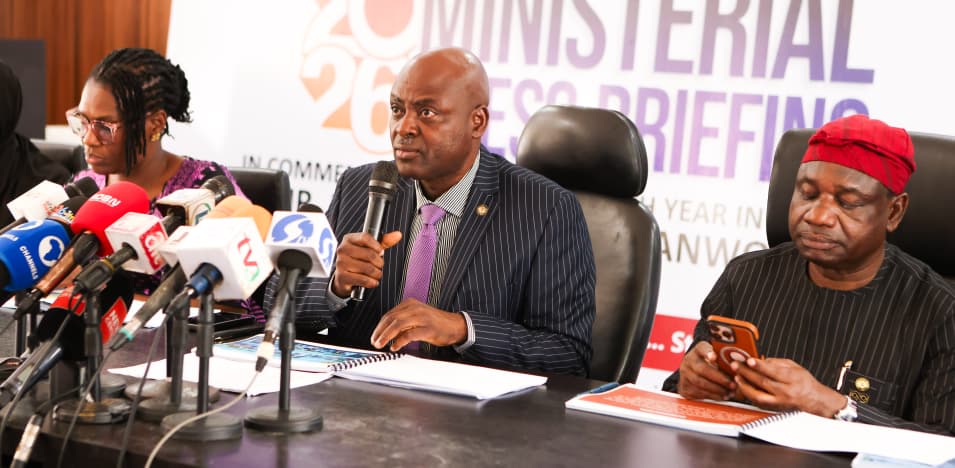
Permanent Secretary, Parastatals Monitoring Office, PMO, Dr. Olugbemiga Ayoola Aina, disclosed this during the 2026 Ministerial Press Briefing on Tuesday in Alausa, Lagos.
Aina said the PMO had, within the last one year, embarked on aggressive institutional reforms designed to improve efficiency, transparency and financial discipline across Lagos State agencies, parastatals and government-owned companies.
According to him, the reforms align with the Sanwo-Olu administration’s T.H.E.M.E.S+ agenda and are aimed at building resilient institutions capable of delivering sustainable governance and improved public service.
“The Parastatals Monitoring Office remains committed to ensuring that all parastatals, agencies and government-owned companies operate in line with established administrative, financial and governance guidelines,” Aina said.
One of the major highlights of the reforms, he said, was the monitoring of 80 revenue-generating agencies through the Parastatals Revenue Generating Meeting, PARGEM, a strategic platform established to track revenue performance, identify leakages and improve collection mechanisms statewide.
The Permanent Secretary disclosed that the state also carried out inspection and periodic evaluation exercises across 70 agencies in 2025, while a fresh exercise covering 75 agencies was already ongoing in 2026.
He explained that the inspections focused on revenue performance, expenditure monitoring, pension compliance, project implementation, financial accountability and adherence to government guidelines.
“In line with our statutory responsibilities, we have continued to strengthen revenue generation mechanisms, monitor compliance, improve inter-agency collaboration and ensure prudent project execution across state agencies,” he stated.
Aina revealed that the PMO also conducted a large-scale project monitoring exercise involving 25 agencies to evaluate ongoing and completed government projects, identify delays and ensure value for money in public spending.
He said the initiative was carried out in collaboration with engineers, builders and architects from the Ministry of Works and Infrastructure to guarantee compliance with approved standards and specifications.
Aina said the PMO additionally embarked on on-the-spot assessments of 50 agencies to evaluate operational efficiency, succession planning, governance structures and audited financial reports.
The Permanent Secretary stressed that the government would continue to deepen reforms through stronger project monitoring, KPI-driven performance evaluation and enhanced stakeholder collaboration.
“As we present this report, we remain mindful that governance is a continuous process that demands innovation, discipline, collaboration and strategic leadership,” he said.
Comments