


Lagos demolishes 349 distressed buildings, detects 27,233 infractions

 Quick Read
The Lagos State Government has intensified its crackdown on distressed and illegal buildings across the state, demolishing 349 distressed structures and detecting 27,233 building infractions between May 2023 and April 2026 as part of aggressive efforts to curb building collapse and enforce safety regulations.
The Lagos State Government has intensified its crackdown on distressed and illegal buildings across the state, demolishing 349 distressed structures and detecting 27,233 building infractions between May 2023 and April 2026 as part of aggressive efforts to curb building collapse and enforce safety regulations.
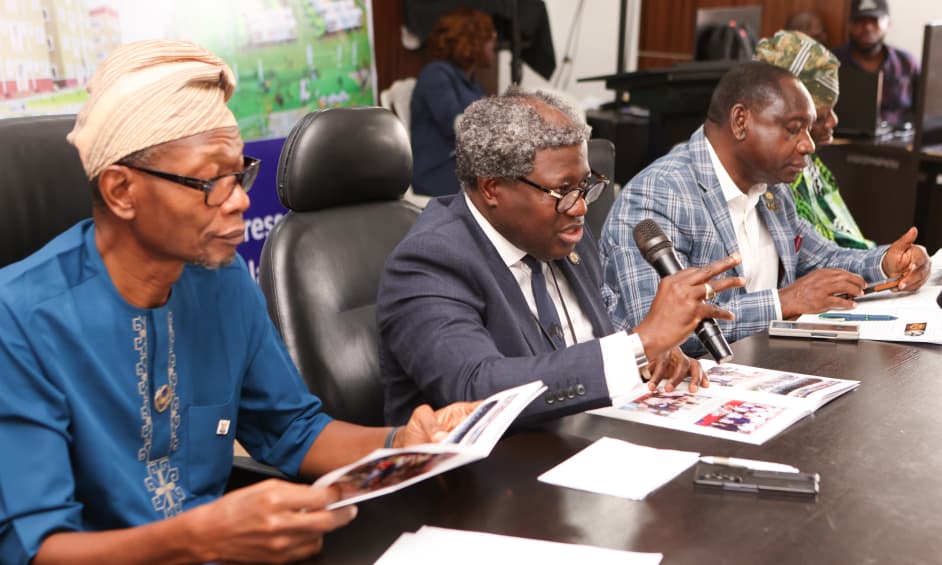
Special Adviser to the Governor on E-GIS and Urban Development, Olajide Babatunde, disclosed this on Thursday in Alausa, Ikeja, during the 2026 Ministerial Press Briefing held to commemorate the third year of the second term of Governor Babajide Sanwo-Olu.
Babatunde said the distressed buildings were demolished by the Lagos State Building Control Agency as part of proactive measures adopted by the state government to halt rising cases of building collapse and protect lives and property.
According to him, LASBCA continued to strengthen enforcement and monitoring activities across the five divisions of Lagos to ensure compliance with building regulations and safety standards.
“The Agency has been playing a pivotal role towards the attainment of making Lagos a 21st-century economy in line with the T.H.E.M.E.S Plus Agenda of the State Government,” Babatunde stated.
He explained that the agency was responsible for enforcing building control regulations, issuing authorisation to commence construction, inspecting building stages, verifying insurance policies, identifying distressed buildings, and enforcing fire safety requirements across the state.
Giving a breakdown of enforcement activities carried out within the review period, the Special Adviser disclosed that LASBCA issued 4,711 authorisations to commence construction to developers and building owners.
He further revealed that the agency carried out 8,099 stage inspections on buildings under construction for compliance and conformity checks, while 1,790 ongoing construction projects were monitored to ensure adherence to approved building plans.
Babatunde added that 902 Certificates of Completion and Fitness for Habitation were issued after satisfactory stage-by-stage inspections of completed buildings by the agency.
According to him, LASBCA also verified 782 building insurance policies as part of measures aimed at strengthening risk management and public safety in the built environment.
The Special Adviser disclosed that the agency carried out 19,320 enforcement activities during the reporting period, including issuance of stop-work orders, seal-up notices, quit notices, and evacuation directives against illegal and non-conforming structures.
He noted that the state government had intensified public enlightenment campaigns and whistleblowing mechanisms to encourage Lagos residents and stakeholders to report distressed and illegal structures before disasters occur.
Babatunde explained that LASBCA deployed social media platforms, SMS channels, websites, and dedicated phone lines to improve public participation and early detection of dangerous buildings across the state.
He further disclosed that the government launched the Certified Accreditors’ Programme, a Public-Private Partnership initiative involving over 140 certified consultants responsible for screening drawings, monitoring construction stages, and identifying illegal structures.
According to him, the initiative followed recommendations contained in the White Paper on the collapse of the 21-storey building at Gerrard Road, Ikoyi.
The Special Adviser also highlighted the introduction of the Electronic Physical Planning Permit System, an online platform enabling developers and property owners to process approvals, stage certifications, fitness certificates, and other regulatory requirements digitally.
Babatunde stressed that the Sanwo-Olu administration remained committed to strengthening urban planning, improving building safety standards, and preventing avoidable building collapse incidents through strict enforcement, technology-driven monitoring, and stakeholder collaboration across Lagos State.
Comments