


A keen review of Eniola Ogunlana’s Omolade boubou gown

 Quick Read
As we observe these days, Afrocentric fashion is now more about celebrating the cultural heritage and style artistry of the African fashion itself. From bold and bright colors, textile patterns, to refined garments, there is always an interesting perspective about how many African designers draw inspirations from their ancestral roots.
By Odunayo Ayo Ojo
As we observe these days, Afrocentric fashion is now more about celebrating the cultural heritage and style artistry of the African fashion itself. From bold and bright colors, textile patterns, to refined garments, there is always an interesting perspective about how many African designers draw inspirations from their ancestral roots.
Indeed, a lot of fashion designers across the African continent, more specifically Nigeria, are employing more traditional forms in their intricate tailoring practice, although with a touch of uniqueness and modern blend. Isn’t this tailoring commendable? I mean, one that does not forget integrating its roots into contemporary style.
Eniola Ogunlana, the creative and mind behind Enyraverstore, is one of the few distinctive fashion designers of the Nigerian extract who can perceive the beauty and essence in utilizing African cultural heritage in design.
Her latest design, OMOLADE, is a testament to her innate craftsmanship. Eniola Ogunlana effortlessly embodies the skillful fingers and mind of an African designer indeed.
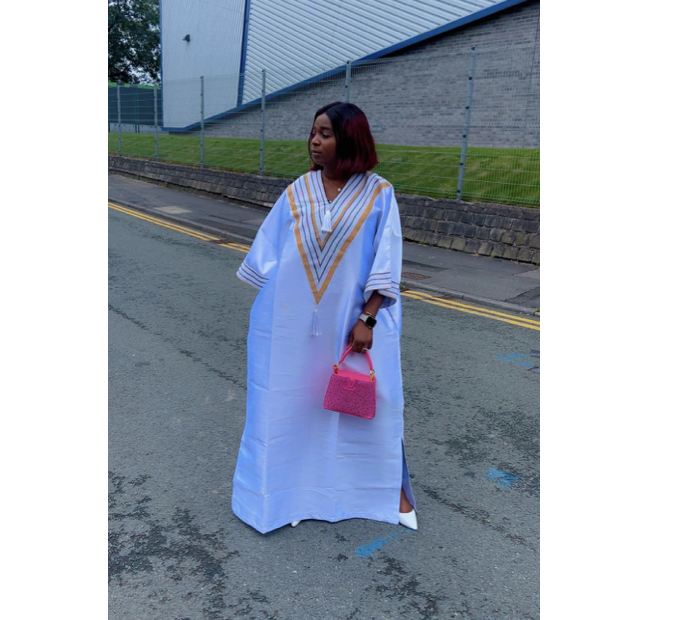
From its physical aesthetics to refined details, Eniola Ogunlana’s OMOLADE’s gown is unarguably a pleasurable invitation to the classic and elegant female boubou. Styled from white African Guinea print fabric, this buobou gown features a V-neck shape. For me, this V-neck shape offers a balance of simplicity and sophistication to the gown.
Along the neckline and moving towards the chest bodice, one can vividly see and admire the careful arrangements of black lines and golden lines which all harmoniously form triangular shape that points all the way vertically down the boubou.
On this interplay of arranged black and golden lines are two white tassels from the endpoint of the neckline to the last golden line of the chest, adding a dramatic but architectural purpose to the gown.
Anyways, what is a good or quality fabric without a matching and amplifying stitching?
Eniola Ogunlana is consistent by making this interplay of lines echoe on the sleeves of the gown, although with a little bit of restraint in omission of the golden lines. Certainly, anyone would be stuck in admiring the rhythmic flow of the design, where maturity hooks sophistication and where old meets the contemporary.
From the pattern drafting of the OMOLADE boubou to the finishing, it appears simple, loose, and floating without losing royalty and demure. The slit openings at both sides of the gown also offers a graceful movement to whoever adorns this buobou gown.
This innovative thought of introducing slits at both sides of the gown is a function of purpose, not just aesthetics. Indeed, Eniola Ogunlana upholds traditional and cultural heritage as she is mindful of her techniques in delivering the best for traditional or cultural wear.
Yet, there are some offsides for this design. The boubou straight shape is unarguably classic and appealing. That said, it is only fair to admit that this form may not suit every wearer, especially those who appreciate structurally fitted dresses. Also, embellishments like stone appliqués could have enhanced the fluidity and overall architecture of the OMOLADE gown.
While Eniola Ogunlana has done well in preserving cultural pride with this boubou gown, yet there are rooms for refinements in the future.
Nevertheless, Omolade boubou is a tributary homage to cultural heritage and creative craftsmanship of Eniola Ogunlana. It is also an expression and appreciation of the richness of African textiles, while also proving that traditional and contemporary styles of today do not have to be in opposition.
With African fashion designers like Eniola Ogunlana, one cannot help but imagine what is next for the future of traditional silhouettes. Will they keep being dynamic and vibrant such that they resonate with younger female generations?
Comments