



Washington says strikes in Iran were defensive after threats to Navy ships

 Quick Read
The United States military carried out strikes on targets in southern Iran on Monday following what American officials described as a rapid escalation of Iranian military activity in the 24 hours leading up to the operation
The United States military carried out strikes on targets in southern Iran on Monday following what American officials described as a rapid escalation of Iranian military activity in the 24 hours leading up to the operation.
According to two U.S. officials who spoke on condition of anonymity, intelligence analysts detected multiple actions by Iranian forces that were considered potentially threatening to American troops and naval assets operating in the Gulf region.
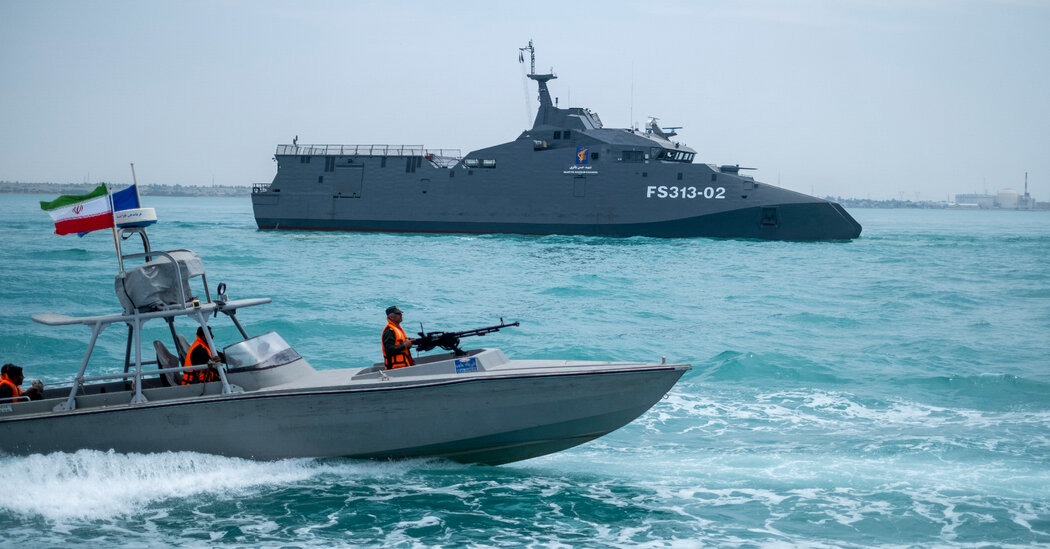
The officials said U.S. warplanes targeted and sank two boats belonging to Iran’s Islamic Revolutionary Guard Corps (IRGC) that were allegedly attempting to place mines in the Strait of Hormuz, a critical global shipping route through which roughly one-fifth of the world’s oil and gas once passed before the conflict disrupted traffic.
They also reported that Iran launched one-way attack drones in the vicinity of nearly two dozen U.S. Navy vessels operating in the Gulf of Oman and the Arabian Sea. The ships are reportedly enforcing a maritime blockade aimed at vessels linked to Iranian ports.
In addition, U.S. military analysts detected activity at Iranian surface-to-air missile sites near the Strait of Hormuz, which officials said posed a potential threat to both land-based and carrier-based aircraft operating in the region.
In response, the U.S. military conducted what it described as “self-defense strikes” against selected targets in southern Iran.
“U.S. Central Command continues to defend our forces while using restraint,” said Capt. Tim Hawkins, a CENTCOM spokesperson, in a statement, adding that the strikes were carried out “to protect our troops from threats posed by Iranian forces.”
He declined further comment on Tuesday, referring to his earlier statement.
The Pentagon also dismissed Iranian media claims that an American MQ-9 Reaper drone had been shot down.
U.S. officials and independent analysts said the IRGC activity may have been part of efforts to test operational boundaries in the region amid ongoing tensions and fragile negotiations aimed at stabilizing the Strait of Hormuz.
Dana Stroul, research director at the Washington Institute for Near East Policy and former U.S. Defense Department official, said the developments reflected continuity in Iran’s military approach despite diplomatic efforts.
“The regime is still attempting to portray itself as a good-faith negotiator,” she said, “but the IRGC navy was caught mining the strait at the same time Tehran was apparently negotiating to demine the strait.”
Iran has previously used small naval vessels to deploy mines in the strait, particularly after the outbreak of hostilities with the United States and Israel earlier this year.
The tactic significantly reduced tanker traffic and contributed to rising global energy prices.
While a cease-fire has been in place for about six weeks, both sides have continued to report sporadic confrontations at sea. U.S. commanders say they are closely monitoring Iranian efforts to rebuild degraded military capabilities.
Recent intelligence assessments cited by U.S. officials suggest Iran may have regained operational access to most of its missile infrastructure, including sites, launchers, and underground facilities.
Of particular concern is the reported reactivation of dozens of missile sites along the Strait of Hormuz, which could pose renewed risks to commercial shipping and military vessels operating in the region.
Comments