


Tritek Summit raises concerns over Africa’s digital skills gap employability

 Quick Read
The summit, organised by the founder of TriTek Academy, Dr. Adeshola Cole, brought together educators, HR professionals, tech specialists, marketers, founders, policy advocates, and young professionals to discuss the widening gap between technical training and workplace relevance across Africa’s growing technology ecosystem.
Stakeholders in Africa’s education and technology sectors have called for urgent reforms in talent development, warning that technical skills alone may no longer be sufficient for employability in a rapidly evolving digital economy driven by artificial intelligence.
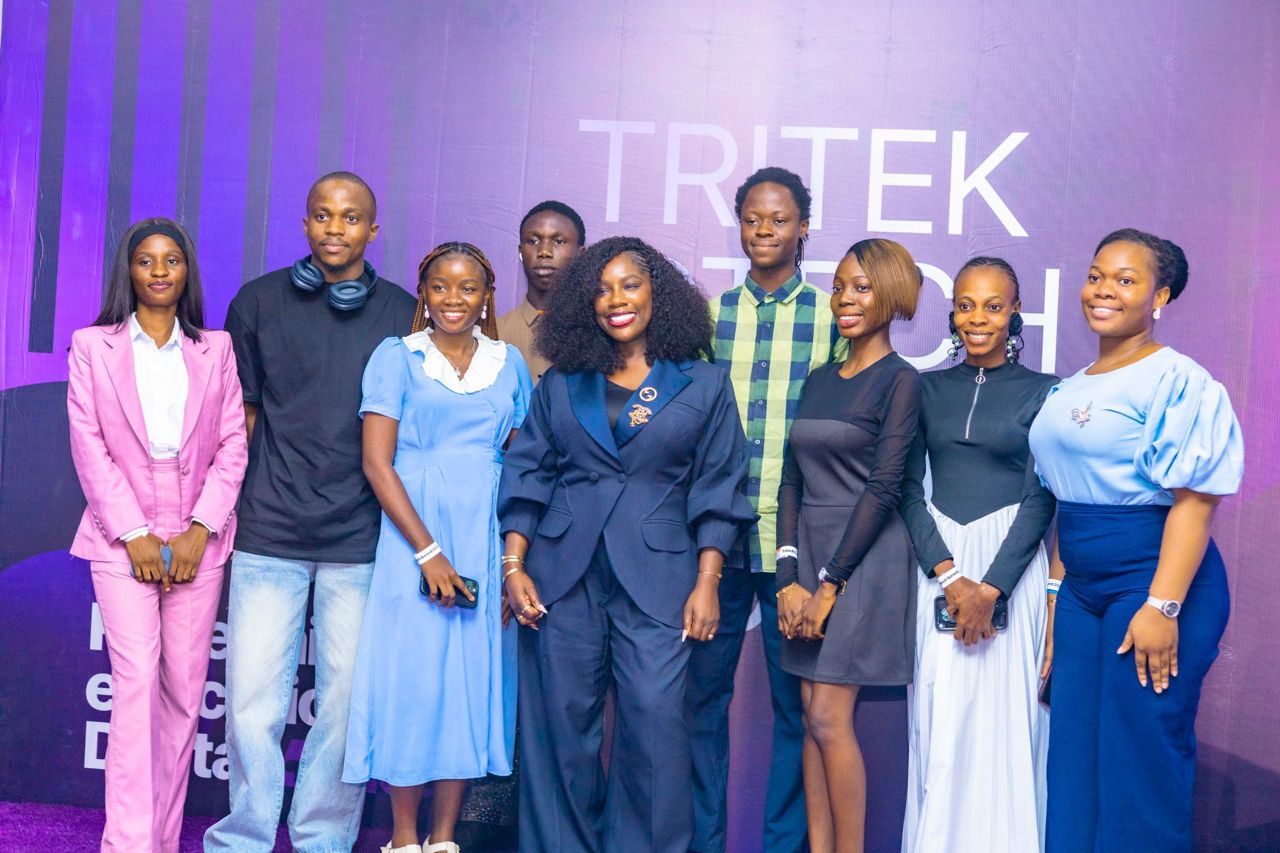
The concerns were raised at the TriTek Academy EdTech Summit held in Lagos on May 16, 2026, under the theme, “Redefining Education for a Digital Africa.”
The summit, organised by the founder of TriTek Academy, Dr. Adeshola Cole, brought together educators, HR professionals, tech specialists, marketers, founders, policy advocates, and young professionals to discuss the widening gap between technical training and workplace relevance across Africa’s growing technology ecosystem.
The event also had in attendance Her Royal Majesty, Queen Ashley Afolasade Ojaja Ogunwusi FCA Yeye Oodua, whose presence reinforced conversations around youth empowerment, education, leadership, and the future of African talent development in a rapidly changing global economy.
Speaking during the event, participants noted that while the technology industry continues to attract increasing interest from young Africans, employers are now placing greater emphasis on practical experience, communication abilities, problem-solving skills, emotional intelligence, and adaptability.
Dr. Cole, a career coach, Forbes-featured CEO, and one of the first female EdTech founders in the United Kingdom, said Africa’s education and workforce systems must evolve beyond certifications and technical competence alone.
According to her, many professionals lack what she described as “global awareness,” including the ability to navigate workplace communication, collaboration, feedback systems, and multicultural environments.
She warned that institutions may unintentionally contribute to the employability gap if they continue producing graduates with technical expertise but limited soft skills.
“If we are only producing technical specialists without communication skills, emotional intelligence, and conflict resolution abilities, then we are contributing to the mismatch ourselves,” she said.
One of the key panel sessions at the summit focused on whether Africa is experiencing a true digital skills gap or simply a mismatch between training and real-world needs.
The session featured contributions from Victor Oluwaleye, Head of Marketing at Konga; Angel Alphonsus, Product and Growth Specialist; and Oladotun Ajayi, Co-founder of Evolv Africa;
Head of Marketing at Konga, Victor Oluwaleye, argued that many commonly taught digital skills are becoming increasingly saturated.
According to him, skills such as digital marketing, Canva design, and basic technology tools are no longer enough to distinguish candidates in today’s competitive labour market.
He stressed the growing importance of critical thinking, communication, initiative, and visibility.
“Do you have critical thinking skills? Can you communicate? Can you solve problems? That is what makes people stand out,” he said.
Victor also encouraged young professionals to build visibility around their work and create opportunities independently where necessary.
“Work on your content. Build your experience yourself if you have to. You can even start something small on your own,” he added.
Product and Growth Specialist, Angel Alphonsus, also addressed the growing emphasis on certifications within the technology industry, noting that certificates without practical application hold limited value in an increasingly competitive market.
According to her, young professionals transitioning into technology should focus on internships, volunteering, project-based learning, and practical exposure alongside academic qualifications and certifications.
“Without applying certifications to real-life situations, you cannot truly compete globally,” she stated.
Angel Alphonsus further called on employers to reconsider unrealistic expectations often placed on entry-level candidates who may not have had access to opportunities required to build experience.
Her comments resonated strongly during discussions around the disappearance of traditional entry-level opportunities across industries increasingly influenced by automation and artificial intelligence.
Speakers at the summit noted that many companies now expect graduates to arrive job-ready, with practical experience already acquired before employment.
Participants observed that industries are rapidly automating repetitive and administrative tasks including customer support, content production, and basic coding functions.
This shift, according to panelists, is contributing to a structural challenge for many African youths seeking career opportunities without prior experience.
Several speakers identified internships, apprenticeships, volunteering, self-initiated projects, and project-based learning as some of the most viable pathways for gaining relevant industry exposure.
The summit also examined the impact of social media on public perceptions of careers in technology.
Co-founder of Evolv Africa, Oladotun Ajayi, stated that the technology sector has become heavily glamorised online, often presenting tech careers as shortcuts to financial success rather than fields requiring continuous learning and adaptability.
He urged professionals to focus on transferable skills capable of remaining relevant across industries.
According to him, communication, storytelling, and public speaking are increasingly becoming high-value skills in a workforce being reshaped by artificial intelligence.
Another panel session moderated by Blessings Mosugu explored whether governments can effectively keep pace with technological advancement or whether education innovation should increasingly be driven by the private sector.
The session featured discussions from Mfon Eshett, Human Resource Manager; Oluwatomilola Tometi, Program Manager, EdTech; Olajumoke Durotolu, Business Operations and Project Manager; and Love Oyeledun, AI Enablement Specialist.
Panelists discussed the growing need for stronger collaboration between public and private institutions in preparing Africa’s future workforce and ensuring educational systems remain aligned with rapidly changing industry realities.
As discussions continued throughout the summit, a recurring concern among speakers was whether African educational institutions and edtech organisations are adequately preparing young people for jobs that may evolve significantly before graduation.
Participants repeatedly emphasised that employability now depends not only on technical knowledge, but also on the ability to apply skills practically, collaborate effectively, and adapt to rapidly changing workplace realities.
Her Royal Majesty, Queen Ashley Afolasade Ojaja Ogunwusi FCA Yeye Oodua, also emphasised the importance of empowering young Africans through education, exposure, leadership, and innovation, while encouraging stakeholders to remain intentional about building opportunities that prepare youths for the future economy.
Her remarks reinforced broader discussions at the summit around sustainable talent development and the role institutions must play in supporting the next generation of African professionals.
As the event concluded, stakeholders agreed that Africa’s competitive advantage in the global economy may no longer come solely from producing more tech talent, but from producing adaptable professionals capable of combining technical expertise with leadership, communication, emotional intelligence, and practical workplace readiness.
The summit ended with renewed calls for stronger alignment between education, industry expectations, and workforce realities, as participants stressed the need for African talent development systems that are better equipped for an increasingly digital and AI-driven future.
Comments