


The organization that decided Africa needed its own reputation framework

 Quick Read
RPI’s answer was the 100 Most Reputable Africans, an annual list that evaluates individuals from across the continent and the diaspora on three criteria: integrity, impact, and visibility.
When Reputation Poll International registered in England and Wales in August 2017, it had a straightforward but ambitious idea: that Africa deserved its own reputation framework, built by people who understood the continent, not adapted from models designed elsewhere.
The timing was not accidental. By 2017, global reputation measurement had become a serious industry, with firms like RepTrak surveying hundreds of thousands of consumers across fifteen economies, producing data that moved boardrooms and shaped investor decisions. But those frameworks were created around Western markets and Western audiences. A Nigerian bank, a Kenyan entrepreneur, and a Ghanaian head of state barely registered.
RPI’s answer was the 100 Most Reputable Africans, an annual list that evaluates individuals from across the continent and the diaspora on three criteria: integrity, impact, and visibility. It was not a scientific instrument in the RepTrak mold. It was more like an editorial judgment, consistently made year after year by an organization that had decided someone needed to make it.
The early editions drew names that gave the list immediate credibility. Ngozi Okonjo-Iweala, who would go on to lead the World Trade Organization. Akinwumi Adesina, President of the African Development Bank. Femi Otedola and Folorunso Alakija are two of Nigeria’s most prominent business figures. These were not people who attached their names to things carelessly.
The list has been published every year since, drawing honourees from more than 20 countries across the continent, including, in recent editions, heads of state, central bank officials, scientists, humanitarians, athletes, and artists. The breadth is the point. Reputation, in RPI’s framing, is not only about wealth or political power. It is about what a life or a career has meant to the people around it.
The organization’s original English entity was dissolved in September 2019. A successor company was re-incorporated in Aberdeen, Scotland, in March 2022, the same month its executive director, Dr. Tonye Rex Idaminabo, was appointed a Fellow of the Royal Society of Arts, joining a list of past Fellows that includes Charles Dickens, Nelson Mandela, Stephen Hawking, and Tim Berners-Lee.
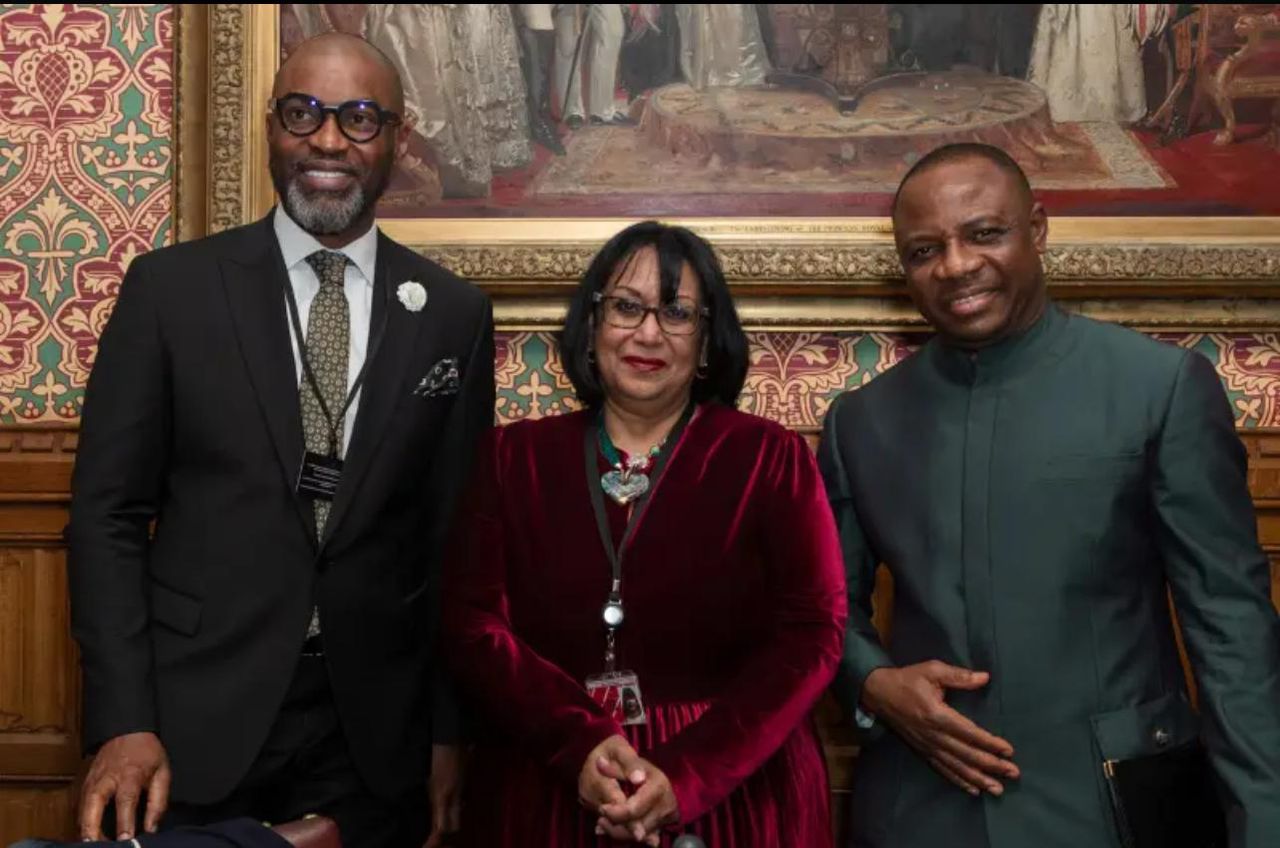
By then, the organization had added two further activities to its annual calendar. The Global Reputation Forum, held each year in London, had grown from a modest gathering into a two-day event that convenes policymakers, banking executives, diaspora professionals, and institutional figures at some of the capital’s most recognizable venues. The 2023 edition was held at the House of Lords and the London Marriott Hotel County Hall, drawing speakers that included a Bank of England official, a former European head of state, and two Members of Parliament.
The third strand is the Reputable Banks and Fintech Awards, which recognize banking institutions and fintech companies operating across Africa for excellence, integrity, and their contributions to financial inclusion. The 2022 edition was held in London, drawing participants from across West and East Africa.
None of it happened overnight. The organization spent its first years largely unknown outside a specific African diaspora network in the UK. What slowly changed was the caliber of the names on the list and the seriousness of the conversations at the forum. Institutions engage when they believe the room is worth being in. By 2023, the Bank of England apparently did.
RPI remains a small organization by any measure. It does not publish a detailed scoring methodology, and its rankings have not yet entered the kind of academic or policy citation that would mark them as authoritative in the fullest sense. What it has built over seven years is a platform that takes reputation seriously as a strategic question for Africa and has persuaded enough serious people to agree that the conversation keeps getting bigger
Comments