


Mapping the Interior with Àmọ̀kẹ

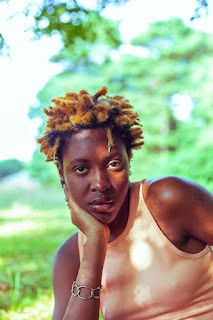
Chinonso Ihekire
For many artists, the space in which they create is just as important as the creation itself. The space takes up every idea, every emotion; in that way, the works created are honest, raw and truthful. This is not an exception for Àmọ̀kẹ.
Àmọ̀kẹ does not believe in following one path. They thrive at the intersection of various art forms. You might come across a poem so visual because the words are arranged in a way that demands your body to move when you read. Similarly, a curated event can feel like being transported into a space where change is possible, and all voices are centred, rather than just a gathering.
Àmọ̀kẹ believes perfectionism keeps us rigid when we should lean into the messiness of creativity. By ignoring the traditional systems we are used to, Àmọ̀kẹ’s work hopes to function as a living, walking installation, one where there is no line between the artists and the audience because the works are a reflection of the audience and the space we exist in. Instead of just sitting in a chair, you are invited into a space that is asking you to question, react and help shape the environment. Rather than just an observer, you find your own meaning and become a part of the art itself.
Àmọ̀kẹ suggests that the entire process of creating anything, from the idea to the space and the audience it is for, is just as important as the final creation. Every messy sketch, the unexpected turns, can create connections to the audience even after the work is out in the world.
Àmọ̀kẹ’s process is how they navigate the intersection of our shared human experiences. It is one of trying and unlearning, and more trials to further aid self-discovery. Àmọ̀kẹ is not afraid to go deeper into feelings we might run away from, creating an atmosphere to know yourself better and even foster deeper connections. By reflecting the inner worlds we each carry, unravelling the layers to reveal what truth means to us and for us, physically and emotionally, what can be possible when we choose to be ourselves without conditioning?
There is no direct request being made, but an urgency, asking the audience to start questioning everything, including what makes us uncomfortable. We all carry around burdens and heavy thoughts that we would rather ignore, but Àmọ̀kẹ’s work suggests that looking at those things is the only way to get back to a sense of being yourself.
The pressure from society to live a certain way and be perceived a certain way is evident. Àmọ̀kẹ hopes to continue to create works where vulnerability is not synonymous with weakness. The best part is that there is no pressure to perform your pain for an audience. You do not have to “heal” on a schedule or explain your trauma to anyone. Just being there, in that moment, is enough.
Àmọ̀kẹ refuses to just stack up a portfolio filled with visually appealing projects. What they’re crafting is bigger—a lived and shared practice. When you come across their work, no matter if you’re viewing, taking part, or collaborating, it invites you to peek inside yourself. It’s messy, joyful, even confusing, the kind of reality we all live in, tangled with others. This isn’t simply about producing art. Instead, it offers a path for us to collectively dive into what being human really means, peeling back layers of complexity with a bit more raw honesty.
Comments