


Moghalu: Nigeria’s political elite fueling insecurity, state failure

 Quick Read
“Nigeria needs a major constitutional redesign. And I argue that state police, while helpful, is not enough,” he said.
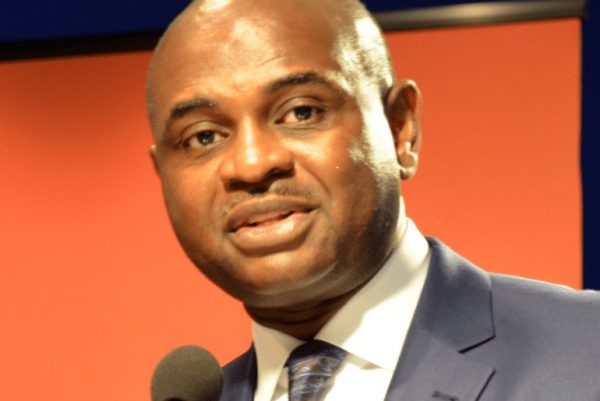
Former Deputy Governor of the Central Bank of Nigeria, CBN, Professor Kingsley Moghalu, has blamed Nigeria’s worsening insecurity on the failure of the country’s political leadership to build a united nation and protect citizens.
Moghalu said terrorism, banditry and kidnapping have persisted because Nigeria remains a geographical country without a common national identity.
Speaking during a television interview on Monday, the former presidential candidate said the country’s security crisis is a direct consequence of failed nationhood, weak leadership and a political system driven by ethnic and religious interests.
“Banditry, terrorism, and kidnapping are all symptoms of a deeper failure to build a common Nigerian identity,” Moghalu said.
According to him, Nigeria’s inability to defeat terrorism in the last 10 to 15 years cannot be separated from the absence of internal cohesion among citizens and leaders.
“We are a country geographically, not a nation. Because we don’t have a common purpose, we are not united internally to be able to fend off external threats from terrorists,” he said.
Moghalu said the failure of nationhood has weakened governance, the economy and national security, adding that political leaders have failed to create a sense of fairness and belonging among Nigerians.
“This failure to become a nation now affects governance, it affects the economy, it affects security, because we all have divided interpretations and divided agendas. The politics of Nigeria is not driven by nationhood; it’s driven by ethnic and religious sentiment,” he said.
He also alleged that Nigeria’s fight against terrorism has been weakened by collusion within the security system and corrupt incentives among those profiting from the war.
According to him, the situation has created what he described as a “military-industrial complex” where huge funds are spent on insecurity without corresponding results.
“You see what you might call a military-industrial complex that is profiting from the war against terrorism. Lots of money is spent, but very few results are delivered,” he said.
Moghalu insisted that Nigeria is already showing signs of a failing state, warning that the appearance of normalcy in Lagos and Abuja should not be mistaken for national stability.
“I don’t think you can argue seriously that Nigeria is not a failing state. The fact that you have the appearance of normalcy in Lagos or in Abuja, all these ungoverned spaces in the northern parts of the country, in some parts of the Southwest, in some parts of the East, these are all indications of state failure,” he said.
He argued that the primary duty of the state is to protect lives and territory, warning that failure to do so weakens government legitimacy.
“A state exists and justifies its existence by its ability to protect the lives and the territory of its citizens,” Moghalu said.
The former CBN deputy governor called for a major constitutional redesign, saying Nigeria needs genuine federalism to address its deep divisions.
He said state police may help, but would not be enough to solve the deeper problem of weak national integration.
“Nigeria needs a major constitutional redesign. And I argue that state police, while helpful, is not enough,” he said.
Moghalu traced Nigeria’s political crisis to its creation through amalgamation, saying the country was not built organically around one national vision.
“Nigeria is not an organic nation. Nigeria came about as a result of the amalgamation of the North and South,” he said.
He, however, said Nigeria can still become a nation if it produces leaders with vision, courage and the capacity to rise above ethnic and personal interests.
“For us to become a nation, the level of leadership that requires, in terms of vision, conceptualisation and mobilising citizens without vested self-interest, does not exist in our political elite,” he said.
Moghalu said Nigeria’s founding structure encouraged ethno-religious politics, noting that the country was built around competing regional interests rather than a single national purpose.
“We did not have a country in which there was one founding father. We had a country with three founding fathers. That tripartite thing meant that even from the beginning, there was no unified national vision,” he said.
He warned that Nigeria cannot achieve sustainable economic progress without first dealing with insecurity, injustice and the absence of national loyalty.
“Many people in Nigeria do not feel loyal to the Nigerian state because they do not feel protected by the Nigerian state, or they do not feel fairly treated by the Nigerian state,” he said.
“If some parts of the country or some individuals feel they have some right to lord it over others, you’re not creating a nation. You’re creating a contest within a geographical space,” he added.
On the way forward, Moghalu advocated real federalism, saying Nigeria’s diverse regions must be allowed to develop from below.
“I am making the case for real federalism because we are a pluralistic society. In every plural society, if you do not have a federal system of government that gives space for the components to develop themselves from below, it never works,” he said.
Speaking further on insecurity, Moghalu accused political leaders of lacking the will to protect Nigerians, saying many are more concerned about gaining and retaining power.
“When you have political leaders talking about these things, but you don’t see any personal care for the lives of Nigerians in their actions, because they are more interested in gaining, obtaining and retaining power, then it doesn’t matter what national security document you design,” he said.
He also suggested that Nigeria may need to hire mercenaries as a short-term measure to reclaim territories from terrorists and reorganise its security forces.
“I would go for mercenaries. Nigeria should use them. President Jonathan tried it, and it was working until Buhari came and cancelled that contract,” he said.
According to him, Nigeria’s security structure has been weakened by internal penetration, making external support necessary in the immediate term.
“The only way we can gain control in the immediate term is to get a group of people who listen to the language of money. You put the cash on the table, and they give you the results,” Moghalu said.
He added that terrorism in Nigeria is not merely local but part of a wider global jihadist movement, warning that divided countries are more vulnerable to such threats.
“Countries that are nations in the real sense are internally resilient; they can fight and withstand these kinds of forces. Mere countries like Nigeria, a country but not yet a nation, will have a hard time,” he concluded.
Comments