


2026 UTME: I-G reveals how 5 suspects allegedly hacked into JAMB server

 Quick Read
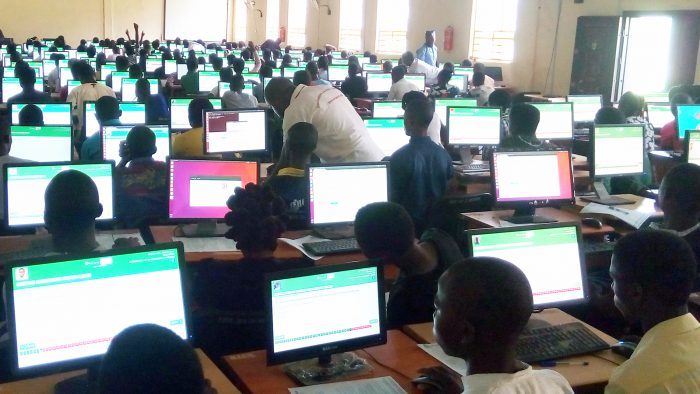
In count two, they were alleged to have, “on April, without authorisation, intentionally accessed the JAMB server remotely by installing a software by name, RADMI software in over 200 systems used for UTME CBT.”
By Taiye Agbaje
The Inspector General of Police, I-G, on Thursday revealed how five suspects for allegedly hacked into the Joint Admissions and Matriculation Board (JAMB)’s server to aide examination fraud during the conduct of the 2026 Unified Tertiary Matriculation Examinations Computer-Based Test (UTME CBT) in Delta State.
The suspects, identified as Ojiyovwi Miracle, Goodluck Ovuijeddo, Dennis Uvietesivwi, Ransome Monday and Hilda Ejohwemu were to be arraigned on allegations bordering on cybercrime, examination malpractices and cheating by the Inspector-General of Police (I-GP)
But their arraignment could not go on before Justice Musa Liman of the Federal High Court in Abuja because they are based in Delta State.
When the case was called, the judge raised observation that since all the suspects reside in Delta, it would be better for the case to be heard at the court’s division in the state in order to ensure expeditious prosecution.
Counsel to the I-G, Faith Dimka, and lawyers to the suspects did not oppose the judge’s advice.
Justice Liman subsequently ordered that the case file should be returned to the central registry for onward transfer to Delta.
However, the charges filed against the suspects FHC/ABJ/CR/300/2026 on May 22 by the Prosecution Counsel, Faith Dimka revealed how they allegedly installed a special software on about 200 computer systems used for the 2026 UTME in Delta State.
In count one, the suspects were alleged to have conspired among themselves to commit the offence bordering on unlawful access to a computer and computer related fraud.
In count two, they were alleged to have, “on April, without authorisation, intentionally accessed the JAMB server remotely by installing a software by name, RADMI software in over 200 systems used for UTME CBT.”
The police alleged that “after it was installed, the system was operated remotely on its own, for fraudulent purposes and obtain data that are vital to national security within the jurisdiction of this honourable court.”
In count three, the suspects were alleged to have knowingly and without authority on April 20, caused loss of property by altering, erasing, imputing and suppressing data for the purpose of conferring economic benefit to themselves against JAMB during the UTME CBT.
In count four, the suspects were alleged to have conspired among themselves “to commit offence to wit cheating at examination and aiding and abetting examination malpractice within the jurisdiction of this honourable court.”
They were also accused to have, on April 20, “by any fraudulent trick or device, by false pretence and with intent to cheat or secure undue advantage procure any question paper produced or intended to be used at JAMB during the UTME CBT.”
The suspects were alleged in count six to have, on April 20, conspired, aided, abetted, counseled, incited, procured and induced persons to commit examination malpractice during the UTME CBT.
While counts one, two and three are offences punishable under sections of the Cybercrimes (Prohibition, Prevention, Etc.) Act, 2015 (As Amended, 2024); counts four, five and six are punishable under provisions of Examination Malpractice Act, 1999 (LFN 2004).
(NAN)
Comments