


All Set for Ekiti Governorship Election

 Quick Read
The electoral body also reiterated its commitment to conducting a free, fair and credible election, assuring voters that adequate measures had been put in place to ensure smooth accreditation, voting and collation of results.
*Security agencies deploy personnel across 16 LGAs
*INEC completes distribution of sensitive materials
*Voters to choose next governor amid tight security
By Kazeem Ugbodaga
After months of intense campaigns, political manoeuvring, stakeholder engagements and grassroots mobilisation across Ekiti State’s 16 local government areas, the stage is finally set for Saturday’s governorship election, with the Independent National Electoral Commission (INEC), security agencies and political parties expressing confidence in their readiness for the crucial poll.
The election will determine who occupies the Government House in Ado-Ekiti for the next four years and is expected to be closely watched across the country because of the state’s political significance in the South-West.
In the final hours before the poll, INEC assured residents and stakeholders that all necessary arrangements had been concluded for a successful election.
The commission said sensitive and non-sensitive materials had been distributed to designated locations, while election officials and ad hoc personnel had been deployed across the state.
The electoral body also reiterated its commitment to conducting a free, fair and credible election, assuring voters that adequate measures had been put in place to ensure smooth accreditation, voting and collation of results.
As part of efforts to guarantee a peaceful process, security agencies have rolled out extensive measures to maintain law and order throughout the exercise.
The Ekiti State Police Command announced a statewide restriction on vehicular movement from midnight on Friday until 6 p.m. today.
According to the command, the restriction covers both intra-state and inter-state roads and applies to private and commercial vehicles, trucks, tricycles and motorcycles.
Police spokesperson, SP Sunday Abutu, said the measure was designed to enhance security and prevent any disruption of the electoral process.
Accredited INEC officials, election observers, journalists, medical personnel, emergency responders and other essential service providers have been exempted from the restriction, provided they possess valid identification and clearance tags.
The police also prohibited the movement of VIPs accompanied by armed escorts to polling units and collation centres, while vigilante groups, quasi-security outfits and volunteer security organisations were barred from participating in election security operations.
Commissioner of Police in charge of the governorship election, CP Abayomi Shogunle, urged voters to remain peaceful and law-abiding, assuring residents that adequate security arrangements had been put in place before, during and after the election.
With campaigns officially ending on Thursday night in line with electoral regulations, attention has shifted from political rallies and campaign promises to the ballot box, where voters will decide the state’s political future.
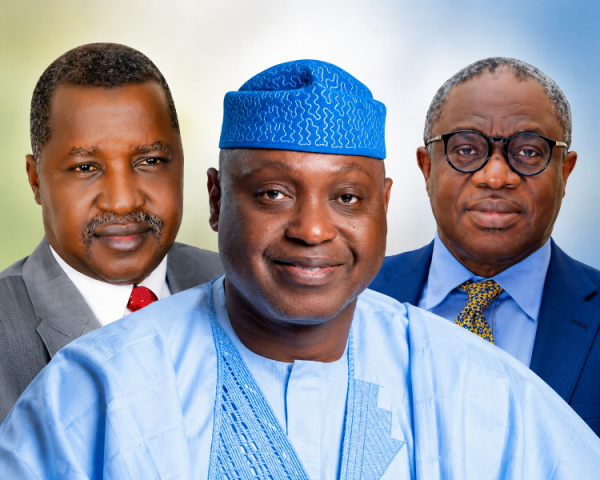
Although several political parties are participating in the election, analysts and observers have identified three candidates as the principal contenders.
Leading the pack is incumbent Governor Biodun Oyebanji of the All Progressives Congress (APC), who is seeking a fresh four-year mandate.
Oyebanji enters the contest widely regarded as the frontrunner, largely because of the advantages of incumbency, the extensive grassroots structure of the APC and a broad coalition of political support that cuts across different interests within and outside the state.
Throughout the campaign, the governor and his supporters have focused on the administration’s record in infrastructure development, education, healthcare, agriculture, rural development and social intervention programmes.
The APC has repeatedly argued that continuity is necessary to consolidate ongoing projects and sustain the state’s development trajectory.
Political observers also point to the governor’s ability to secure endorsements from prominent political stakeholders and maintain relative stability within the ruling party as major strengths heading into the election.
However, the opposition insists the race remains open.
The Peoples Democratic Party (PDP) candidate, Dr. Wole Oluyede, has consistently rejected suggestions that the election is a mere formality for the incumbent governor.
Throughout the campaign, Oluyede has argued that Ekiti voters are politically sophisticated and have a history of making independent decisions regardless of prevailing political calculations.
His campaign message has centred on offering an alternative vision for governance, improving economic opportunities and addressing areas where the opposition believes the current administration has fallen short.
The PDP candidate has repeatedly maintained that the election should not be viewed as a coronation but as a democratic contest that will ultimately be decided by voters at the polling units.
Also in the race is Chief Dare Bejide of the African Democratic Congress (ADC), who is regarded by many analysts as the strongest third-force candidate in the election.
Bejide, a familiar figure in Ekiti politics, has campaigned on the need for a departure from the dominance of the traditional major parties.
Throughout the campaign, he has presented the ADC as a credible alternative for voters seeking a different political direction.
The ADC candidate has also relied on his political experience, grassroots contacts and support from sections of the electorate dissatisfied with both the APC and PDP.
While most pre-election assessments place Oyebanji ahead of his rivals, analysts caution that elections are ultimately determined by voter turnout, the effectiveness of party structures on election day and the credibility of the electoral process.
Beyond the contest among the candidates, stakeholders have emphasised the importance of maintaining peace throughout the exercise.
Civil society organisations, election observers, traditional rulers and religious leaders have repeatedly called on political actors and their supporters to avoid violence and respect the outcome of the election.
The governorship poll is expected to serve as another important test of Nigeria’s electoral process, particularly regarding election security, voter participation and the management of off-cycle governorship elections.
As voting begins across Ekiti State on Saturday, the campaigns have ended, the promises have been made and the preparations completed.
What remains is for the electorate to exercise its democratic right and decide who will govern the Land of Honour for the next four years.
Comments