


Reactions as Oyebanji becomes first Ekiti governor to win consecutive terms

 Quick Read
With the victory, Oyebanji becomes the first governor in Ekiti State's history to win re-election and secure two consecutive terms since the state was created in 1996.
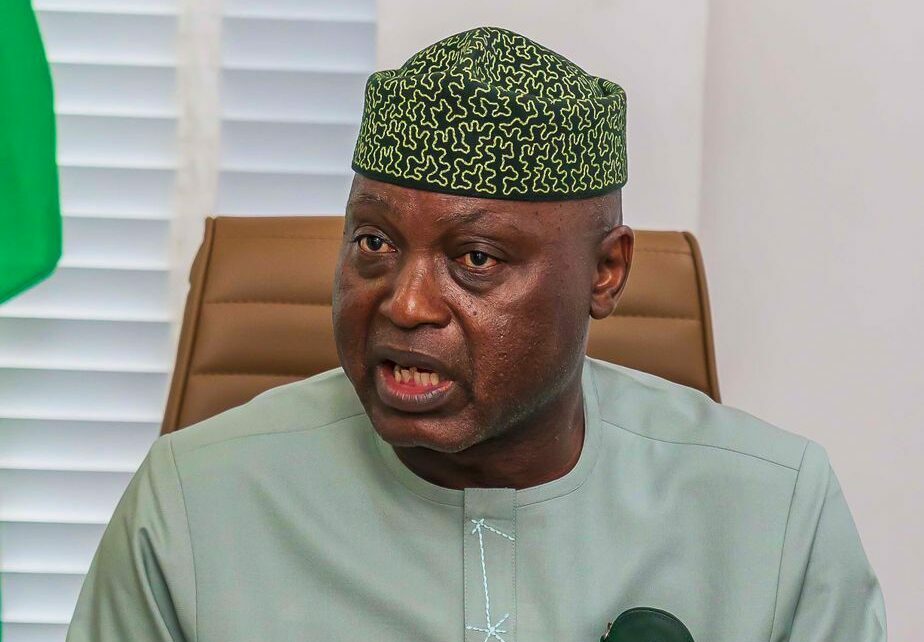
Governor Biodun Abayomi Oyebanji of the All Progressives Congress (APC) has been declared the winner of the 2026 Ekiti State governorship election by the Independent National Electoral Commission (INEC).
With the victory, Oyebanji becomes the first governor in Ekiti State’s history to win re-election and secure two consecutive terms since the state was created in 1996.
The governor recorded a landslide victory, winning in all 177 wards and the 16 local government areas of the state.
The Returning Officer for the election and Vice-Chancellor of the Federal University of Technology, Akure (FUTA), Professor Adenike Oladiji, announced the results at the INEC headquarters in Ado-Ekiti.
According to the official results, Oyebanji polled 319,224 votes to defeat the Peoples Democratic Party (PDP) candidate, Dr Wole Oluyede, who scored 40,543 votes.
The African Democratic Congress (ADC) candidate, Ambassador Dare Bejide, came third with 12,872 votes.
Other political parties received significantly lower votes.
Speaking after his victory, Oyebanji thanked the people of Ekiti State for their support and promised to continue serving them with dedication.
He said the mandate given to him was a call to greater service and assured residents that his administration would continue to work with courage, humility, compassion and accountability.
The governor also pledged to continue implementing the state’s 30-Year Development Plan, which he described as the roadmap for Ekiti’s growth and development.
Opposition Candidates Reject Outcome
Despite the victory, the election result has generated mixed reactions.
ADC candidate Dare Bejide rejected the outcome, alleging that the election was marred by irregularities, intimidation and vote-buying.
He claimed that political actors and security personnel created an atmosphere of fear in some polling units and alleged that large amounts of money were distributed to influence voters.
Bejide said his party would study the election results and decide on the next course of action after completing its review.
Similarly, PDP candidate Dr Wole Oluyede accused the APC of using vote-buying and intimidation to secure victory.
Speaking through his media aide, Gani Salau, Oluyede alleged that voters were induced with cash and that opposition members faced intimidation before and during the election.
He argued that poverty made many voters vulnerable to vote-buying and expressed concern over the continued practice in Nigerian elections.
Shortly after the Independent National Electoral Commission (INEC) declared Oyebanji winner of the election, hashtags related to the Ekiti poll began trending on X, Facebook, and other social media platforms.
Many users congratulated the governor for becoming the first elected governor in Ekiti State’s history to secure two consecutive terms since the state’s creation in 1996.
Supporters described the outcome as a reflection of public approval of Oyebanji’s administration, citing achievements in infrastructure, education, healthcare, agriculture, and youth empowerment.
Several commenters also praised the governor’s relationship with political leaders across party lines, arguing that his inclusive leadership style contributed to his overwhelming victory.
A social media user, identified as @EkitiProgress, wrote that the election result showed that “performance still matters in politics,” while another user described the outcome as “a victory for continuity and stability.”
However, not all reactions were positive.
Some users echoed concerns raised by opposition parties over alleged vote-buying and electoral irregularities. Critics questioned the huge margin of victory and called on relevant authorities to investigate claims made by opposition candidates.
Others argued that the election highlighted the need for stronger measures against vote trading and greater voter education.
Political observers also joined the debate online, with many noting that the election result could influence political calculations ahead of future off-cycle governorship elections and the 2027 general elections.
Some analysts described Oyebanji’s victory as one of the most dominant electoral performances in Ekiti’s political history, particularly because he won across all 16 local government areas and 177 wards.
Meanwhile, congratulatory messages continued to pour in from political leaders, stakeholders, and residents, many of whom urged the governor to use his renewed mandate to deepen development and address the challenges facing the state.
As celebrations and debates continue online, the 2026 Ekiti governorship election remains one of the most talked-about political events in Nigeria, with social media serving as a major platform for public reaction and political discourse.
Tinubu Congratulates Oyebanji
President Bola Tinubu congratulated Governor Oyebanji on his re-election, describing the victory as a strong endorsement of continuity and good governance.
In a statement issued by his spokesman, Bayo Onanuga, the President commended the people of Ekiti State for conducting themselves peacefully during the election and praised security agencies for maintaining order.
Tinubu noted that Oyebanji’s first term recorded achievements in infrastructure, agriculture, education, healthcare, youth employment and rural development.
He urged the governor to remain inclusive in governance and continue working for the benefit of all Ekiti residents during his second term.
The President also encouraged INEC to build on the lessons from the Ekiti election as the country prepares for the Osun governorship election and the 2027 general elections.
Comments